





Renaissance Madonna and Child
These renaissance madonna and child depictions bring centuries of sacred devotion to your wall, ranging from genuine sixteenth-century panels to later revival watercolours.
Renaissance Madonna and Child
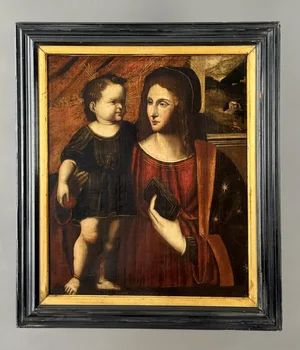
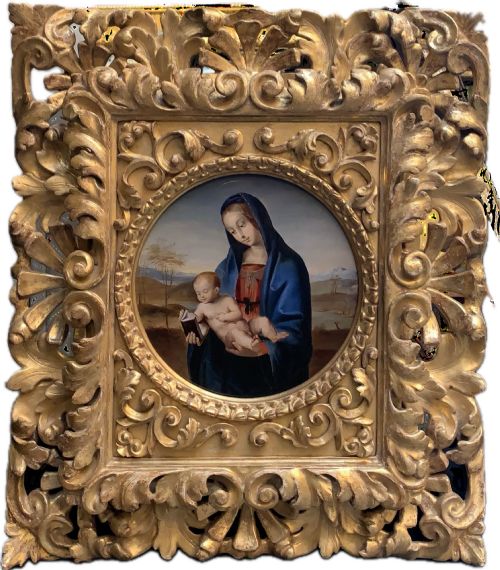
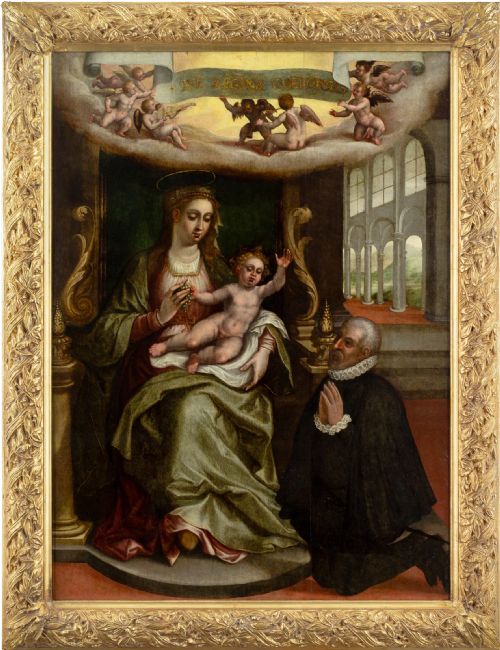
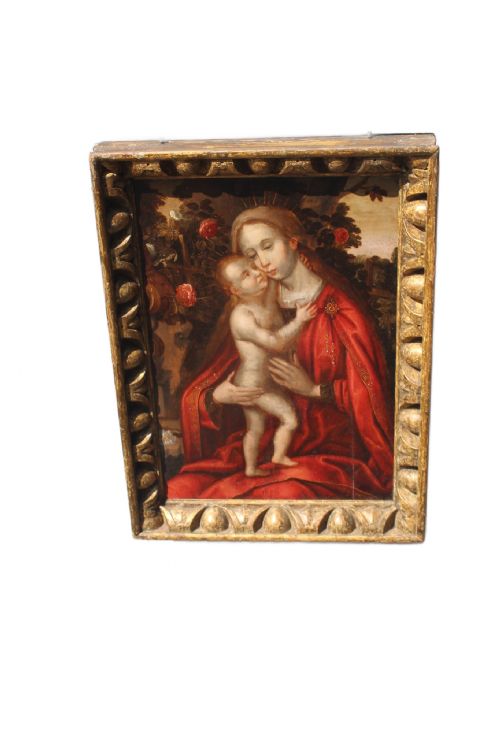
When you search for renaissance madonna and child pieces, you encounter a devotional subject depicting the Virgin Mary and the infant Jesus that has inspired artists across multiple centuries. The selection on this page centres primarily on oil paintings on canvas or wood panel, alongside sculptures, porcelain plaques, and framed prints.
The objects span from original sixteenth-century works attributed to circles of major masters down to nineteenth-century revival copies and Edwardian interpretations. You will find works executed in oil, watercolour, and carved oak, reflecting diverse European traditions including Italian and Spanish Renaissance styles.
How they were made
The makers of these works utilised oil pigments applied to stretched canvas or rigid wooden panels, often building up rich layers to achieve depth in the figures of the Virgin and Child. Sculptural examples utilise carved oak, while other pieces incorporate gesso and gold leaf to create ornate frames and decorative surfaces.
Later revival pieces frequently employ hand-painted porcelain or print techniques on paper and glass, demonstrating how workshops reproduced famous compositions by masters such as Raphael and Correggio for subsequent generations.
Periods represented across the items include the sixteenth, seventeenth, eighteenth, and nineteenth centuries, alongside Edwardian examples.
What varies in quality
Quality in these devotional works rests upon the fidelity of the draughtsmanship and the expressiveness captured in the faces of the figures. Hand-painted oil surfaces executed by skilled followers or circle members exhibit a subtle mastery of light and shadow that mechanical prints or hurried copies simply lack.
The integrity of the primary support, whether an ageing timber panel or a heavy canvas, dictates the overall preservation of the work. Furthermore, the presence of period materials such as genuine giltwood frames contributes significantly to the visual authority of the piece.
Bernardino Luini·Miguel Barroso·Benvenuto Tisi·Ambrious Benson
The Renaissance Madonna and Child Glossary
- Oil on panel
- A painting technique where pigment mixed with oil is applied to a flat piece of wood rather than stretched fabric. This was the standard support for many early European painters before canvas became dominant.
- Gesso
- A white paint mixture consisting of a binder mixed with chalk, gypsum, or pigment, used to prepare a wood or canvas surface for painting or gilding. It provides a smooth base for fine detail work.
- Circle of
- A term used when a work is produced by an unidentified artist working in the studio or under the direct influence of a known master. It denotes a close stylistic and chronological proximity to the named painter.
- Revival
- A stylistic movement where artists and manufacturers consciously imitate the aesthetic forms of an earlier era, such as the High Renaissance. Nineteenth-century makers frequently produced these retrospective works.
- Porcelain plaque
- A flat ceramic tablet fired at high temperatures and subsequently hand-painted with ceramic colours. These items were often mounted in frames to emulate miniature oil paintings.
Renaissance Madonna and Child: Frequently Asked Questions
Are these paintings genuine sixteenth century works?
Some pieces date directly to the sixteenth century, created by followers or circles of Renaissance masters.
Others are later nineteenth-century or Edwardian revival works that pay homage to those earlier compositions.
What is the difference between an oil on canvas and a porcelain plaque?
Oil on canvas involves pigments bound in oil applied to a woven fabric support, offering textured brushwork and depth.
Porcelain plaques are fired ceramic tablets hand-painted with enamels, providing a smooth and durable surface.
How should I hang a heavy framed oil painting?
Ensure your wall fixings are secured directly into wall studs or utilise heavy-duty wall anchors designed for substantial weights.
Consider the conservation of the piece by avoiding locations with direct sunlight or fluctuating humidity.
How do I identify a revival piece?
Revival pieces often display nineteenth-century framing techniques, standardised canvas dimensions, or paper supports characteristic of later printing technologies.
The handling of pigment can also reveal the chemical signatures and brush habits of a later period.