


Removable Tray Side Table
A removable tray side table brings portable utility and traditional craftsmanship together, offering a versatile surface that lifts away from its support.
Removable Tray Side Table
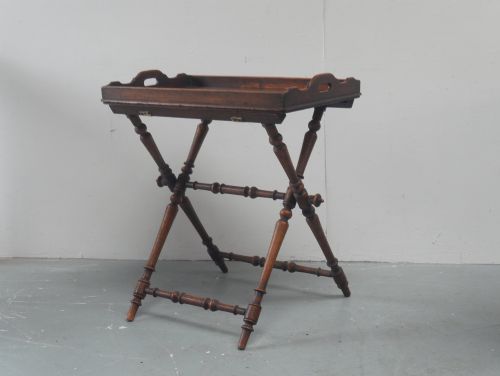
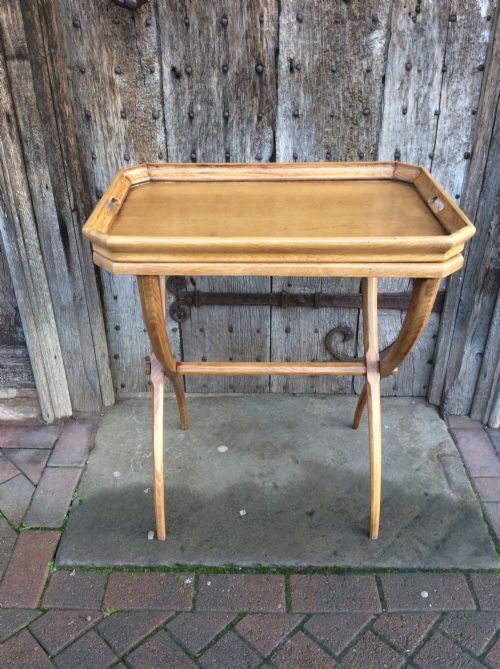
A removable tray side table serves as both a stable support and a lift-off serving surface. These pieces combine practical utility with refined cabinetmaking, appearing across multiple historical periods.
The selections available here range from sturdy oak butler models to more decorative marquetry and satinwood examples. Buyers encounter forms spanning the eighteenth century through the Edwardian era.
Traditional side tables, tray tables, and etageres form the core of this grouping. Each piece integrates a detachable upper section with a folding or fixed stand designed for everyday function.
How they were made
Cabinetmakers utilised robust timbers such as mahogany, oak, and walnut for structural stability. Finer decorative surfaces often incorporate satinwood, kingwood, and boxwood inlay.
French polishing and marquetry techniques define the decorative finish of many pieces. Glass inserts and brass fittings appear where appropriate to the style and period.
What varies in quality
The refinement of the timber and the precision of the inlay determine the standing of each piece. Superior examples display meticulous attention to the grain and seamless integration of the tray within the stand.
Construction methods reveal the standard of workshop production. Well-fitted joints and original stands distinguish finer furniture from simpler utilitarian items.
The Removable Tray Side Table Glossary
- Butler tray
- A portable serving tray with four hinged or fixed sides, designed to lift off a dedicated folding stand. This form originated for domestic service and evolved into domestic furniture.
- Etagere
- A set of open shelves or tiered trays used for display and small items. These pieces often feature delicate uprights and fine wood veneers.
- Marquetry
- The art of applying pieces of veneer to a structure to form decorative patterns. Craftsmen use contrasting woods to create intricate floral or geometric designs.
- Satinwood
- A durable hardwood with a lustrous, golden-yellow sheen. It frequently appears in stringing and crossbanding on later furniture.
Removable Tray Side Table: Frequently Asked Questions
What is a removable tray side table?
A removable tray side table consists of a detachable upper tray resting upon a separate folding or rigid stand. This design allowed domestic staff to carry provisions directly to the living areas.
Over time, these pieces transitioned from purely utilitarian objects into decorative furniture for drawing rooms and parlours.
How do I date these tables?
Dating relies upon timber selection, construction methods, and stylistic indicators such as inlay or leg shape. Eighteenth-century examples typically show heavier proportions and simpler oak or mahogany construction.
Later Victorian and Edwardian pieces often incorporate lighter satinwood, delicate stringing, or elaborate marquetry work characteristic of revival styles.
Were these tables used in dining rooms?
These tables served multiple rooms, functioning as mobile serving surfaces for tea, drinks, or small meals. Their portability made them useful in both formal reception rooms and private chambers.
The lift-off tray allowed servants to clear or replenish items without moving the entire furniture structure.
How do I care for antique wood trays?
Maintenance involves dusting with a soft, dry cloth and avoiding placement near direct heat sources or strong sunlight. Proper humidity levels prevent the timber and veneer from splitting.
Occasional application of appropriate wax helps nourish the polished finish without building up excessive residue.