



Religious Painted Timber
Religious painted timber pieces bring devotional art into domestic spaces through carved wood, pigment, and gold leaf.
Religious Painted Timber
When you search for religious painted timber, you encounter sacred sculptures, icons, and panels executed across several centuries. The material evidence spans the seventeenth, eighteenth, and nineteenth centuries, taking forms such as wall art, panel paintings, and freestanding statues. You are most likely to meet carved wood figures and painted panels depicting saints, angels, and holy figures.
The regional variety within these listings ranges from European folk art and continental baroque to Russian orthodox icons and Chinese representations of Guanyin. Pieces appear in pine and various carved woods, finished with polychrome paint, gesso, and gold leaf. Each object reflects the devotional requirements of its period and origin, whether executed in a naive style or with formal orthodox precision.
How these pieces were made
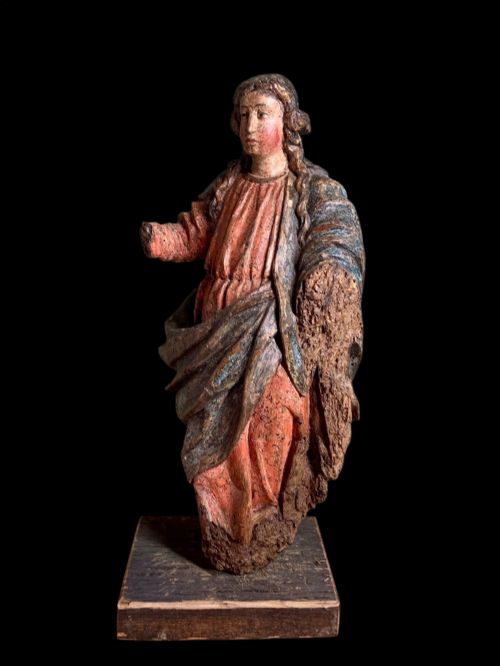
Carvers shaped timber substrates such as pine and dense hardwoods into figures and panels before applying preparatory layers of gesso. This provided a smooth ground for subsequent layers of pigment and polychrome paint. Artisans frequently integrated gold leaf to highlight halos, vestments, and architectural backgrounds.
Painting techniques combined mineral pigments with binding media to achieve durable surface decoration. Many surfaces received subsequent layers of paint or protective finishes over the centuries, contributing to the distressed patinas visible on folk art carvings and ecclesiastical panels alike.
Religious Painted Timber Retail Price Guide 2026
Typical asking prices for religious painted timber among the pieces listed under this phrase on Sellingantiques today, from the lower quarter to the upper quarter. They describe what is for sale here now, not the wider market.
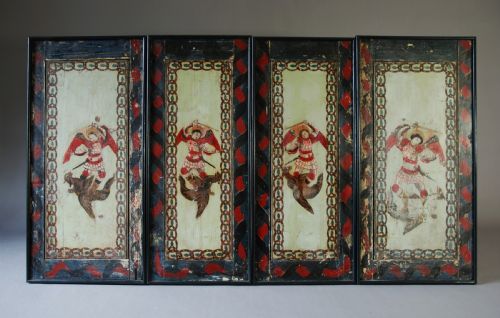
St Michael occasionally arrives with twelve companions on painted pine panels, ensuring the saints outnumber the household furniture.
Judging quality in painted timber
Quality rests in the harmony between the underlying wood carving and the survival of the original polychrome surface. Stronger examples display confident chisel work that defines drapery and facial expressions without excessive reliance on surface paint. The integrity of the gesso and pigment layers dictates how successfully the piece retains its intended visual impact.
The relationship between maker and medium also separates standard devotional objects from finer works. Pieces executed within formal iconographic traditions demonstrate strict adherence to proportional canons, whereas folk art examples derive their character from naive expression and regional decorative choices.
The Religious Painted Timber Glossary
- Polychrome paint
- Decoration applied in several colours to wood, stone, or terracotta sculptures. This technique defines garments, flesh tones, and decorative motifs on devotional carvings.
- Gesso
- A traditional white paint mixture consisting of a binder mixed with chalk, gypsum, or pigment. It served as an absorbent ground layer for gilding and polychrome painting on timber panels.
- Gold leaf
- Gold beaten into extremely thin sheets used for gilding surfaces. It frequently highlights sacred subjects on icons and carved wooden panels.
- Icon
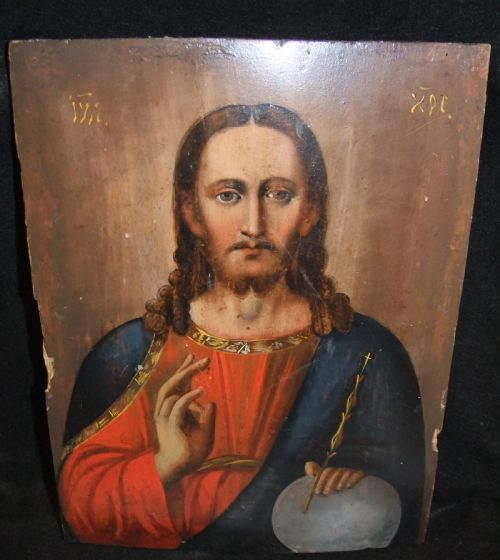
- A religious work of art, most commonly depicting Christ, saints, or angels. These panels are executed on wood within specific orthodox traditions.
- Folk art
- Art produced from an indigenous cultural tradition or by untrained artisans. These pieces rely on regional styles rather than academic conventions.
Religious Painted Timber: Frequently Asked Questions
What is religious painted timber?
Religious painted timber encompasses carved wooden sculptures, panel paintings, and icons finished with pigments, gesso, or gold leaf. These works span domestic and ecclesiastical devotional contexts across multiple centuries.
The materials include pine and various carved woods decorated with polychrome paint. Examples range from naive folk art panels to formal orthodox icons and continental carvings.
How were these pieces used?
Devotional objects served as focal points for prayer and meditation in churches, chapels, and domestic shrines. Icons and painted panels were positioned for veneration, while figures of saints and angels occupied altars or wall niches.
Over time, many of these wooden pieces transitioned from active religious settings into collections of art and antiques. Their surfaces record centuries of handling, devotional use, and changing interiors.
How do I care for painted wood?
Preserving painted timber requires stable environmental conditions away from direct heat sources and strong sunlight. Fluctuations in temperature and humidity cause wood to expand and contract, which threatens the stability of gesso and paint layers.
Dusting should be performed gently with a dry, soft brush without applying liquid cleaners or polishes. Protecting the fragile pigment and gold leaf surfaces maintains the integrity of the original decoration.
How are different periods identified?
Identifying the period relies on examining the tool marks left by the carver, the composition of the wood substrate, and the formulation of the ground layers. Eighteenth-century and nineteenth-century pieces often exhibit distinct structural methods and stylistic markers associated with specific regions.
Stylistic conventions, such as 17th-century orthodox traditions or Gothic revival influences, provide further context for dating. Comparing the handling of the polychrome paint and pigment helps distinguish earlier ecclesiastical works from later interpretations.