




Religious Folk Art Carving
Religious folk art carving offers direct, hand-hewn devotion shaped by local hands across centuries of domestic and liturgical life.
Religious Folk Art Carving
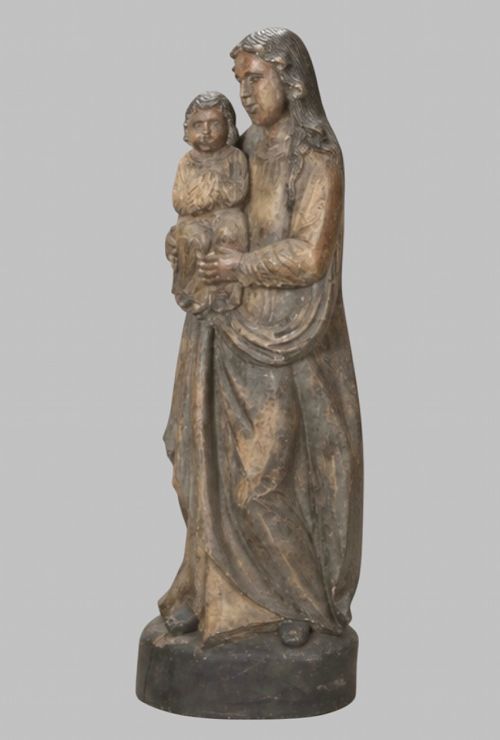
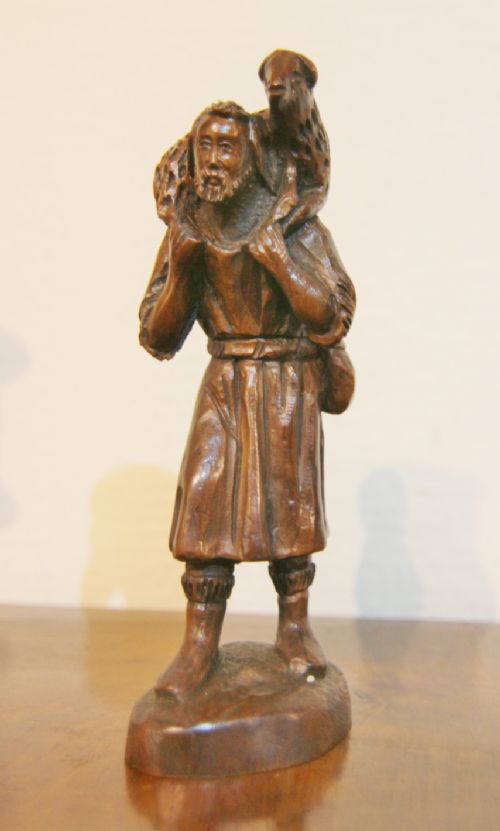
When you search for religious folk art carving, you encounter devotional figures, home altars, and regional saints shaped by local makers rather than court workshops. These pieces span from the seventeenth century through to the early twentieth century, reflecting varied European and global traditions.
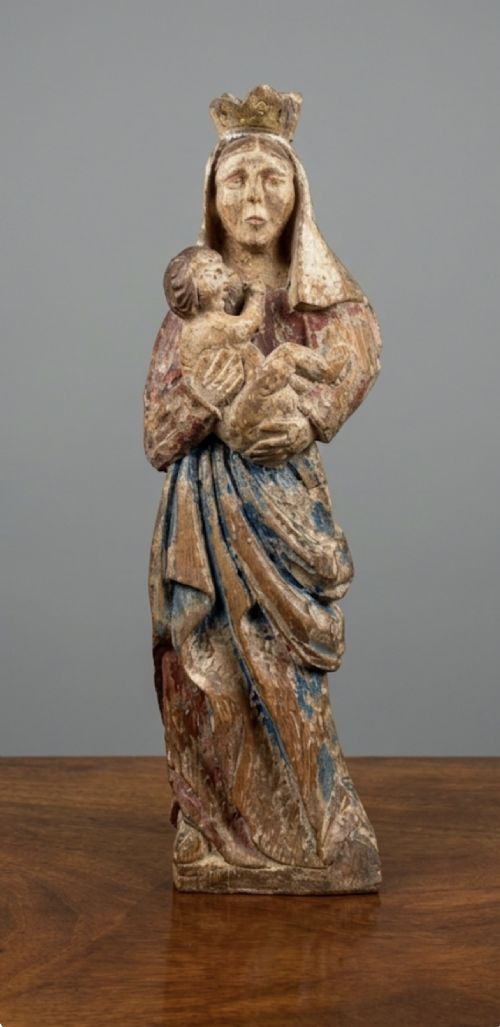
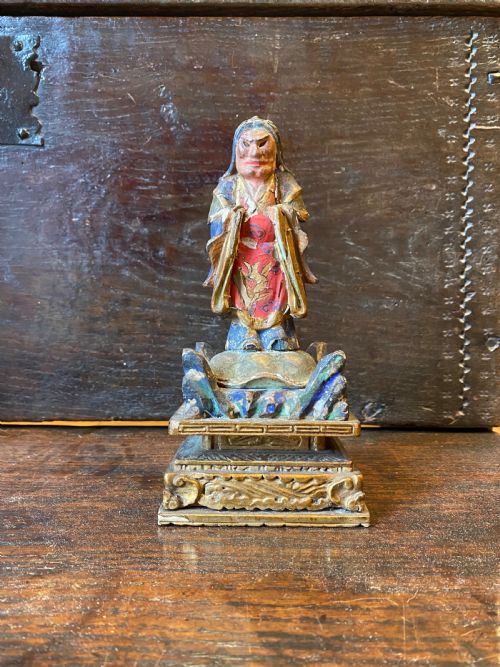
The selections on this page most frequently present carved wood statues of saints, the Madonna and child, and biblical scenes originating from Italy, Spain, Germany, and Austria. Alongside traditional Christian subjects, the forms extend to specific regional deities and processional figures.
The physical scale ranges from intimate pocket-sized devotional items to substantial temple deities and architectural wall panels. Each object carries the distinct mark of vernacular craftsmanship, showing how ordinary communities expressed faith through sculpture.
Materials and Techniques
The makers relied primarily on seasoned hardwood and softwoods, carved directly with gouges and chisels to establish the primary form of the figure. Tool marks often remain visible beneath the surface layers, revealing the direct and unhurried rhythm of the workshop.
Surfaces were frequently finished with gesso preparation before receiving layers of polychrome pigment, paint, or gold leaf to bring lifelike presence to the sculpture. Over time, these pigments have settled into the wood grain, creating the characteristic weathered patination seen today.
Regional styles represented include Italian, Spanish, German, Austrian, and Anglo-Indian folk art traditions.
Judging Quality and Character
The survival of original surface finishes - such as early polychrome pigment or gold leaf - strongly defines the visual integrity of a piece. Retaining these historic layers without excessive modern repainting preserves the authentic character and age of the carving.
Franz Keller
The Religious Folk Art Carving Glossary
- Polychrome
- Decoration consisting of several colours applied to the surface of wood or gesso. This technique gave carved devotional figures a lifelike appearance.
- Gesso
- A plaster mixture applied to wood surfaces as a smooth base for paint or gold leaf. It provides the foundation for traditional polychrome finishes.
- Home Altar
- A small domestic shrine or devotional structure used for private prayer. These portable architectural pieces often house carved figures of saints.
- Processional Figure
- A sacred sculpture mounted on poles or carried during religious festivals and street processions. These pieces are typically designed to be viewed from multiple angles.
Religious Folk Art Carving: Frequently Asked Questions
How were these wooden figures finished?
Many sculptures were coated in gesso and decorated with polychrome pigments, paint, or gold leaf to enhance their visual impact.
Surfaces often show centuries of wear, revealing the underlying wood where the original paint has naturally thinned.
How do I date a carving?
Dating relies on tool marks, wood shrinkage, style of drapery, and the composition of underlying gesso and pigment layers.
Earlier seventeenth-century pieces generally show heavier tool work and simpler construction compared to later nineteenth-century examples.
Where were these pieces displayed?
Carvings were housed in domestic home altars, village churches, or carried through streets during religious processions.
Smaller devotional objects were also kept in private rooms or carried in pockets for daily prayer.
How do I care for antique wood carvings?
Keep carvings away from direct sunlight and sudden changes in room temperature to prevent the wood from cracking.
Dust gently with a dry cloth and avoid applying modern polishes that can damage historic polychrome surfaces.