

Religious Figure Art
Religious figure art brings centuries of devotion into a room through carved wood, oil painting and cast bronze.
Religious Figure Art
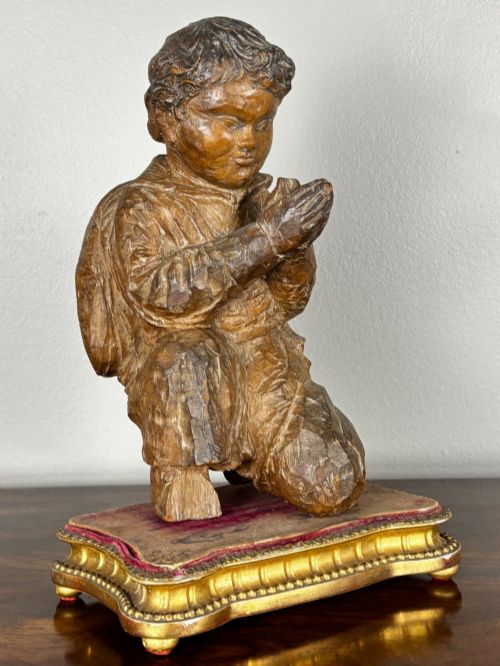
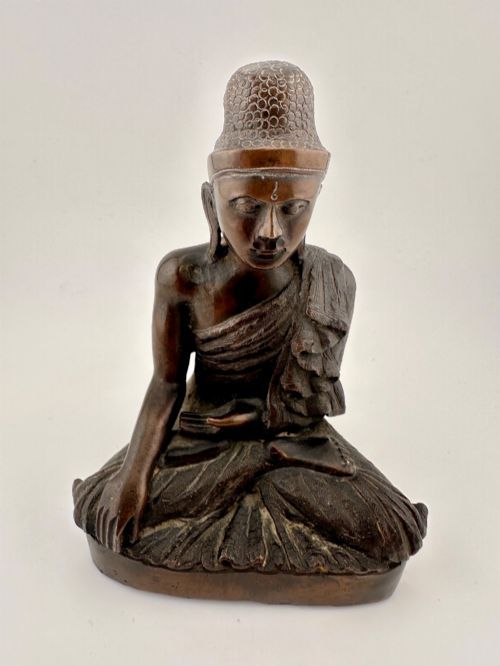
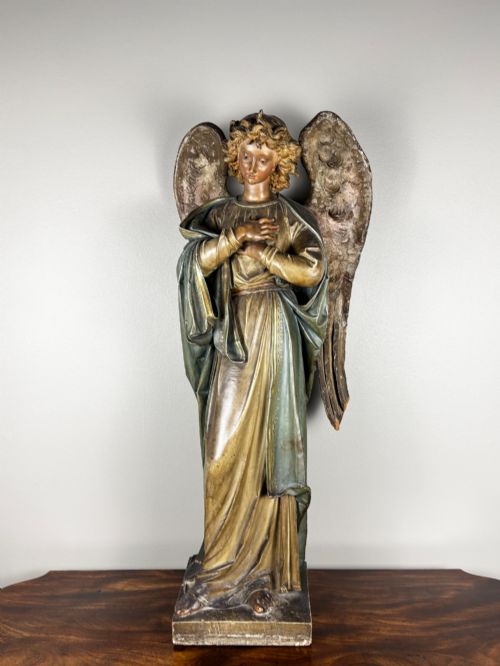
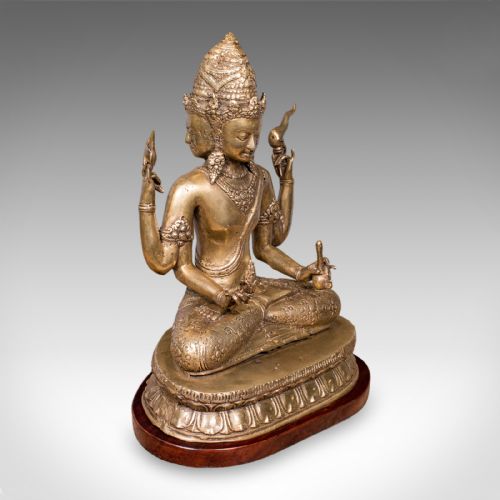
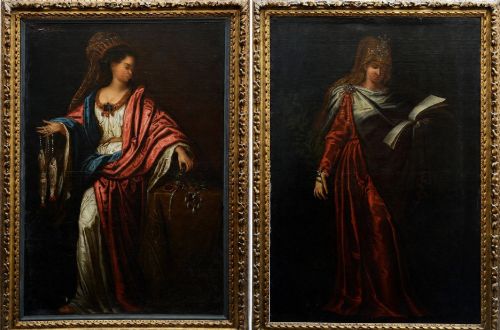
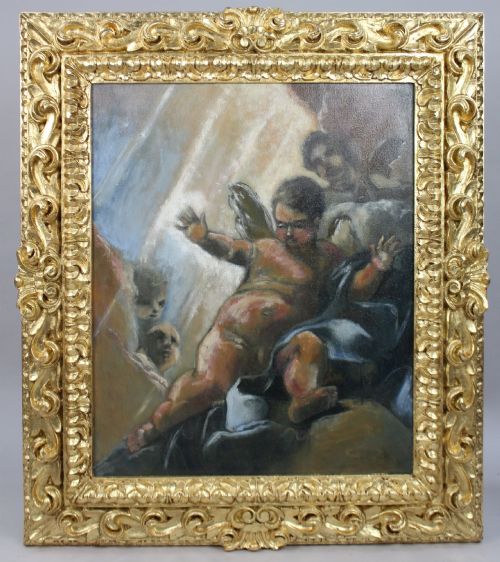
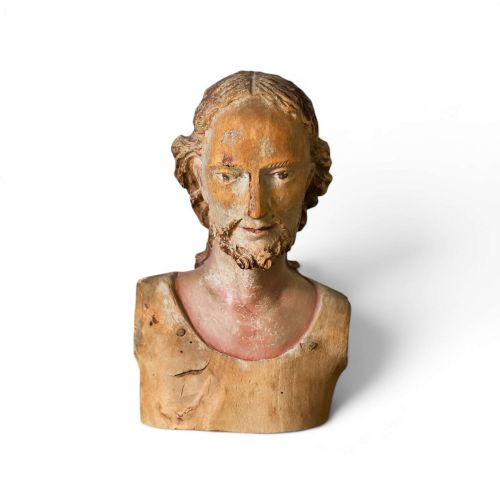
Religious figure art spans carved wooden statues, devotional icons, framed oil paintings and embroidered textile panels from various European and Asian traditions. The pieces appearing here range from sixteenth-century walnut groupings to nineteenth-century Italian polychrome angels and bronze deities.
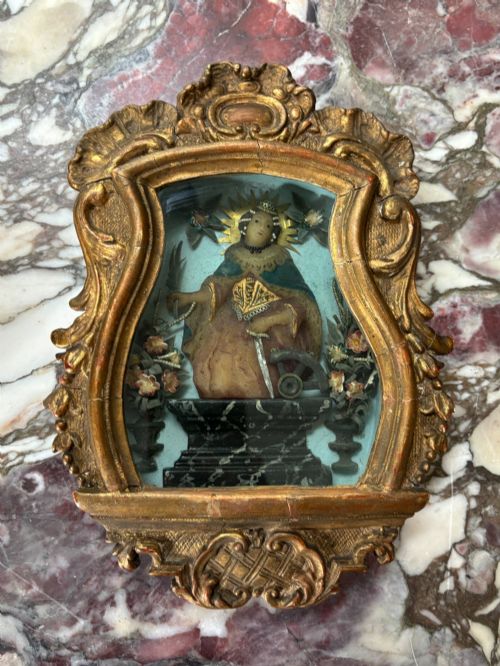
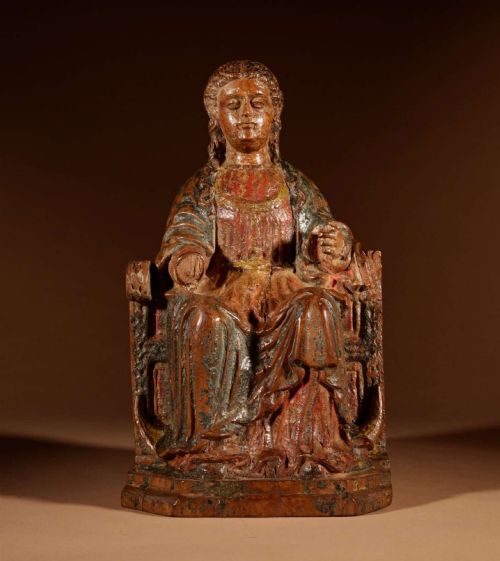
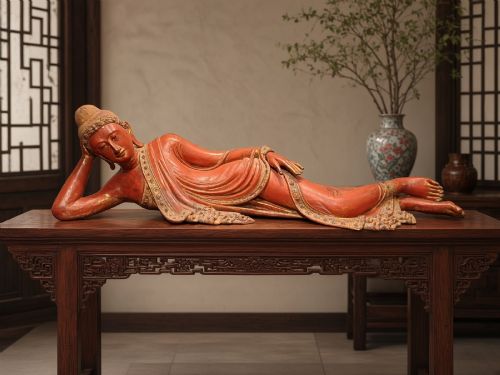
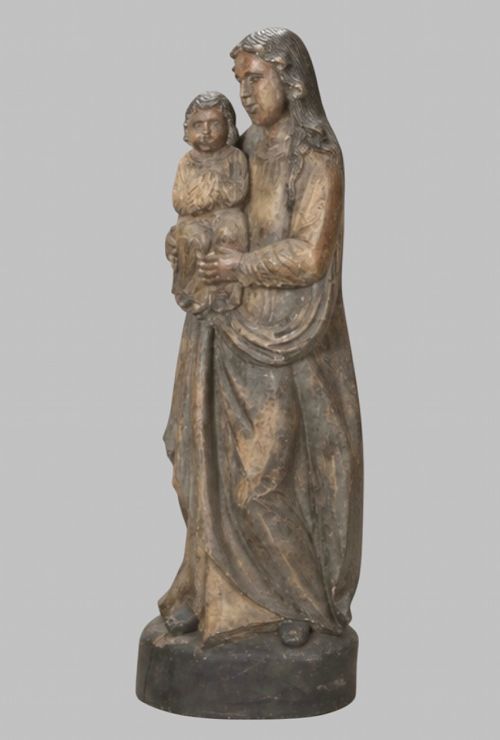
Buyers encounter distinct regional styles, including Spanish and Italian Baroque sculptures, French devotional shadow boxes, and Southeast Asian Buddhas and Hindu icons. Statues of saints, the Madonna and child, and Corpus Christi figures dominate the wooden sculptures on this page.
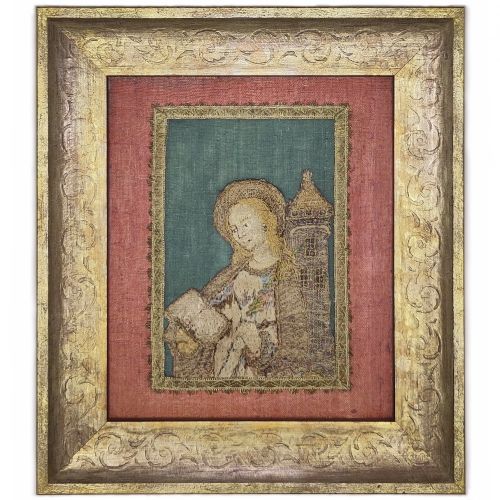
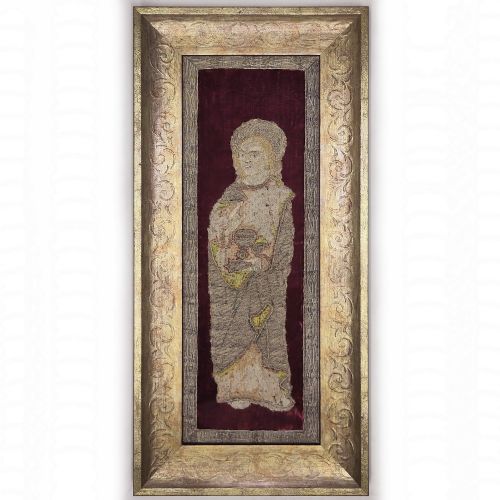
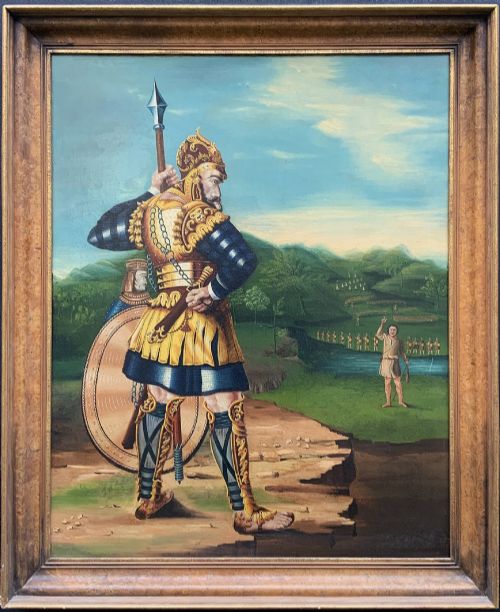
Wall art sits alongside three-dimensional forms, featuring biblical oil paintings, classical engravings and embroidered orphrey panels. Pieces scale from small devotional shadow boxes to large statues and panels.
Materials and Technique
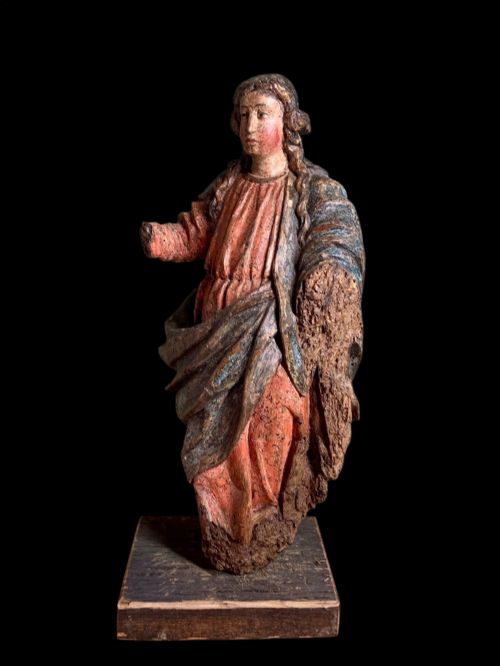
Carved wood provides the primary medium for statues, utilising olive wood, limewood, oak and walnut shaped by hand. Many wooden figures receive a layer of gesso before painters apply polychrome pigments and gold leaf.
Oil paintings employ canvas and panel supports, often set within carved giltwood frames. Metal works utilise cast bronze for devotional figures, while textile pieces incorporate detailed embroidery on panels.
Religious Figure Art Retail Price Guide 2026
Typical asking prices for religious figure art among the pieces listed under this phrase on Sellingantiques today, from the lower quarter to the upper quarter. They describe what is for sale here now, not the wider market.
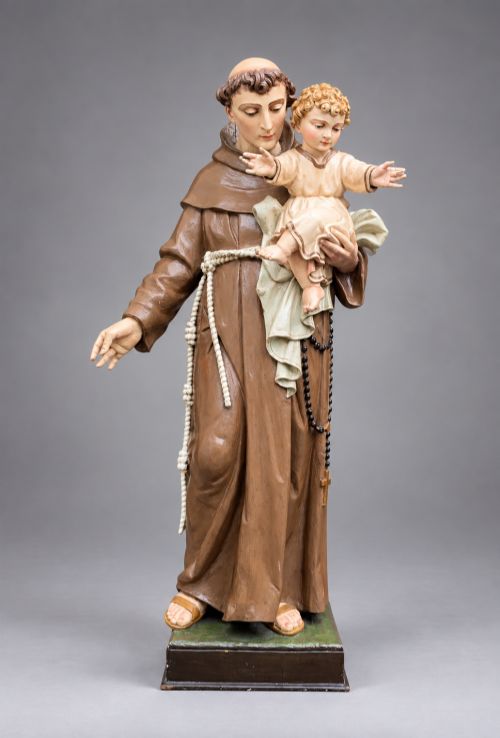
One nineteenth-century figure depicts Saint Anthony accompanied by a child, holding a small book.
Evaluating Quality
Quality rests in the sculptural depth of the carving and the preservation of original polychrome paint and gilding. Pieces retain distinction when the facial expressions and drapery folds display skilled handwork rather than rigid mass production.
The integrity of the surface finish determines much of the visual impact, distinguishing between untouched historical patination and heavy later overpainting. Age-related wear on wood and canvas remains acceptable when the underlying artistry stays intact.
Franz Keller·Siegfried Bendixen·Raphael·George Kemper·F R Roffe
The Religious Figure Art Glossary
- Polychrome
- Decorated in several colours. This technique appears frequently on carved wooden statues and saints.
- Corpus Christi
- The body of Jesus on the cross. These wooden figures date from the seventeenth and eighteenth centuries.
- Orphrey
- An embroidered band or panel on ecclesiastical vestments. Surviving figures often appear isolated from larger panels.
- Gesso
- A plaster mixture applied to wood as a base for paint and gold leaf. It creates a smooth surface for gilding.
- Giltwood
- Wood carved and then covered with gold leaf. Frames and figures utilise this method for a reflective finish.
Religious Figure Art: Frequently Asked Questions
How do I clean an old wooden statue?
Dust surfaces gently with a dry, soft brush to protect fragile polychrome paint and gesso layers. Avoid water, harsh chemical cleaners and modern polishes that can strip historical finishes from the wood.
Keep pieces away from direct sunlight and radiators to prevent the wood from drying, cracking or warping over time.
Where were santos figures displayed?
Santos figures served as focal points for private prayer within domestic shrines, small chapels and local churches. Processional figures also participated in outdoor religious festivals and feast days.
Today, collectors place these pieces on mantelpieces, consoles or inside glass cabinets as sculptural art.
What is a devotional shadow box?
Devotional shadow boxes house small religious figures, relics or Nevers glass elements behind protective glass frames. They functioned as portable shrines for personal prayer and contemplation in European homes.
The enclosed design helped protect delicate materials like wax and glass figurines from dust and physical damage.
How are wooden and bronze figures dated?
Dating relies on stylistic clues, tool marks left by the carver, and the natural ageing of materials like oak, limewood and bronze. The type of gesso and pigment used in polychrome finishes also offers period indicators.
Comparative analysis with documented regional workshops helps narrow down the century of origin.