

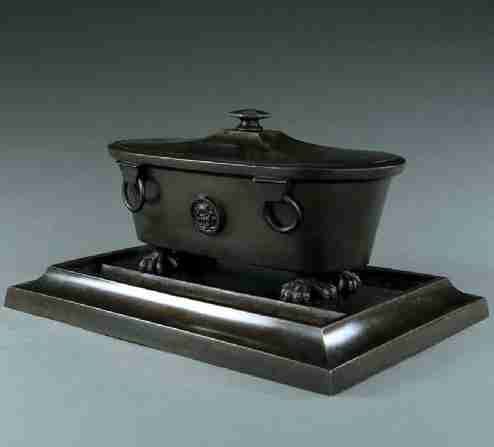
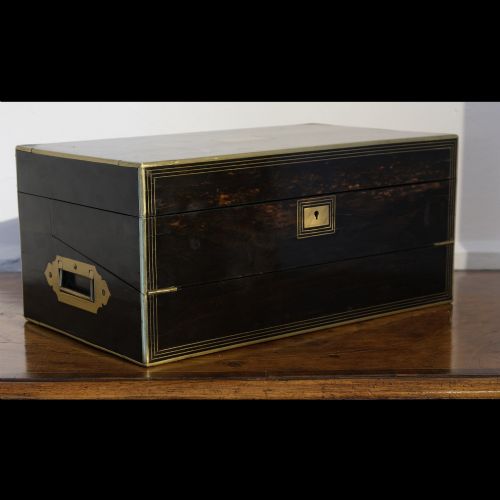


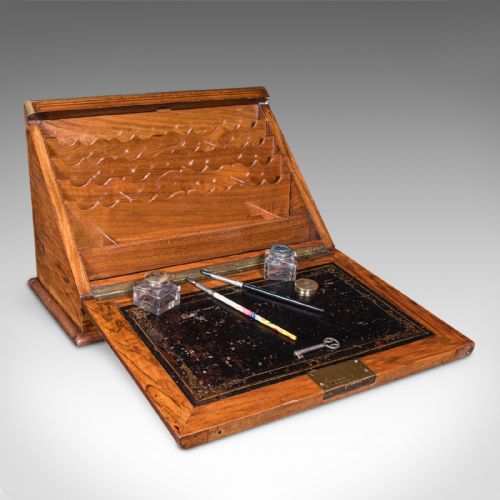
Regency Writing Slope Desk
These pieces of regency writing slope desk hardware combine portable practicality with fine cabinet-making.
Regency Writing Slope Desk
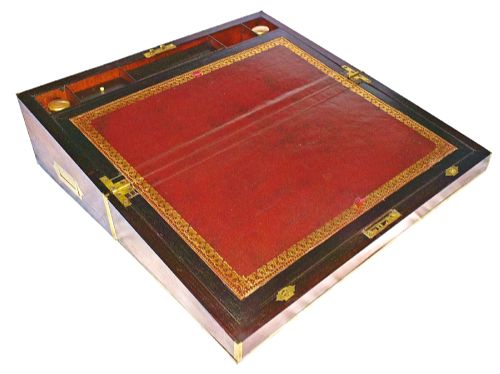
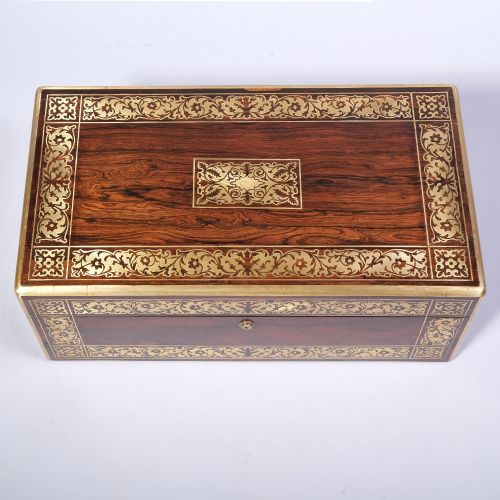
A regency writing slope desk is a portable or compact box designed for correspondence, documents, and travel use. The form folds open to reveal an angled surface for writing and fitted compartments for ink and paper.
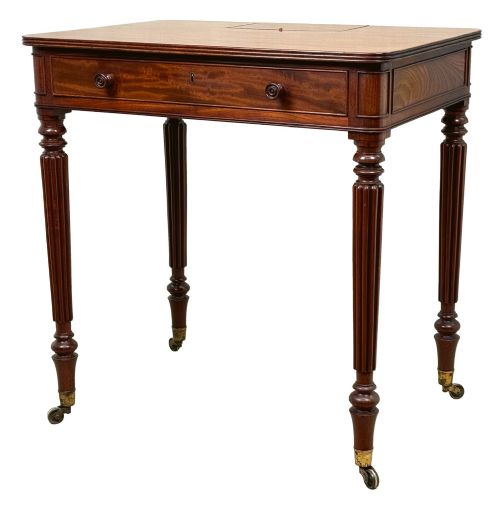
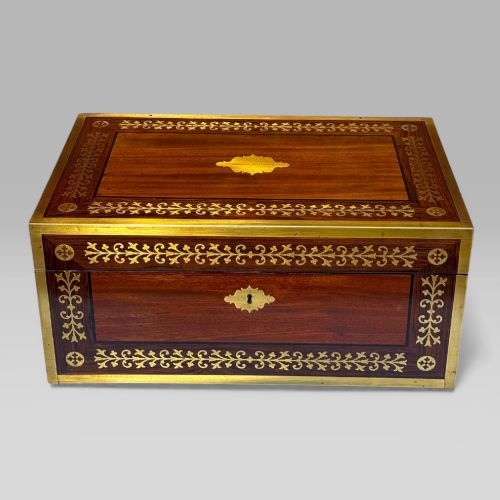
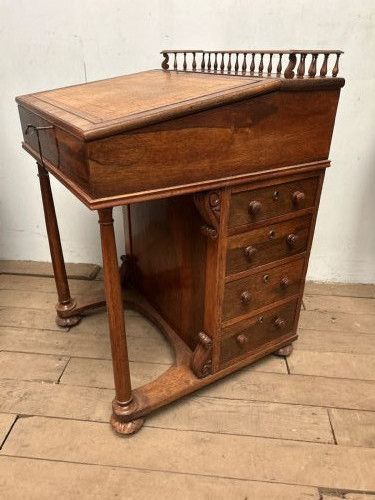
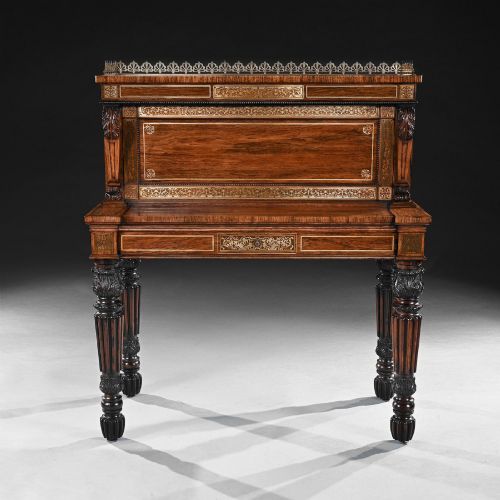
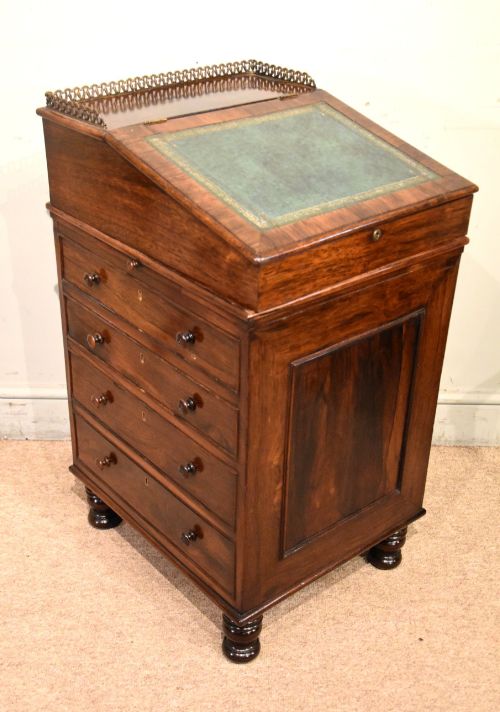
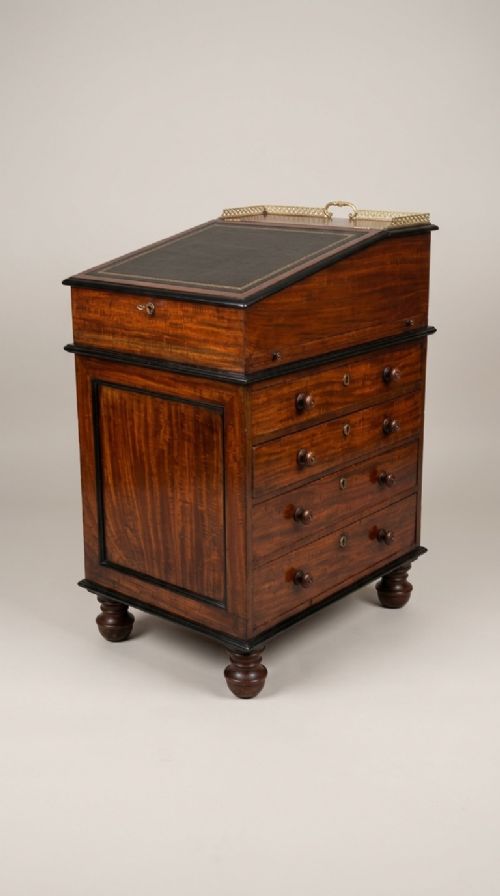
The version most often met on this page is the rosewood or mahogany slope, frequently inlaid with brass or built as a Davenport. These items span periods from the Georgian era through the Regency and William IV years into the Victorian period.
Materials and construction
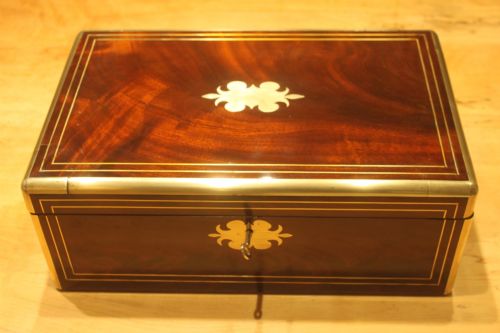
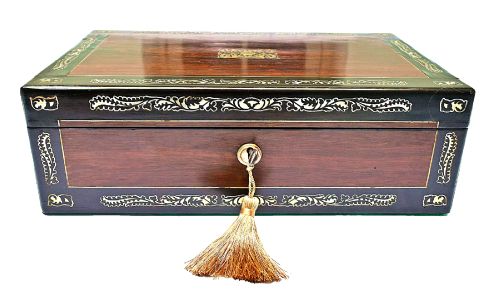
Cabinet-makers built these boxes using dense timbers such as rosewood, mahogany, walnut, and coromandel, occasionally incorporating burr elm or satinwood. Brass binding, brass inlay, and mother of pearl decorated the exteriors to provide resilience during travel.
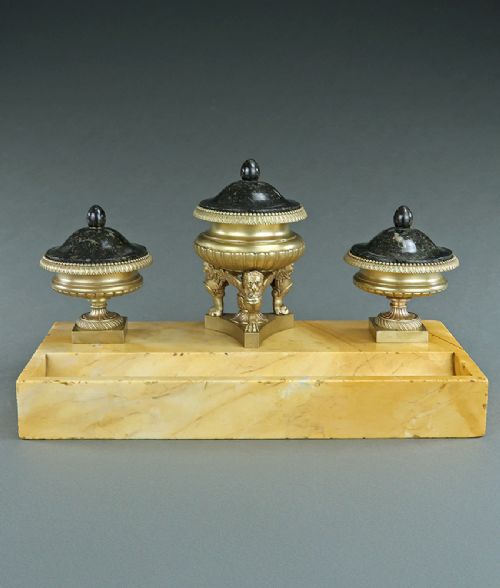
Interiors contained secret drawers, leather writing surfaces, and glass inkwells with ormolu mounts. Joinery relied on precise box construction designed to withstand transit while housing stationary securely.
Regency Writing Slope Desk Retail Price Guide 2026
Typical asking prices for regency writing slope desk among the pieces listed under this phrase on Sellingantiques today, from the lower quarter to the upper quarter. They describe what is for sale here now, not the wider market.
Materials recorded across these items include rosewood, mahogany, walnut, coromandel, amboyna, brass, leather, glass, and mother of pearl.
What separates the finest examples
The standard of a regency writing slope desk depends on the integration of its brass inlay, the selection of figured timber grain, and the complexity of its internal mechanics. Finer items exhibit precise cabinet work in secret drawers and sliding components.
Attribution to known workshops elevates an example, as seen in pieces linked to Gillows of Lancaster or George Austin of Dublin. The completeness of fitted interiors, original glass inkwells, and undamaged leather writing surfaces further distinguishes superior work.
Gillows Oxford Street Workshop·Gillows of Lancaster·Gillow Lancaster·George Austin Dublin
The Regency Writing Slope Desk Glossary
- Writing slope
- A portable box with an angled lid that opens to form a desk surface for correspondence. These items often include internal compartments for pens and ink.
- Davenport
- A compact desk featuring a sloped writing top above a pedestal of drawers. Versions from the Regency and William IV periods often incorporate sliding tops.
- Campaign
- A style of furniture designed for travel and military use, typically featuring brass corners and flush handles for protection. These items are built for portability.
- Coromandel
- A dense, heavily figured tropical hardwood prized for its rich brown colour and dark streaks. Cabinet-makers used it for high-status boxes during the nineteenth century.
- Ormolu
- Gilded bronze used for decorative mounts and inkwells. This material added metallic contrast to marble and timber bases.
Regency Writing Slope Desk: Frequently Asked Questions
How were regency writing slope desks used?
These boxes provided a portable writing surface for travellers, soldiers, and homeowners who needed to manage correspondence away from a full-sized library desk. The internal compartments kept paper, pens, and liquid ink secure during transit.
When opened, the hinged lid created a slanted writing plane lined with leather. Documents and valuables often remained hidden behind secret drawer mechanisms within the box.
What is the difference between a slope and a Davenport?
A writing slope is typically a portable box placed upon a table or carried on journeys, folding open into an inclined writing surface. It focuses on compact document storage and travel.
A Davenport is a stationary piece of furniture combining a sloped desk top with a fixed pedestal of drawers underneath. Regency examples frequently incorporate sliding writing surfaces and side compartments.
How do I identify a Regency period piece?
Regency items date from the early nineteenth century and often feature classical proportions alongside rosewood or mahogany timbers. Characteristic details include foliate cut brass inlay and campaign brass banding.
Maker attributions and construction techniques from workshops like Gillows help confirm the period. Secondary woods and traditional joinery further establish the nineteenth-century date of manufacture.
Where should I place a writing slope in my home?
These boxes sit well on side tables, chest tops, or dedicated stands where their timber grains and brass inlays remain visible. Closed boxes function as decorative objects while concealing modern items inside.
Opened slopes require a stable surface with adequate depth to support the fold-out writing lid. Positioning them away from direct heat sources protects the rosewood or mahogany veneer from drying out.