


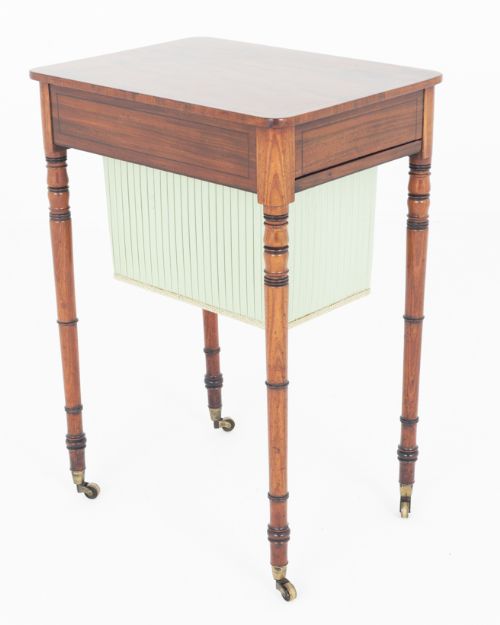


Regency Work Table with Basket
A regency work table with basket offers clever hidden storage and fine timber surfaces, making it a practical centrepiece for any drawing room.
Regency Work Table with Basket
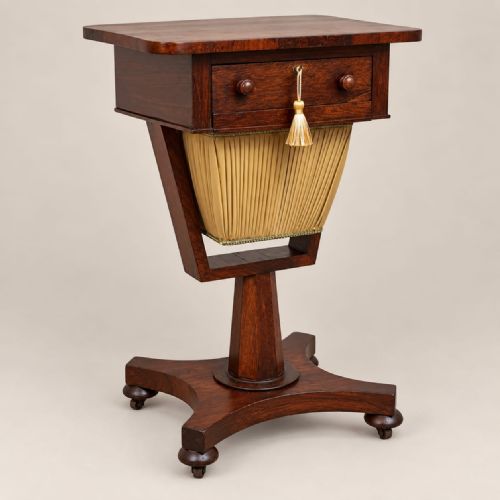
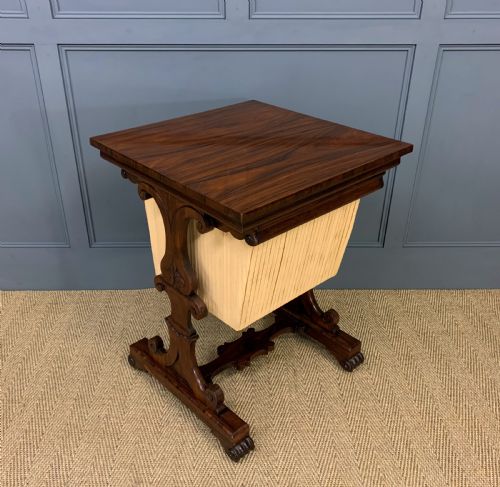
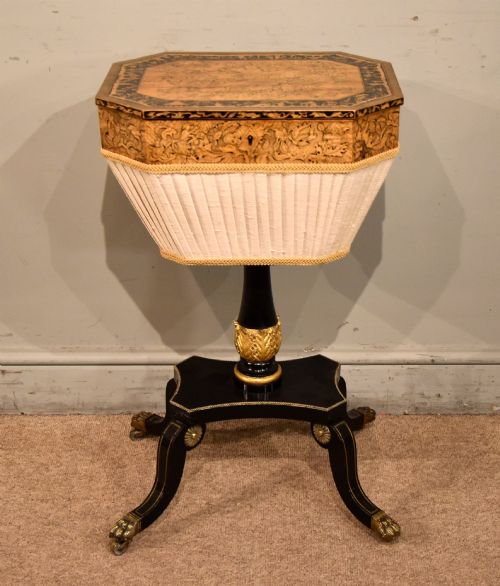
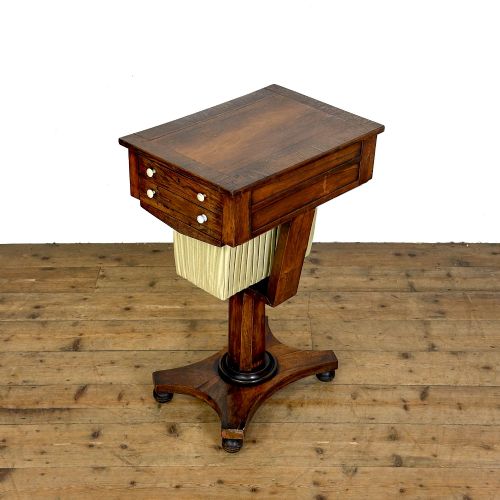
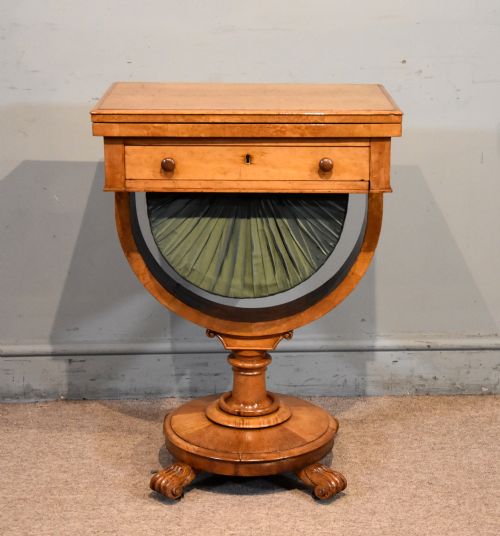
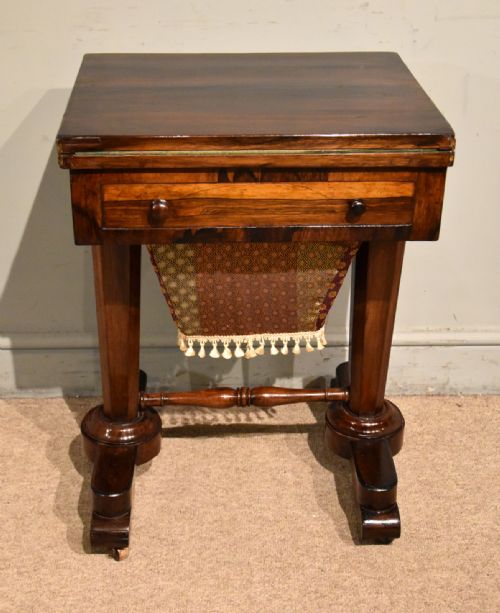
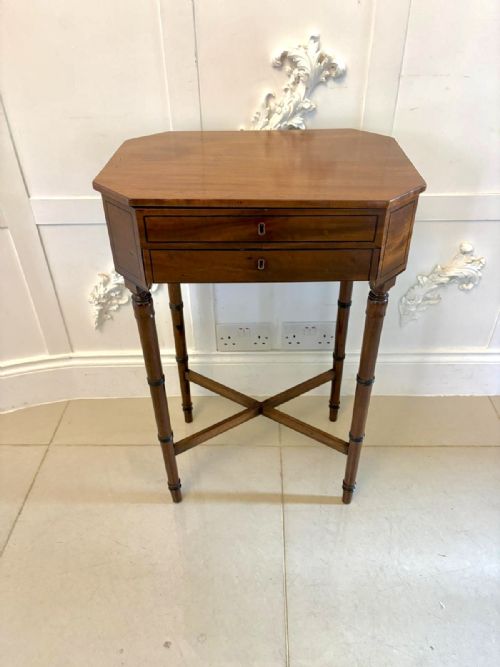
When you search for a regency work table with basket, you encounter versatile multi-purpose furniture designed for domestic needlework and small pastimes. These pieces typically date from the Georgian, Regency, and William IV periods, appearing in forms that double as occasional, side, or lamp tables.
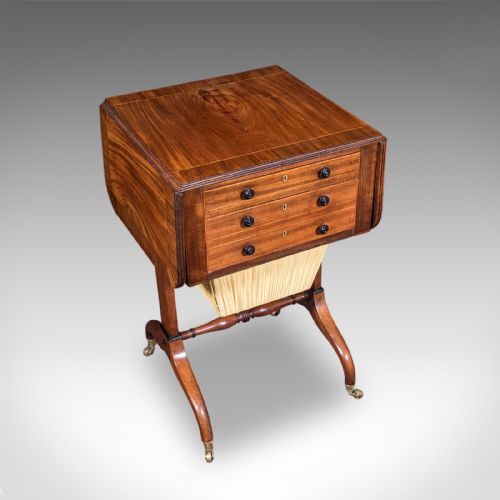
The version most commonly met on this page combines a rich mahogany or rosewood structure with an underslung fabric receptacle. Certain examples incorporate fold-over tops for games, merging utility with refined cabinet-making.
How they were made
Cabinet-makers relied on dense, richly grained timbers such as mahogany and rosewood to construct the main frames and tops. Inlaid details and turned columns demonstrate the decorative ambition of nineteenth-century workshops.
Fabric and baize feature prominently in the linings and sewing bags, often paired with delicate bone or brass fittings. Drop-leaf actions and clever folding mechanisms show precise mechanical carpentry beneath the polished surfaces.
Many a Victorian needlewoman relied on these suspended fabric baskets to hide a tangle of yarn from polite company.
What varies in quality
The distinction between ordinary and exceptional work tables rests on the selection of timber and the crispness of the carving. Finely figured rosewood and subtle string inlay elevate a piece far above plain mahogany constructions.
Construction methods also dictate quality, particularly the smoothness of the drop-leaf joints and the integrity of the integrated sewing basket frame. Original brass hardware and well-preserved internal compartments preserve the structural harmony of the piece.
The Regency Work Table with Basket Glossary
- Work table
- A small domestic table fitted with drawers or a fabric bag for holding sewing equipment and needlework. These items became essential in nineteenth-century drawing rooms.
- Drop leaf
- A hinged flap on the side of a table that folds down to save space or lifts up to extend the surface area. It rests on a swing bracket or gateleg support.
- Rosewood
- A heavy, dark timber with distinct reddish-brown grain patterns, frequently utilised for high-status Regency and William IV furniture. Its polished finish yields a deep lustre.
- Baize
- A coarse woollen fabric resembling felt, commonly used to line the interiors of gaming and work tables. It provides a soft, durable surface for cards and sewing.
- Occasional table
- A small, movable table designed for a specific, temporary use within a room. They appear in various forms throughout the Georgian and Victorian eras.
Regency Work Table with Basket: Frequently Asked Questions
What is a work table with basket used for?
These tables were originally designed to hold sewing gear, threads, and unfinished needlework inside a suspended fabric pouch.
Today, they function brilliantly as compact side tables, bedside surfaces, or lamp stands in modern living spaces.
How do I tell Regency and William IV pieces apart?
Regency pieces generally display delicate classical proportions, restrained brass mounts, and slender turned legs inspired by antiquity.
William IV furniture tends to be heavier, featuring bolder carved scrolling, robust pedestals, and darker rosewood veneers.
Are all these tables fitted with games boards?
Not every table includes gaming facilities, but many combine sewing compartments with fold-over tops configured for chess or card playing.
Those intended purely for work focus entirely on drawers and the underslung fabric bag rather than dual-purpose tops.
What woods were commonly used for these tables?
Cabinet-makers predominantly used solid mahogany and rosewood, often enhanced with lighter string inlay or polished brass details.
Internal elements frequently incorporate softer secondary timbers alongside bone handles and fabric linings.