
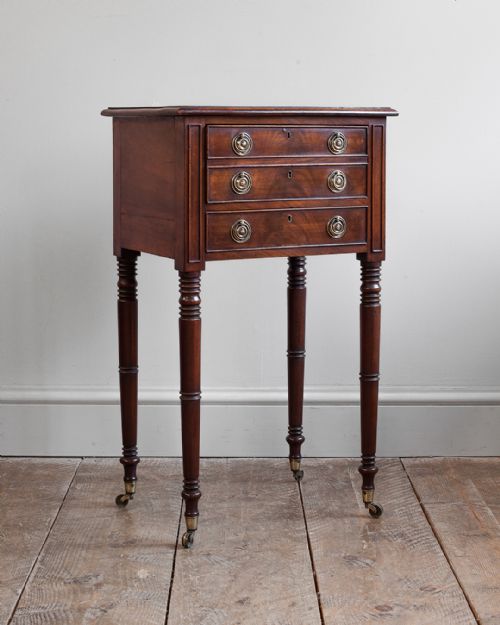

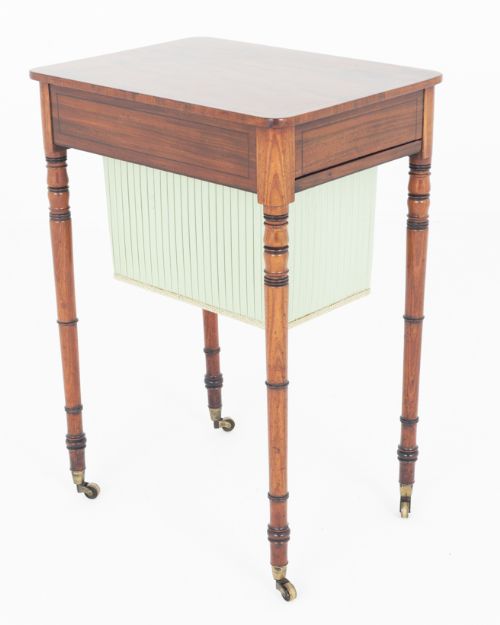


Regency Work Box Table
A regency work box table is a purposeful small piece designed for ladies' needlework and writing.
Regency Work Box Table
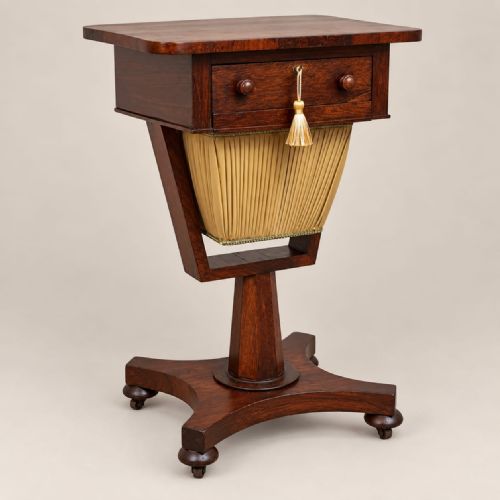
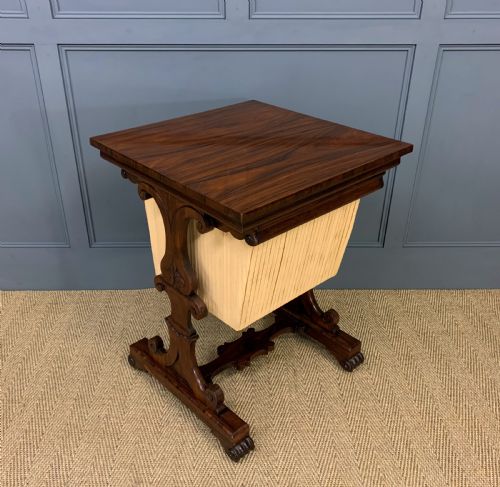
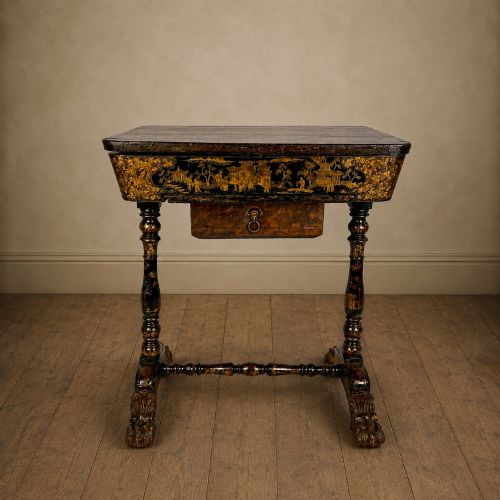
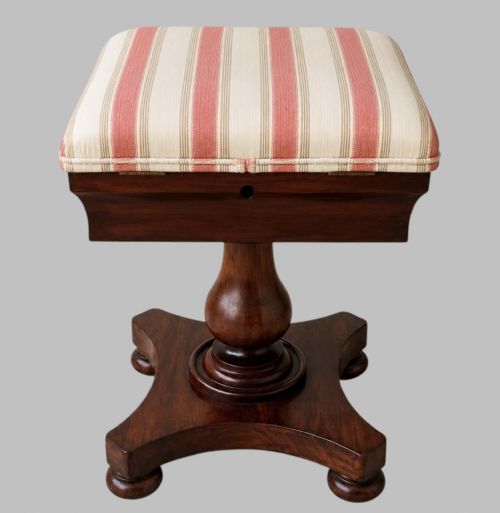
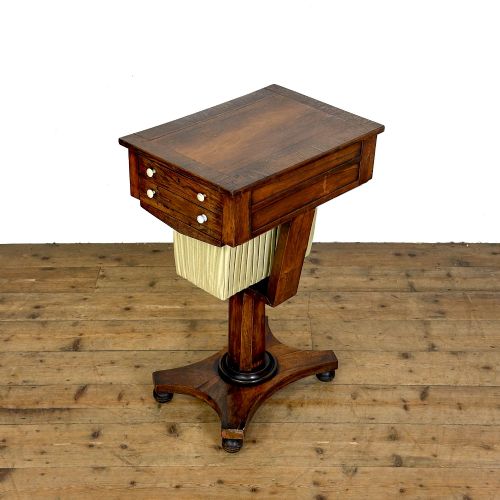
A regency work box table combines a small storage chest with a table stand, intended for sewing, writing and keeping personal items. The form appears primarily across the nineteenth century, with strong representation from the Regency period, William IV and Georgian eras.
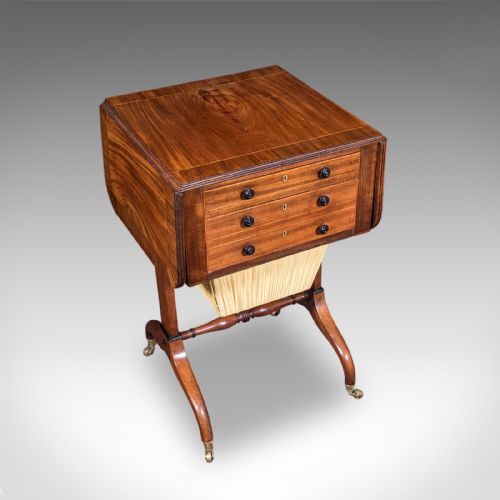
You will encounter mahogany and rosewood most frequently on this page, alongside flame mahogany, burr ash and lacquer. Many examples incorporate fitted interiors, drop leaves or sliding bags for fabric, serving both practical and decorative domestic functions.
What varies in quality
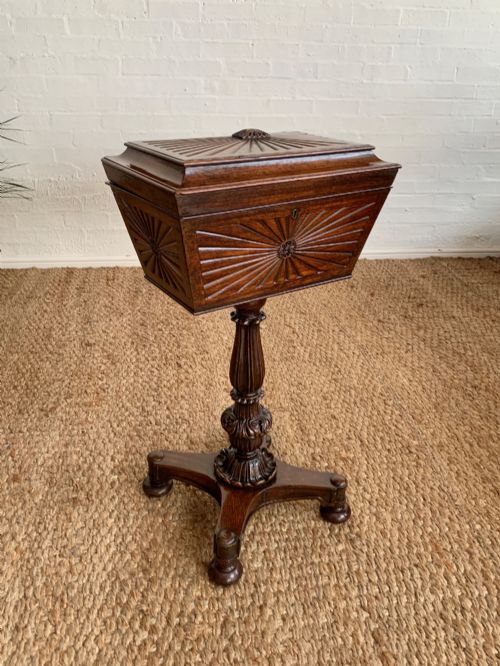
The choice of timber grain dictates much of the visual merit, with figured mahogany, flame mahogany and rosewood marking the higher tier of production. Finer examples display precise inlay work, well-executed carving such as sunburst motifs, and intact internal compartments with original fittings.
Construction rigidity and the proportional balance between the upper box and the supporting stand distinguish standard utility pieces from finer cabinet work.
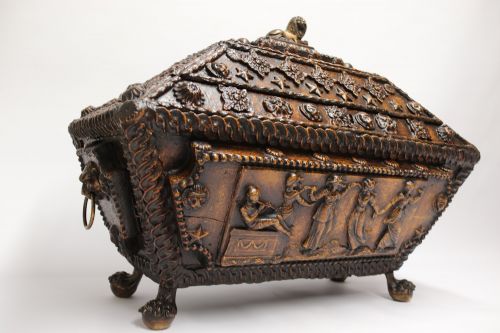
Object forms span sewing tables, occasional tables, tortoiseshell boxes and penwork jewellery caskets.
The Regency Work Box Table Glossary
- Work box table
- A small portable or freestanding chest mounted on a table stand, designed for sewing and needlework.
- Drop leaf
- A hinged table leaf that folds down at the side to reduce the overall footprint when not in use.
- Lyre-ended
- A table support shaped in the stylized form of a musical lyre, common in nineteenth-century furniture.
- Caddy top
- A hinged lid construction resembling a tea caddy, frequently found on enclosed storage boxes.
- Chinese Export
- Items manufactured in China for Western markets, often finished in black and gilt lacquer.
Regency Work Box Table: Frequently Asked Questions
What is a regency work box table used for?
These pieces served as dedicated stations for ladies to carry out needlework, embroidery, and correspondence in the parlour. The internal compartments kept threads, needles, and writing tools organised.
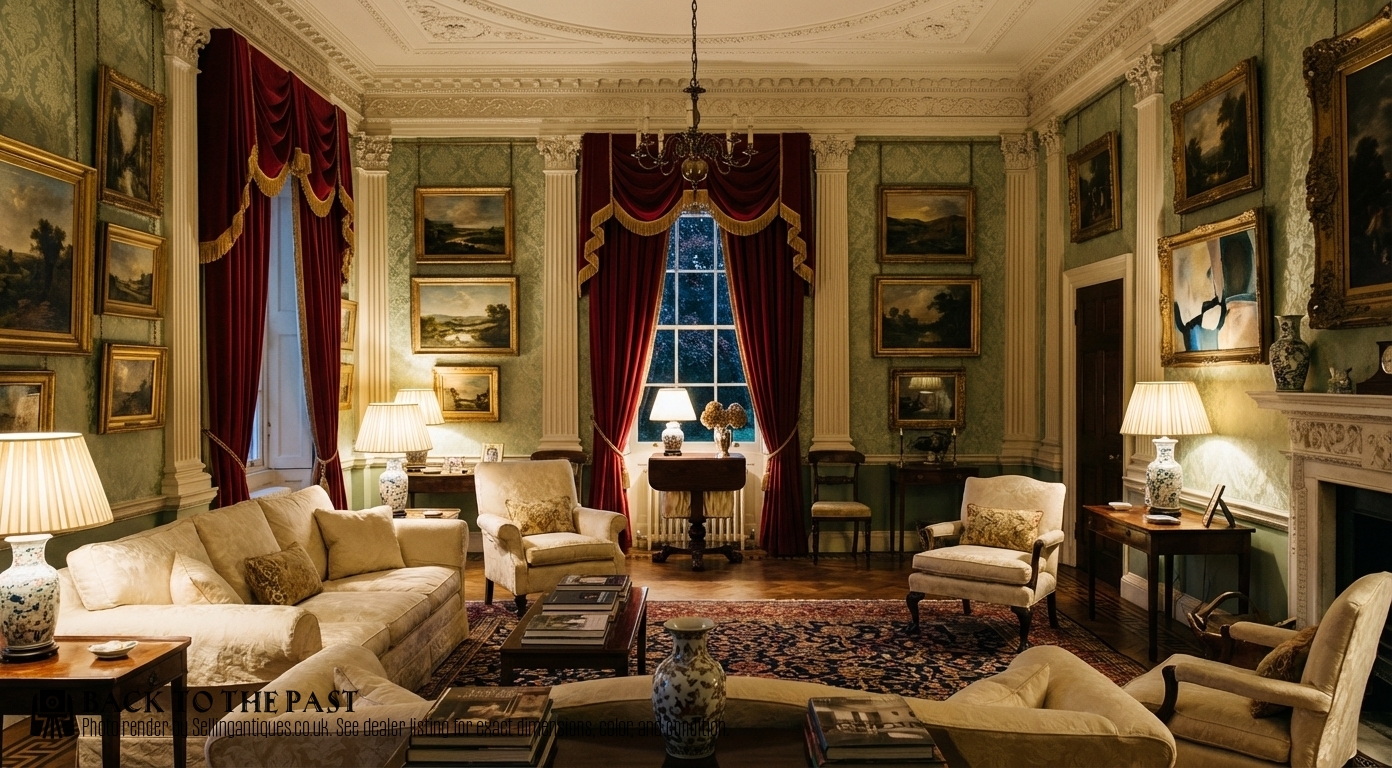
Today, they function well as compact side tables or lamp stands in sitting rooms, offering discreet storage within a small footprint.
How do I tell a Regency piece from a Victorian one?
Regency pieces often display crisper classical restraint, light wood inlay, and cleaner architectural lines influenced by the early nineteenth century. Rosewood and mahogany were heavily utilised during this period.
Victorian examples frequently present heavier proportions, denser carving, and darker finishes, though stylistic overlaps occurred during transition periods like William IV.
Are the fabric bags original?
The hanging fabric bags intended to catch sewing scraps are frequently modern replacements, as silk and fabric perish over long periods of use. Surviving original textiles are uncommon.
When replacement fabric matches the period aesthetic, it maintains the functional appearance of the piece without altering its structural integrity.
Can these tables be used for writing?
Certain examples feature fold-over tops or fitted desk interiors with baize-lined surfaces intended for correspondence. They bridge the gap between a sewing stand and a small desk.
Checking the interior configuration reveals whether a specific piece was built primarily for needlework, games, or writing.