
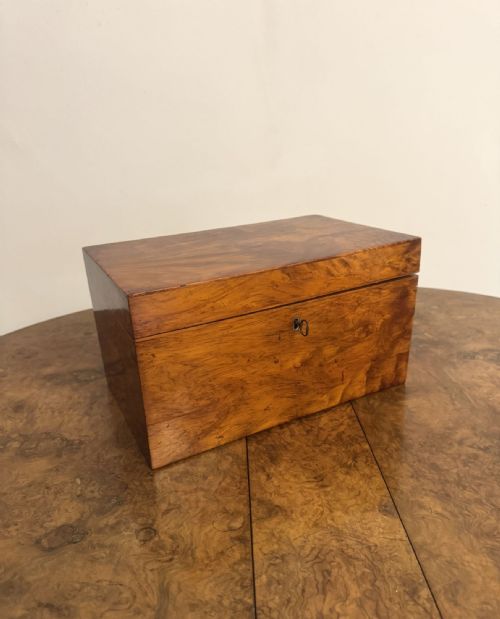


Regency Wooden Tea Caddy
A regency wooden tea caddy is a compact box designed to store precious tea leaves, prized for its refined cabinetwork and decorative veneers.
Regency Wooden Tea Caddy
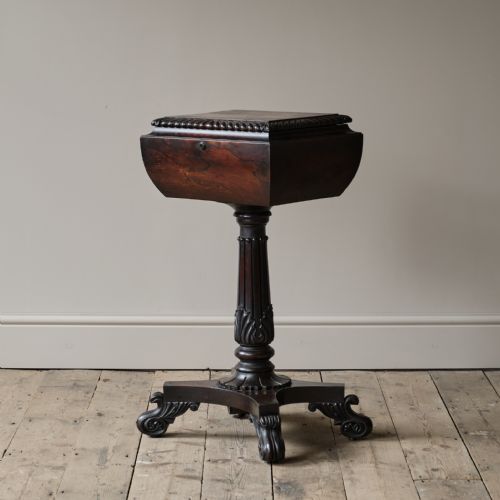
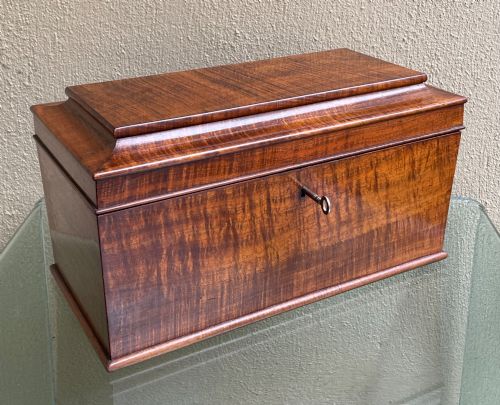
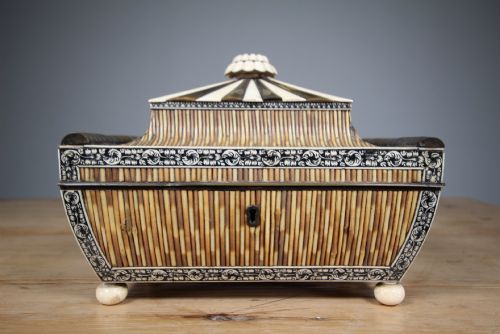
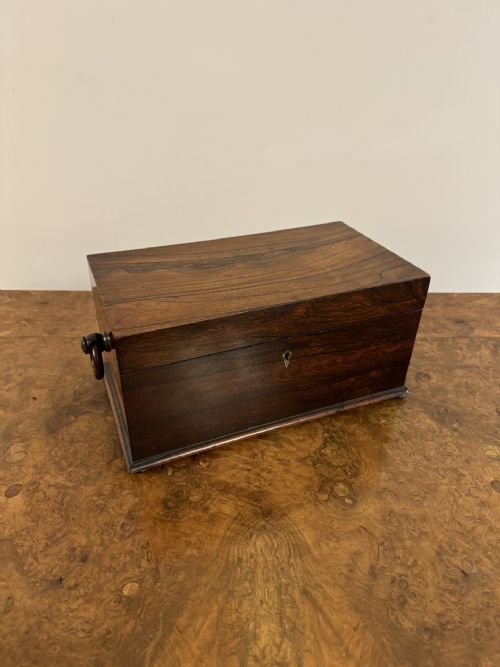
A regency wooden tea caddy is a container built during the late Georgian and Regency periods to keep high-value leaf tea secure and dry. These pieces appear in forms such as simple rectangular boxes, sarcophagus shapes on bracket feet, and pedestal teapoys.
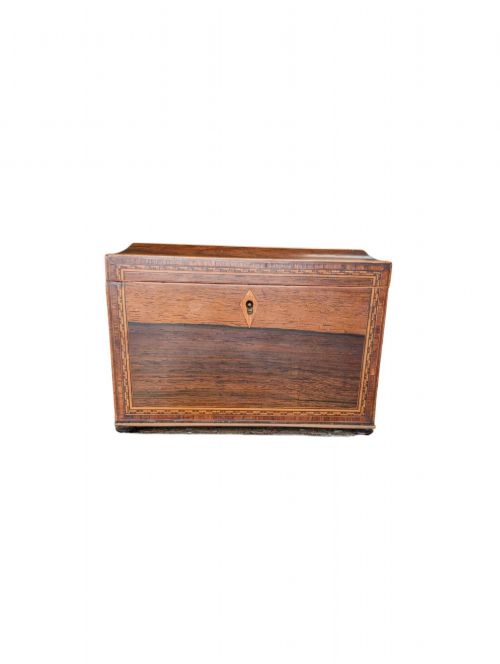
The materials span native and exotic timbers, including mahogany, rosewood, satinwood, and yew, often augmented with contrasting stringing. Mahogany and rosewood examples dominate the selection, frequently displaying rich grain patterns like flame figures or burr growths.
Beyond standard double-compartment tea boxes, the selection includes related storage forms such as needlework boxes, quill boxes, and miniature sideboards. These items reflect the domestic rituals of the nineteenth century, when dry leaf was stored under lock and key.
Assessing Craftsmanship and Materials
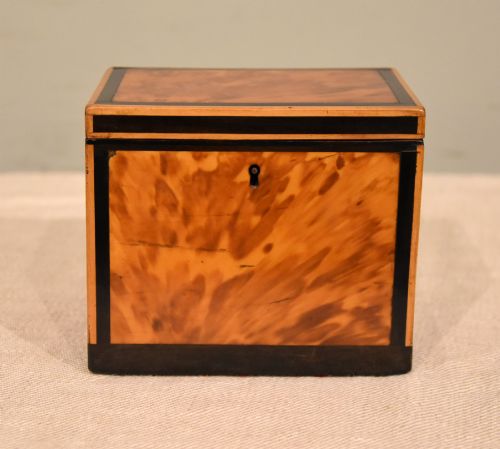
Quality rests upon the selection of timber veneers and the precision of the cabinet joints. Highly figured grains, such as burr yew, amboyna, or tortoiseshell, indicate higher status pieces intended for prominent display in the drawing room.
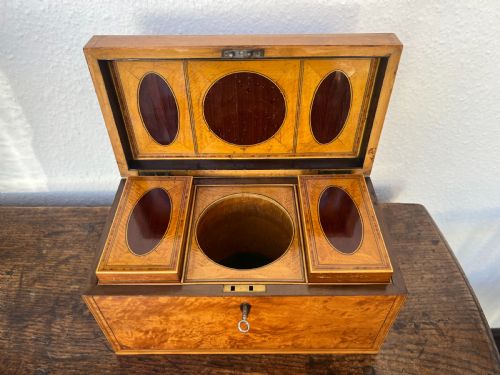
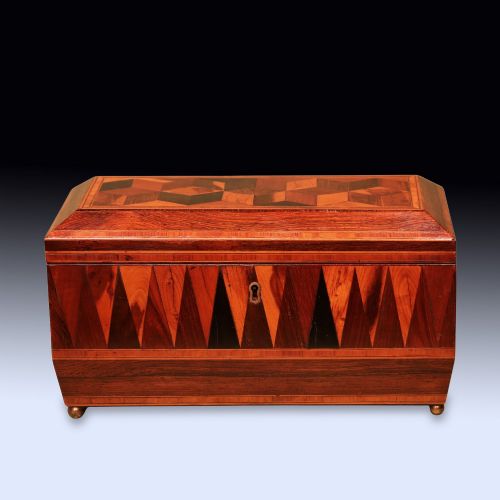
The complexity of the decorative scheme separates standard boxes from exceptional examples. Fine brass inlay, intricate Tunbridge Ware mosaics, and intact interior fittings including original glass mixing bowls elevate the standing of a piece.
Listings feature woods including mahogany, rosewood, satinwood, ebony, amboyna, and burr yew across the Regency and Victorian periods.
The Regency Wooden Tea Caddy Glossary
- Sarcophagus form
- A box shape featuring a domed or steep-sided lid tapering down to a rectangular base, often resting on bun feet. This architectural silhouette mimics ancient burial monuments popular in Regency design.
- Teapoy
- A freestanding piece of furniture comprising a tea caddy mounted on a central pillar with tripod legs or a cabinet base. These larger pieces served the same function as tabletop caddies.
- Stringing
- Thin lines of contrasting wood or bone inlaid into the surface of a box to create geometric borders. Cabinetmakers utilised this technique to frame panels of figured mahogany or rosewood.
- Escutcheon
- A small brass plate surrounding the keyhole of a box to protect the surrounding wood from wear. They frequently take decorative shield or diamond shapes.
- Tunbridge Ware
- Small wooden objects decorated with mosaic patterns built from tiny blocks of naturally coloured woods. This specialised craft produced intricate geometric and floral scenes.
Regency Wooden Tea Caddy: Frequently Asked Questions
What is a regency wooden tea caddy used for?
These boxes stored precious black and green teas securely when tea was an expensive commodity. They kept leaves dry and protected from light in divided internal compartments.
Many examples included a central glass bowl used for blending different teas before brewing. Today, they serve as decorative storage for jewellery, trinkets, or small collections.
What woods were used to make these tea caddies?
Cabinetmakers employed native timbers like mahogany, walnut, and satinwood alongside imported luxury woods. Rosewood, coromandel, and amboyna provided rich, dark surfaces with striking natural grain patterns.
Inlays often utilised contrasting light woods such as boxwood and ebony, or materials like bone and tortoiseshell.
Are original interiors usually intact?
Many caddies retain their original fitted interiors, which include lidded compartments for different tea varieties. Some also preserve glass mixing bowls and small ivory or bone tea spoons.
Loss of internal lids or bowls is common due to centuries of use, though surviving original fittings enhance the completeness of the piece.
How should I care for a antique wooden tea caddy?
Keep wooden tea caddies away from direct sunlight and radiators to prevent timber splitting and veneer lifting. Maintaining stable room humidity preserves the old polish and structural stability.
Occasional application of appropriate wax polish helps nourish dry wood surfaces without harming antique patination.