


Georgian Sarcophagus Tea Chest
A georgian sarcophagus tea chest holds precious dry leaves securely in architectural miniature, combining polished timber and secret compartments for the drawing room.
Georgian Sarcophagus Tea Chest
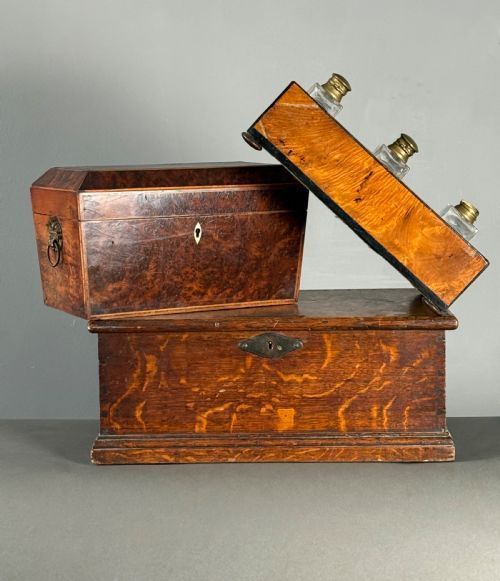
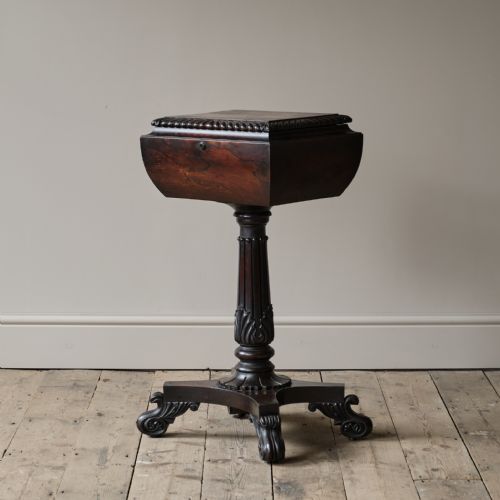
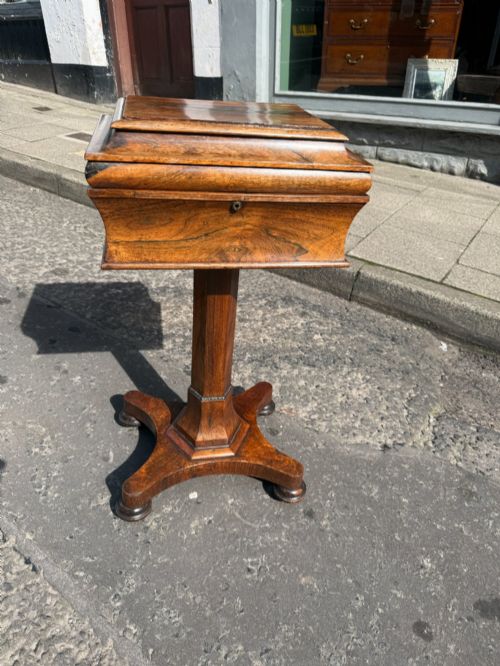
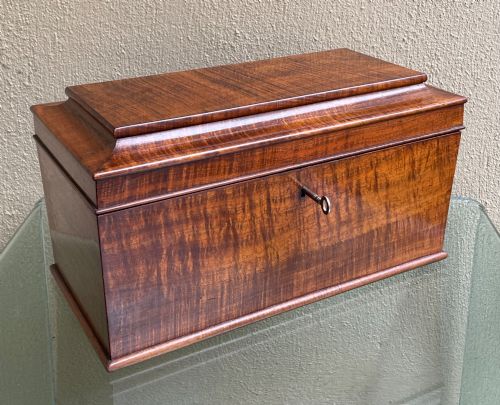
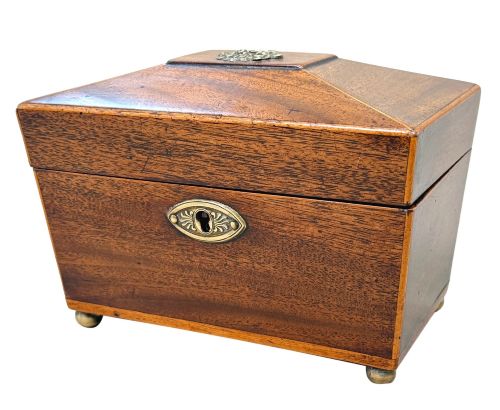
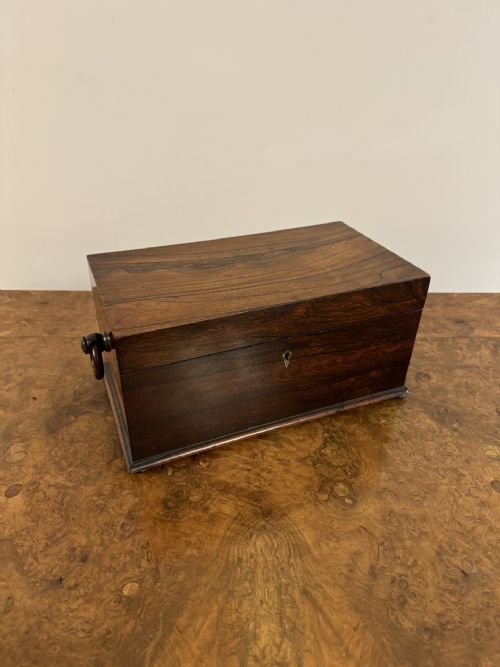
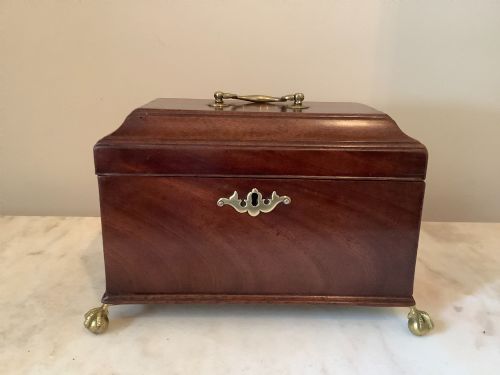
A georgian sarcophagus tea chest is a lidded container shaped like an ancient stone tomb, adapted during the eighteenth and nineteenth centuries to store luxury loose leaves under lock and key. These pieces appear most frequently in rich mahogany or rosewood, constructed in proportions that echo classical monuments scaled down for the parlour or drawing room.
Makers fashioned these lidded boxes to sit upon tea tables or dedicated stands, often incorporating internal divisions for distinct varieties alongside central mixing bowls made of cut glass. Surviving examples span the Georgian, Regency, and Victorian eras, demonstrating how a utilitarian domestic object evolved into a sculptural ornament.
How they were made
Craftsmen built carcass frames from dense tropical hardwoods like mahogany and rosewood, frequently applying burr veneers, satinwood parquetry, or tortoiseshell to create figured exterior surfaces. They embedded contrasting stringing of boxwood and ebony along lid edges and panel borders, adding visual definition to the geometric volumes.
Makers embellished the timber structures with cast brass lion mask handles, paw feet, and escutcheons secured over working brass locks. Interiors often reveal secondary woods, velvet linings, and hidden secret drawers operated by clever internal catches.
Materials appearing across the current selection include brass, bone, mother-of-pearl, tortoiseshell, and cut glass.
What varies in quality
The degree of refinement rests in the selection of timber veneers and the precision of inlaid brass work, where tightly fitted geometric patterns demand high skill. Superior examples demonstrate continuous grain matching across the sarcophagus lid and harmonious proportions in the stepped ogee mouldings.
Internal architecture marks another division between ordinary storage and exceptional design, notably where fitted canisters, bone details, and functioning locking mechanisms remain intact. The presence of specialised decorative techniques such as Chinoiserie penwork or intricate marquetry elevates the piece further.
The Georgian Sarcophagus Tea Chest Glossary
- Sarcophagus form
- A box design featuring a steep, stepped lid and inverted trapezoidal body reminiscent of a classical stone coffin popular during the Regency period.
- Teapoy
- A freestanding tea chest supported on a central pillar with tripod or platform feet, designed to stand beside a chair in the drawing room.
- Escutcheon
- A small protective plate of brass surrounding a keyhole, often shaped as a shield or diamond on these boxes.
- Parquetry
- Geometric mosaic woodwork formed by small pieces of contrasting timber laid down in repeating patterns across the exterior surfaces.
Georgian Sarcophagus Tea Chest: Frequently Asked Questions
What were tea chests used for?
These boxes stored precious black and green tea leaves when dry leaf was an expensive commodity kept under strict household control.
Servants or hosts measured out portions using internal canisters before locking the lid to prevent unauthorized access.
How do I spot a Regency sarcophagus box?
Regency pieces typically display architectural box forms with bold mouldings, brass lion mask ring handles, and dark rosewood surfaces.
They frequently incorporate precise brass inlay and rest upon carved wooden feet rather than standing flat on a base.
What is inside a tea chest?
Interiors normally contain lidded wooden canisters or foil-lined compartments designed to preserve the aroma of different tea leaves.
Many examples also hold a central circular recess intended to accommodate a cut glass mixing bowl.
How should I clean wood surfaces?
Maintain polished timber surfaces by dusting gently with a dry, soft cloth to prevent abrasive particles from scratching the fragile veneers.
Avoid liquid polishes and keep the boxes away from direct sunlight and radiators to protect the antique polish and prevent wood splitting.