



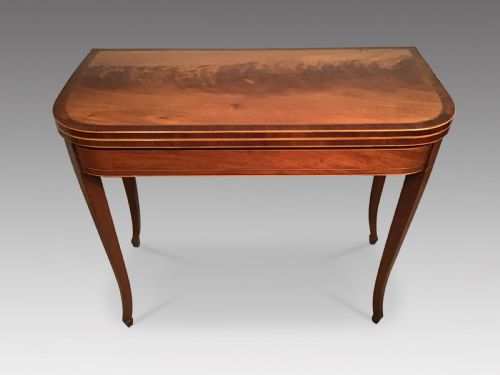
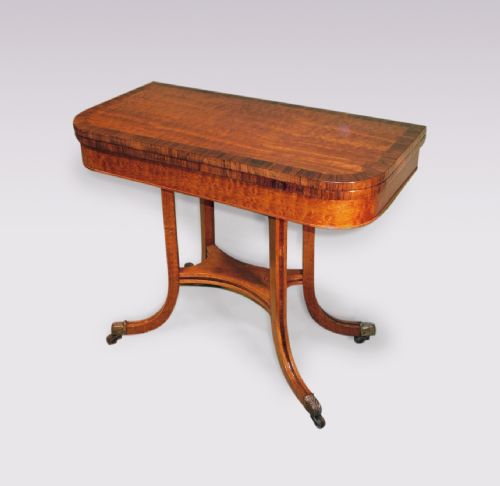
Regency Wooden Games Table
These regency wooden games table pieces are versatile folding items built for cards, chess and backgammon, offering period charm for modern drawing rooms.
Regency Wooden Games Table
A regency wooden games table is a multifunctional item designed for entertainment, often featuring fold-over or turn-over tops that transform a surface into a card or gaming board. The selection spans Georgian, Regency, William IV and 1930 periods, alongside later Regency Revival pieces.
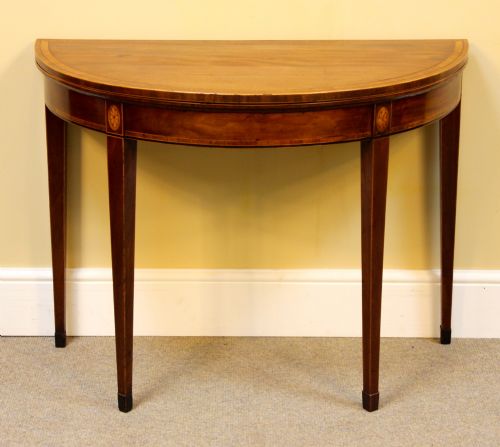
Card tables, tea tables and occasional tables dominate the forms, frequently shaped with 'D' fronts or bow fronts. Buyers are most likely to encounter mahogany and rosewood examples dating from the early nineteenth century.
Makers utilised clever mechanics such as split swivelling tops to reveal chess and backgammon boards hidden beneath the surface. These items served both practical dining or tea purposes and evening social gaming.
How they were made
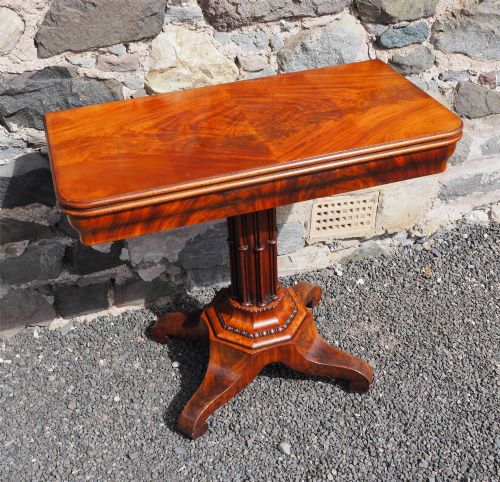
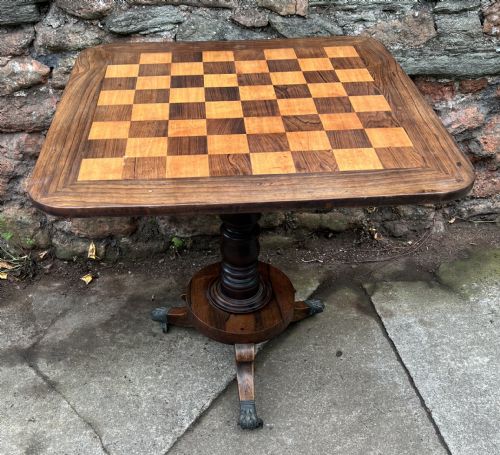
Makers constructed these tables predominantly from solid timbers and veneers, applying flame mahogany and rich rosewood over structural woods like oak. Cabinet makers employed boxwood, satinwood and intricate wood inlay to create contrasting borders and chequered gaming surfaces.
Brass fittings, including castors and hinges, supported the heavy fold-over mechanisms and swivelling tops required for dual-purpose furniture. Carved details appeared on pillar supports and pedestals, adding architectural weight to the designs.
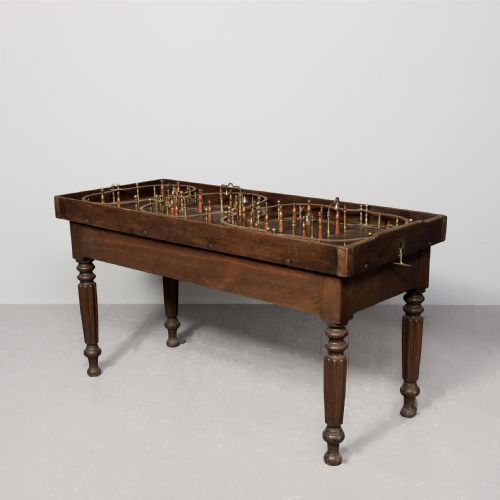
Object forms span card tables, tea tables, sofa tables, side tables, skittles games and a nest of quartetto tables.
What varies in quality
Quality rests in the choice of timber figure, such as the depth of flame mahogany veneer and the crispness of satinwood and boxwood inlay. The precision of the fold-over hinges and the smooth operation of swivelling tops also set finer examples apart.
Design ambition dictates standing, from simple scumbled finishes to attribution to prominent makers like Gillows or William Trotter. The integration of carved woodwork and the cleverness of internal compartments for chess and backgammon pieces define the upper end of the range.
William Trotter·Gillows
The Regency Wooden Games Table Glossary
- Card table
- A folding table designed specifically for card games, featuring a baize-lined interior surface when opened. They often double as tea tables when closed.
- Swivelling top
- A table top that rotates on its base to reveal a hidden compartment or to shift orientation before folding out. This mechanism allows dual usage for dining and gaming.
- Flame mahogany
- A veneer cut from the fork of the mahogany tree, producing a distinctive, fiery flame-like grain pattern. It was favoured by cabinet makers for grand Regency furniture.
- Chequered top
- A surface patterned in alternating light and dark squares, typically utilised for chess or draughts games. Inlays of satinwood and rosewood frequently form these patterns.
- Scumbled
- A painted finish applied to imitate the grain of more expensive wood or to create decorative surface texture. It appears on alternative regional furniture forms.
Regency Wooden Games Table: Frequently Asked Questions
What is a regency wooden games table used for?
These tables served as dual-purpose furniture in nineteenth-century drawing rooms, functioning as console or tea tables when closed and opening up for card games, chess or backgammon.
Their clever fold-over and swivelling mechanisms allowed households to save space while accommodating evening social entertainment and leisure activities.
How do I tell a Regency table from a later revival piece?
Original Regency and Georgian pieces display period construction methods, timber ageing and hand-cut joinery consistent with the early nineteenth century. Later pieces from periods like 1930 often show different secondary woods, machine-made fixings and lighter structural weight.
Stylistic cues also help, as genuine Regency items carry characteristic Grand Regency or William IV proportions and specific brass hardware.
How do I care for a rosewood or mahogany games table?
Keep wooden furniture away from direct sunlight and heat sources to prevent the rosewood or flame mahogany veneers from drying and cracking. Maintain a stable room humidity and dust gently with a dry, soft cloth rather than using harsh commercial polishes.
Protect the fold-over surfaces when in use, especially if playing games with wooden pieces that might scratch the polished top or internal inlay.
Can I use a card table for dining?
Many card and tea tables feature stable folding tops that can support light usage, though their original purpose was social rather than for heavy daily meals. Care must be taken with the hinges and swivelling mechanisms to avoid straining the structural frame.
Using protective mats will safeguard the delicate satinwood, boxwood inlay and polished wood surfaces from heat and moisture rings.