

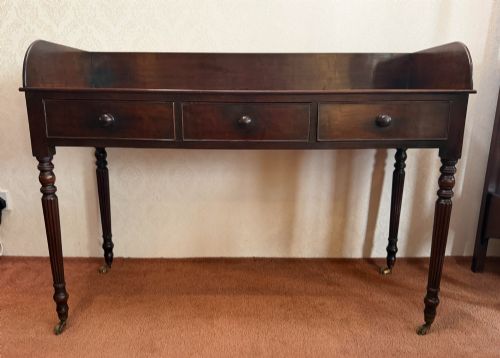
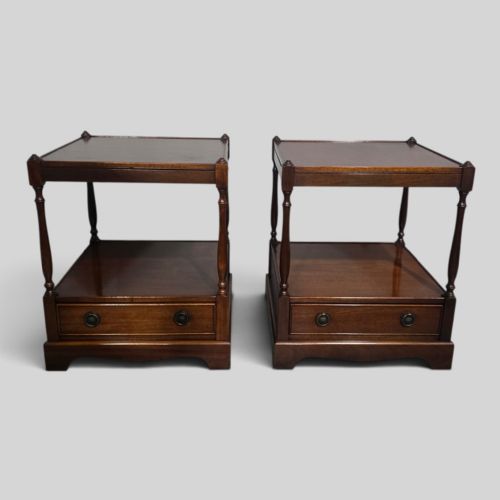
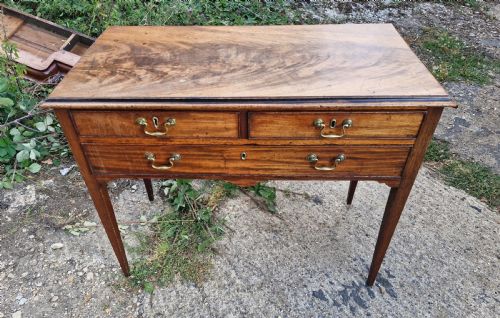

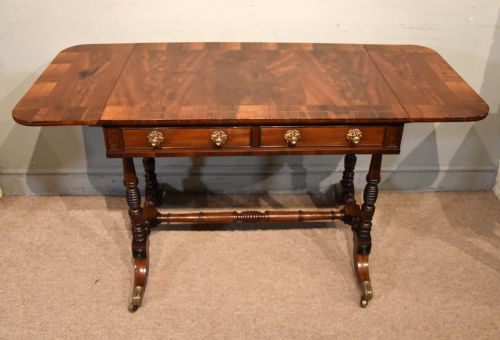
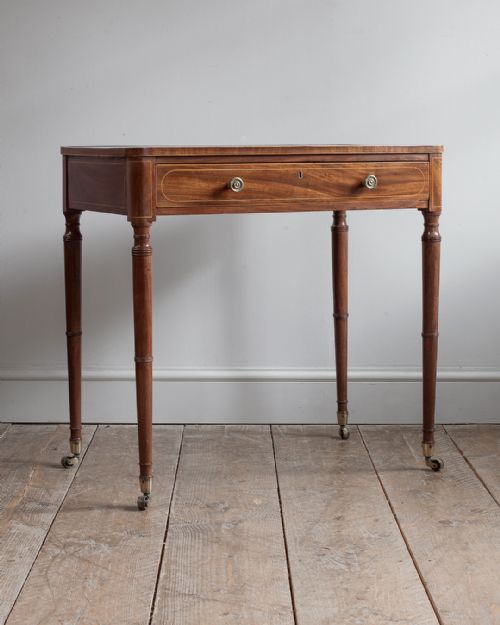
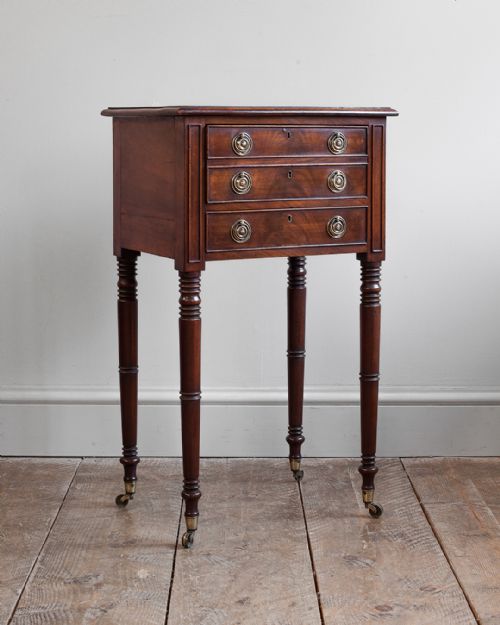
Regency Wooden Drawer Table
These pieces of a regency wooden drawer table are practical surfaces defined by period craftsmanship, offering useful storage and timeless utility.
Regency Wooden Drawer Table
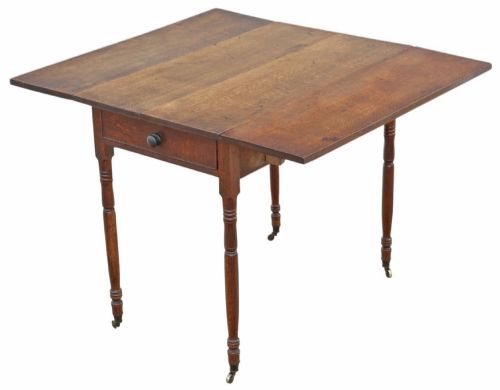
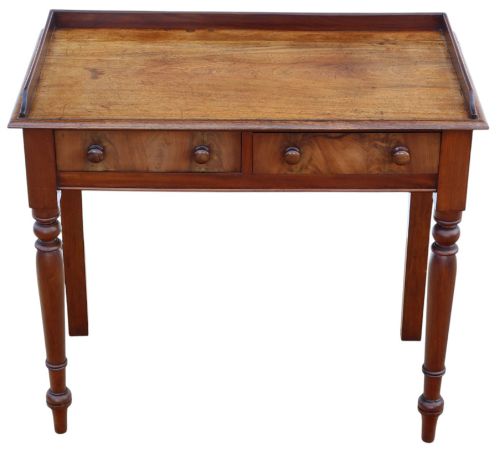
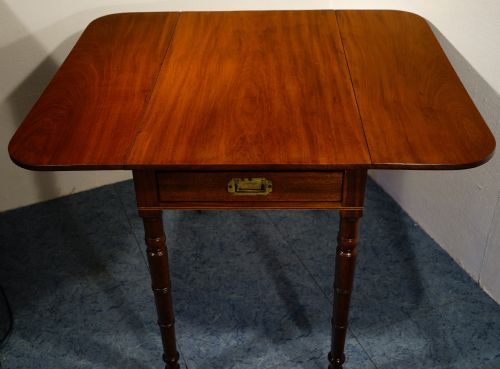
A regency wooden drawer table spans side tables, writing tables, sofa tables, and pembroke tables produced across the nineteenth century, including Georgian, Regency, and William IV periods. These items provide compact surfaces with integrated storage suited for writing, sewing, or general display.
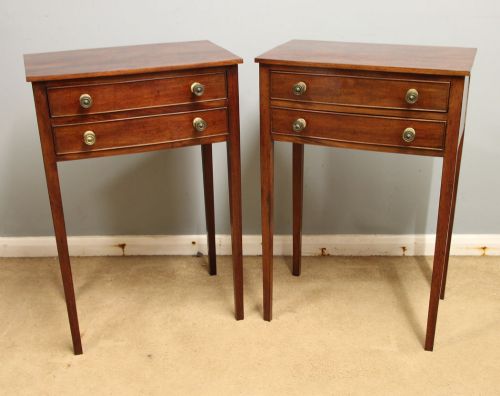
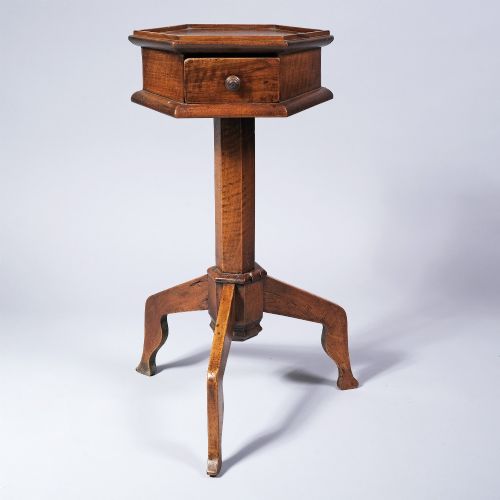
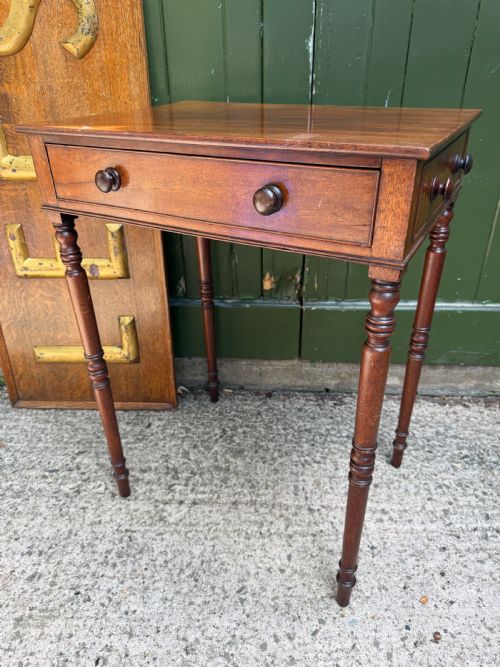
The versions most common on this page are mahogany side tables and lamp tables featuring single or double drawers. Pieces range from small occasional items to larger freestanding library and writing desks.
Materials and construction
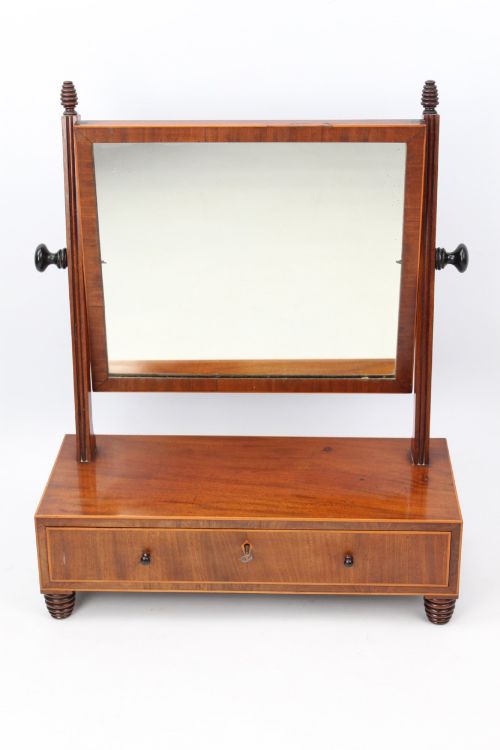
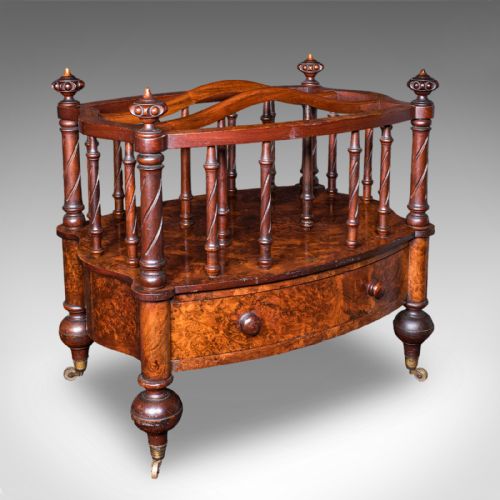
Makers utilised solid timbers and veneers, predominantly mahogany and flame mahogany, alongside occasional oak, fruitwood, boxwood, and burr walnut. Brass fittings and glass elements appear as handles, castors, or mirror components.
Joinery relies on traditional techniques to form drop leaves, fitted drawers, removable sewing baskets, and hand-painted geometric tops where applicable.
Listings feature pieces spanning the 18th century, Georgian, Regency, Victorian, and Edwardian periods, constructed from mahogany, oak, fruitwood, and burr walnut.
Assessing quality
Quality rests in the selection of figured timbers, such as flame mahogany or burr walnut, and the crispness of proportion and freestanding form. Finely-drawn designs with balanced proportions distinguish superior items from simpler utility pieces.
The integration of working drawers, original brass hardware, and careful secondary wood use mark the distinction between standard workshop output and exceptional cabinet work.
The Regency Wooden Drawer Table Glossary
- Pembroke table
- A small table with hinged drop leaves on either side. These tables often include a single drawer and were designed to be easily moved.
- Sofa table
- A rectangular table traditionally placed in front of a sofa. These pieces feature drop leaves and double drawers.
- Work table
- A small table equipped with drawers and storage bags or compartments for sewing materials. They date widely across the Georgian and Regency eras.
- Flame mahogany
- A veneer cut from mahogany showing a distinctive flame-like grain pattern. Cabinet makers selected this for prominent drawer fronts and tabletops.
- Occasional table
- A small, versatile table used for specific tasks or general placement around a room. They appear in numerous wood types across multiple nineteenth-century periods.
Regency Wooden Drawer Table: Frequently Asked Questions
What is a pembroke table?
A pembroke table is a small, drop-leaf table with hinged flaps on opposite sides. It typically includes one or more drawers and sits on four legs.
These pieces were designed for versatility, allowing the leaves to drop when space was needed or rise for serving and writing.
How do I identify a Regency table?
Regency tables date from the early nineteenth century and display classical lines inspired by Greek and Roman forms. Look for mahogany construction, brass accents, and restrained decoration.
Proportions are typically neat and balanced, often featuring pillar supports or saber legs.
Where should I place a side table?
Side tables fit well against walls, beside seating, or in hallways where surface space is required without obstructing movement. Drawer models provide useful storage for small household items.
Freestanding versions look effective positioned where all sides remain visible.
Are these tables suitable for daily use?
These tables served practical domestic roles originally and continue to function as writing surfaces, lamp stands, or bedside tables. Solid timber construction provides durability.
Routine care involves gentle cleaning and avoiding excessive moisture on antique wood surfaces.