


Regency Wooden Dining Chairs
Regency wooden dining chairs bring crisp architectural lines and rich timbers to the dining room, offering both sturdy comfort and enduring style.
Regency Wooden Dining Chairs
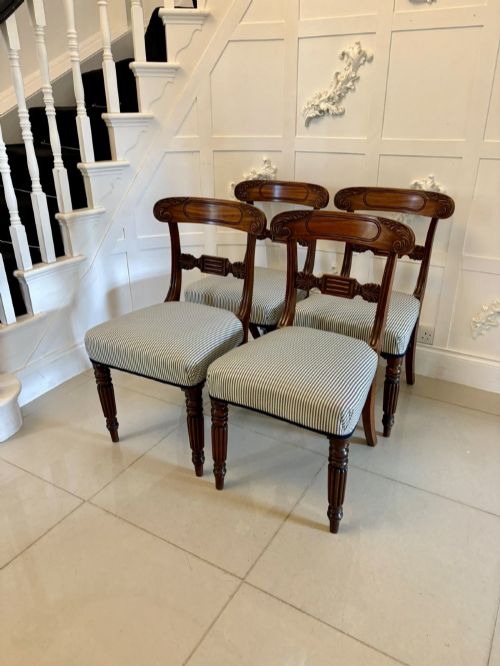
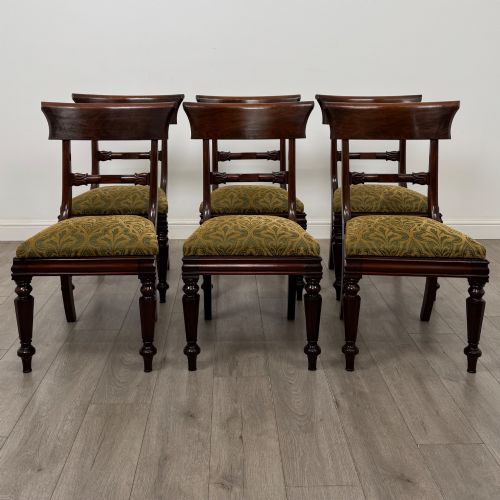
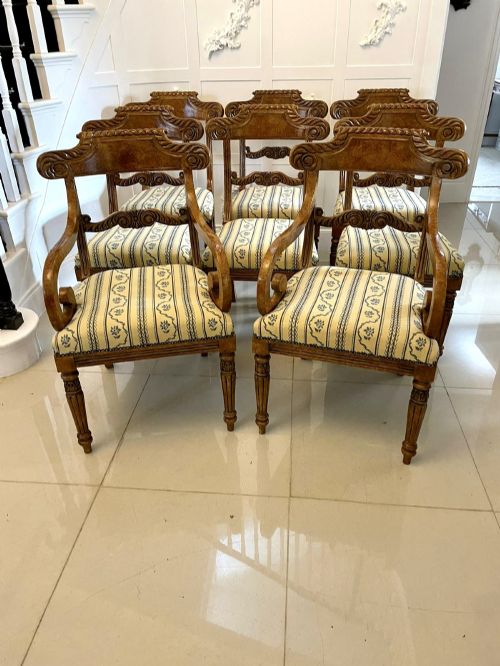
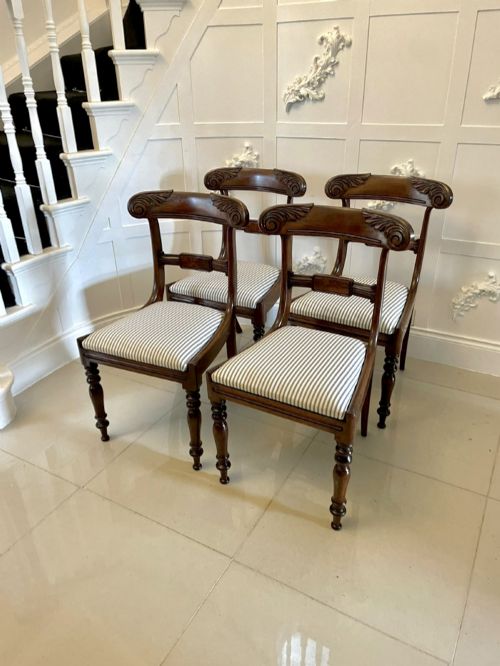
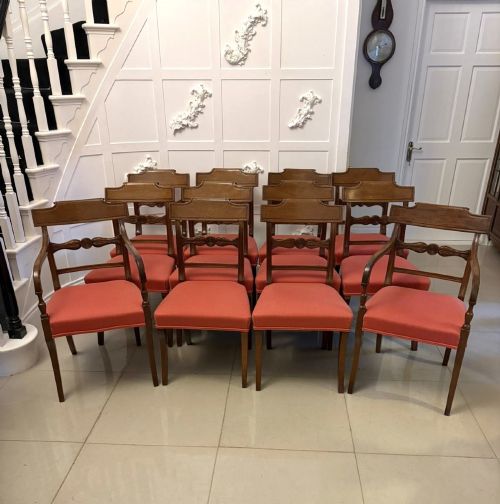
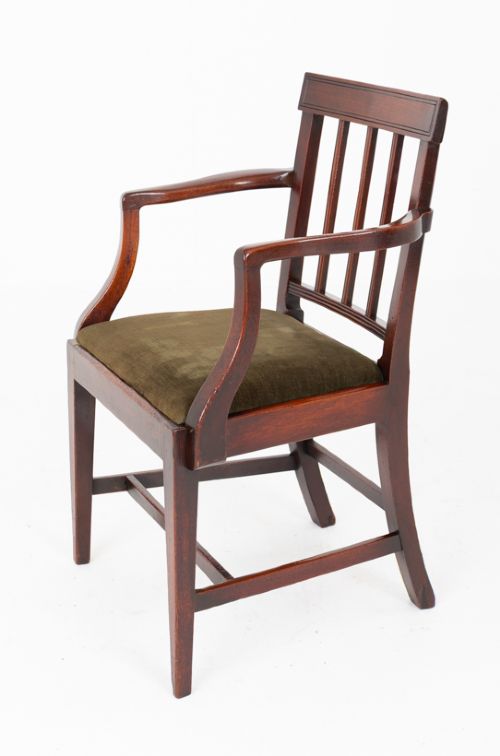
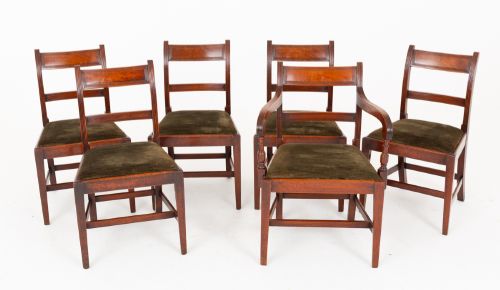
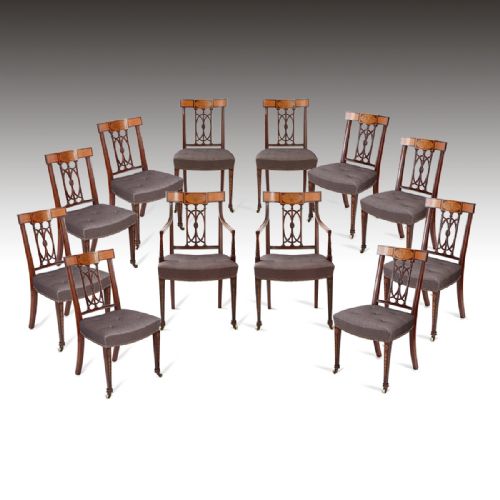
These regency wooden dining chairs encompass formal armchairs, side chairs, and larger matched sets intended for the dining table. The selection draws primarily from nineteenth-century periods, featuring Georgian antecedents alongside later William IV and Victorian interpretations.
Mahogany forms the mainstay of these pieces, alongside regional timbers such as yew, fruitwood, and maple. Buyers encounter individual carvers, pairs, and extensive sets numbering up to twelve or thirteen matching seats.
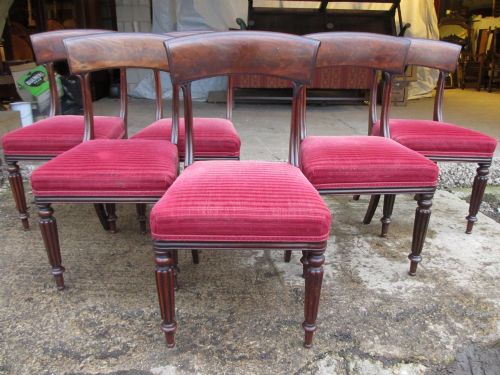
The silhouettes range from crisp sabre leg designs and Grecian side chairs to robust bar backs and ropeback carvers. Craftsmanship reflects the prevailing aesthetic movements of the era, moving from restrained classical forms to decorative painted or brass-inlaid finishes.
How they were made
Cabinetmakers constructed these frames predominantly from solid mahogany, utilising dense tropical hardwoods capable of supporting slender, load-bearing legs. Workshops also turned to fruitwood, yew, and simulated rosewood or faux birds-eye maple to achieve varied grain patterns and surface textures.
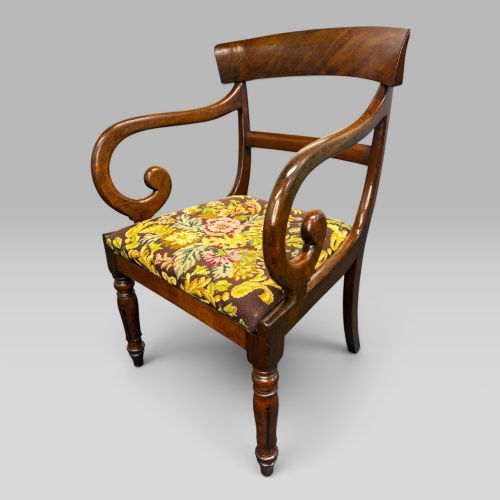
Structural embellishment relied on meticulous joinery, brass inlay, ebonising, and hand-applied paintwork rather than applied plaster mouldings. Seats frequently incorporated cane work or drop-in pads upholstered in traditional textiles.
Listings feature mahogany, fruitwood, yew, and maple timbers across the nineteenth century, Georgian, and Victorian periods.
What varies in quality
The distinction between ordinary utility seating and superior examples lies in the crispness of the carved details and the selection of the timber. Dense, well-figured mahogany with deep natural lustre elevates a set far above plain, utilitarian alternatives.
Proportion and structural integrity dictate the standing of a suite, where harmonious rail curves and tight joinery endure through generations of daily use. Original decorative elements, such as intact brass inlay or untouched cane work, further distinguish top-tier pieces from later replacements.
The Regency Wooden Dining Chairs Glossary
- Carver
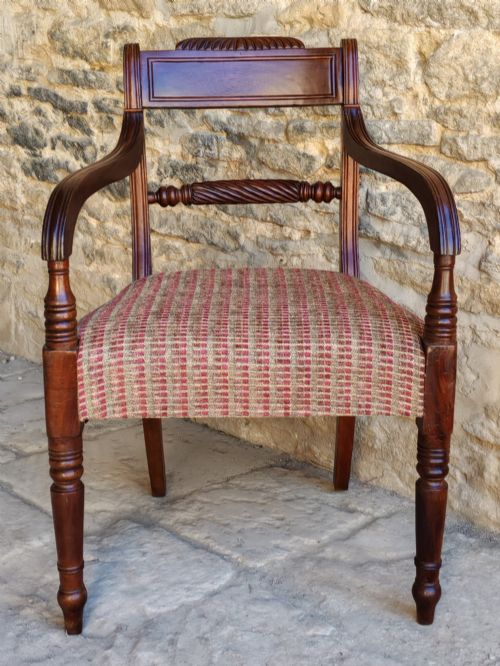
- An armchair designed with elbow supports, traditionally placed at the head of a dining table.
- Sabre leg
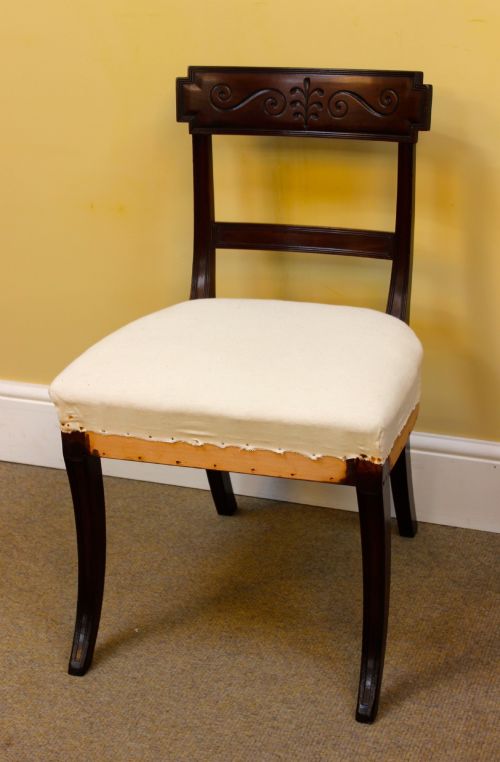
- A concave-curved rear or fore leg tapering towards the foot, characteristic of the Regency period and derived from classical Greek furniture.
- Bar back
- A chair design featuring a horizontal wooden crossrail across the upper backrest, often shaped or reeded.
- Grecian
- A stylistic descriptor reflecting the nineteenth-century revival of classical Greek forms, notable in chair crest rails and leg profiles.
- Cane
- Woven rattan material utilised for lightweight, resilient seat panels within wooden frames.
Regency Wooden Dining Chairs: Frequently Asked Questions
How do I care for antique mahogany chairs?
Keep wooden dining chairs away from direct heat sources and sudden humidity changes to prevent timber splitting or joint shrinkage. Feed the dry wood periodically with a suitable wax to maintain the protective surface sheen.
Avoid commercial liquid polishes containing silicone, which build up harmful residues over time. Clean upholstered inserts gently with appropriate textile attachments and address spills immediately.
Can I mix carvers with side chairs?
Combining carvers with matching side chairs follows traditional dining arrangements where armchairs occupied the heads of the table. Ensure the timber tone and leg style align closely when pairing disparate antique pieces together.
Matching sets often include two carvers alongside a larger number of side chairs. Using singles requires careful attention to seat height and overall proportions to maintain visual balance around the room.
How do I identify Regency features?
Look for classical restraint, clean lines, and architectural motifs inspired by ancient Greece and Rome. Characteristic details include reeded members, brass inlay, and sabre legs that taper gracefully.
Solid mahogany and simulated rosewood finishes frequently define this period. The joinery typically employs traditional pegged mortise and tenon construction executed by hand.
Are these chairs suitable for daily use?
Solid mahogany frames offer robust structural integrity capable of handling regular seating demands. Ensuring that joints remain tight and stable is essential before placing antique chairs into active service.
Consider having older upholstery or webbing professionally reinforced if the seats feel soft or compromised. With proper maintenance, these pieces function reliably as primary dining room seating.