

Regency Wood Chair
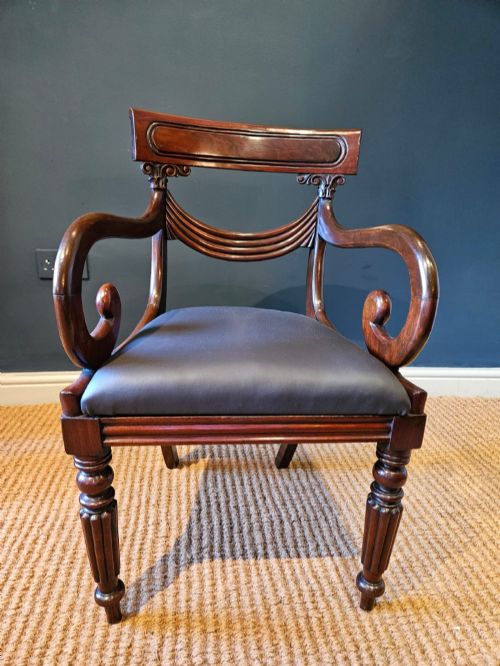
A regency wood chair brings architectural discipline and warm timber tones to an interior, whether taking the form of a formal dining seat or a library armchair.
Regency Wood Chair
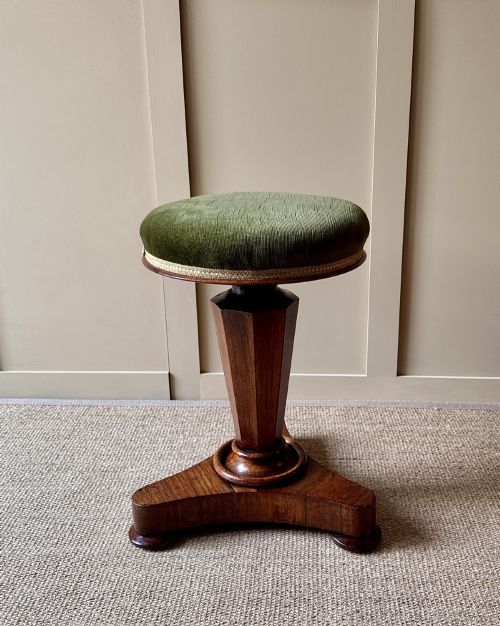
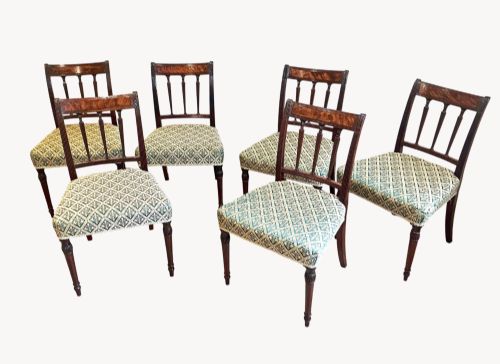
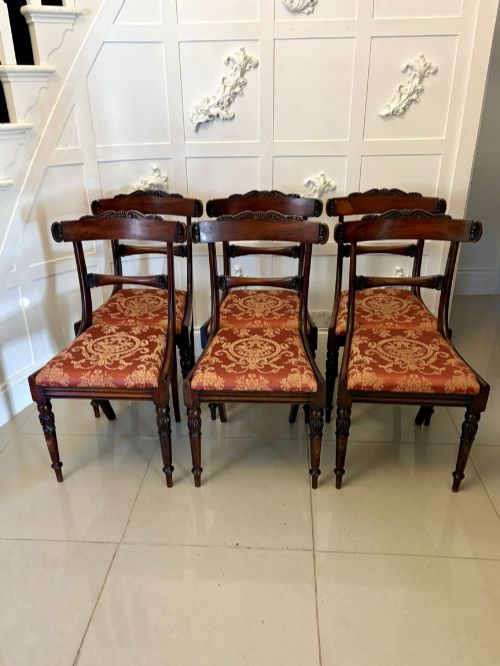
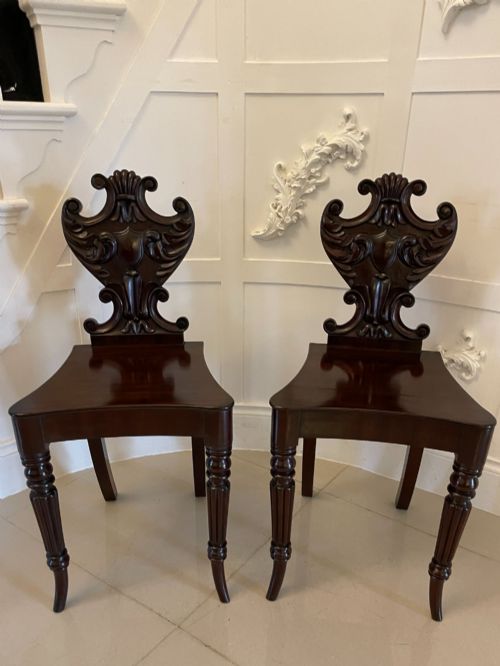
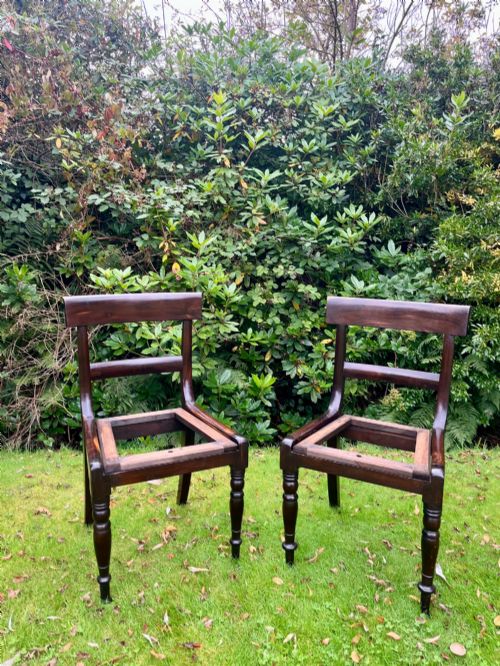
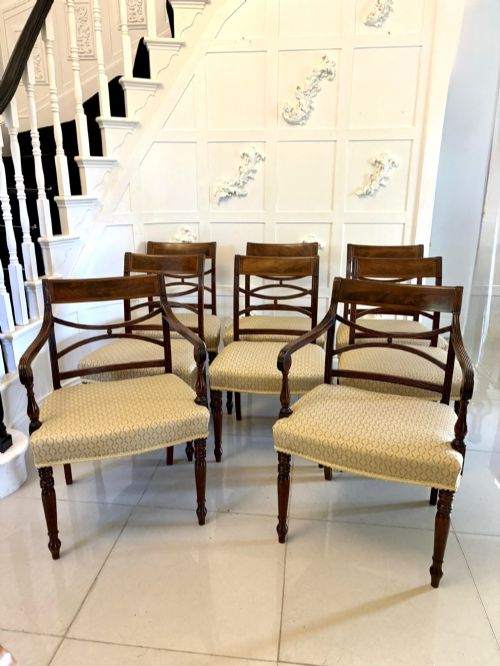
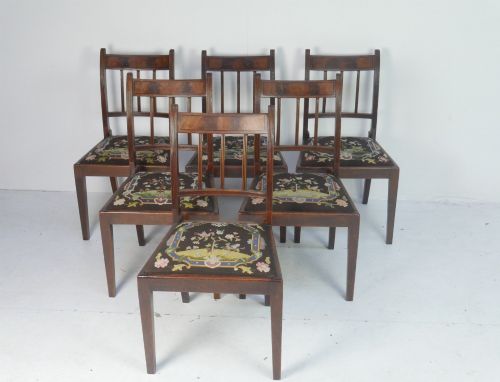
A regency wood chair encompasses dining chairs, armchairs, hall chairs, side chairs, and piano stools spanning the Georgian, Regency, and William IV eras, along with later revivals. Buyers seeking this phrase encounter sturdy seating constructed for parlours, libraries, and dining rooms across the nineteenth century.
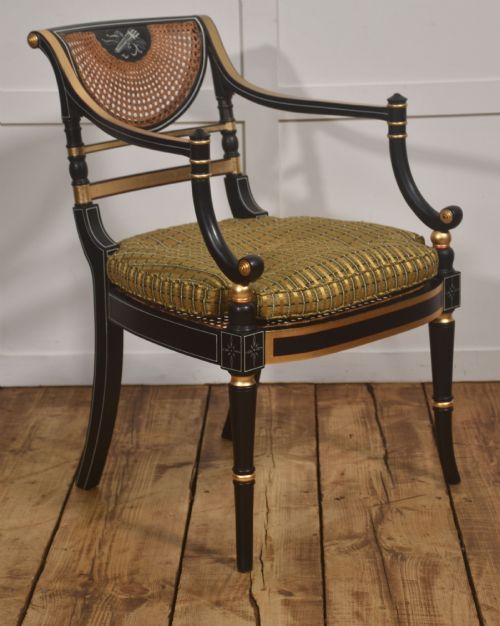
The materials and forms vary widely, ranging from solid mahogany and rosewood dining sets to ebonised elbow chairs, cane seats, and yew wood Windsor armchairs. While many pieces date directly to the early nineteenth century, revival versions from later decades also appear regularly in these selections.
Materials and construction
Makers utilised dense cabinet timbers such as mahogany, rosewood, laburnum, and satinwood, often shaping them into curved backs, shield backs, or rope backs using traditional joinery. Brass inlays, parcel-gilt details, and turned legs frequently accent the primary wood structures.
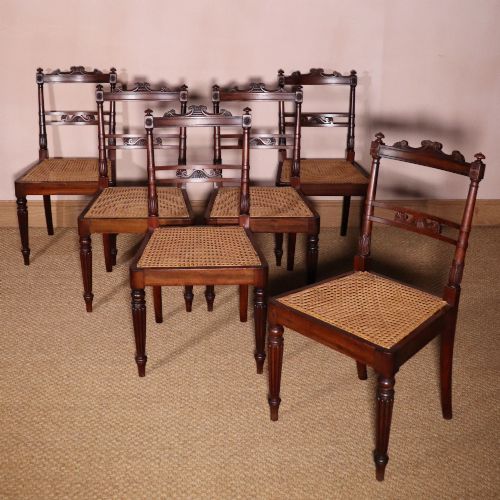
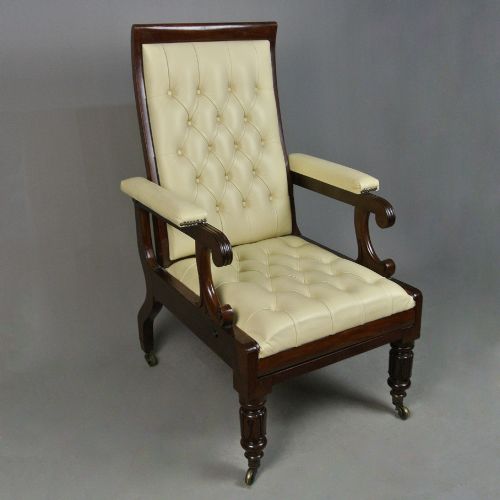
Seating surfaces involved woven cane inserts, drop-in pads, or fixed upholstery finished with fabric and velvet. Mechanical elements also surface in specialised forms, including adjustable piano stools and patented reclining chairs.
Regency Wood Chair Retail Price Guide 2026
Typical asking prices for regency wood chair among the pieces listed under this phrase on Sellingantiques today, from the lower quarter to the upper quarter. They describe what is for sale here now, not the wider market.
Listings feature mahogany, rosewood, yew wood, laburnum, satinwood, and cane across periods ranging from the eighteenth century to the twentieth century.
Judging the standard
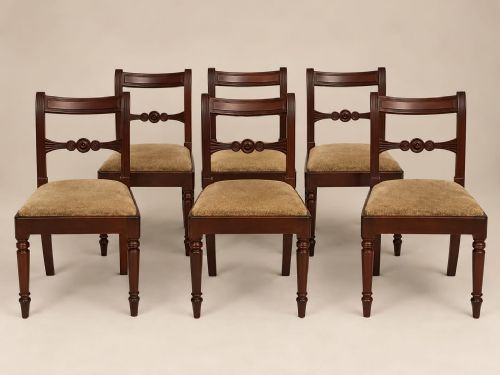
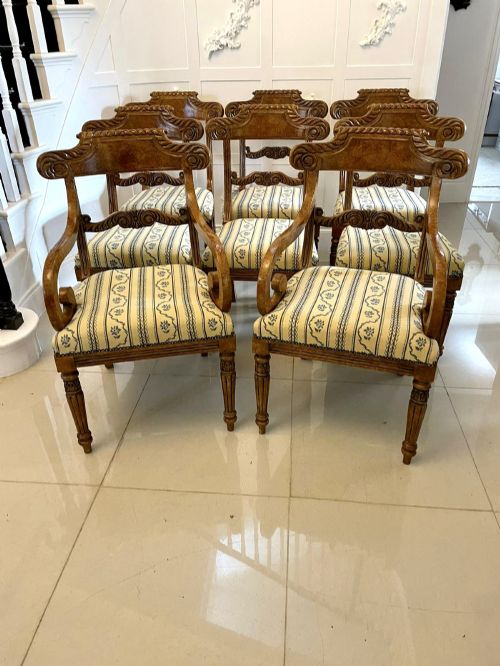
The standard of a regency wood chair rests upon the crispness of carved details, the choice of timber figurations like flame mahogany or faux birds eye maple, and the integrity of the original frame construction. Matching sets demonstrate uniform grain selection and consistent proportions across every individual seat.
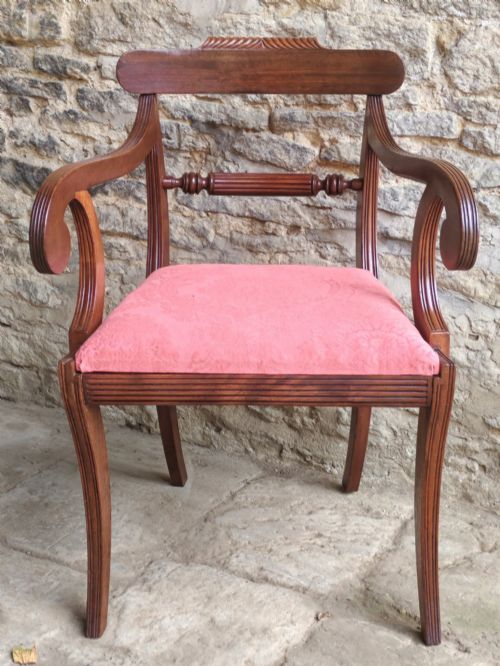
Subtle refinements such as reeded legs, scroll arm carvers, and finely turned spindles separate standard utility seating from pieces attributed to notable workshops. The survival of original surfaces and uncompromised joinery determines the standing of each example.
Gillows·Daws Patent
The Regency Wood Chair Glossary
- Carver
- An armchair designed to match a set of single dining chairs, typically placed at the head of a dining table.
- Caning
- A seating method utilising woven split rattan to create a flexible, patterned mesh panel within the wooden frame.
- Ebonised
- Wood finished with a dark stain or lacquer to imitate expensive ebony.
- Barback
- A chair style featuring a horizontal wooden slat across the upper backrest, characteristic of William IV designs.
- Lyre back
- A chair backrest featuring an openwork splat shaped in the symmetrical outline of a classical lyre musical instrument.
Regency Wood Chair: Frequently Asked Questions
What defines a regency wood chair?
These seats are defined by classical revival forms, clean architectural lines, and dense cabinet woods produced during the early nineteenth century and subsequent revival periods.
They reflect aesthetic influences drawn from antiquity, utilising curved crest rails, sabre legs, and restrained carving rather than heavy ornamentation.
How were these chairs used originally?
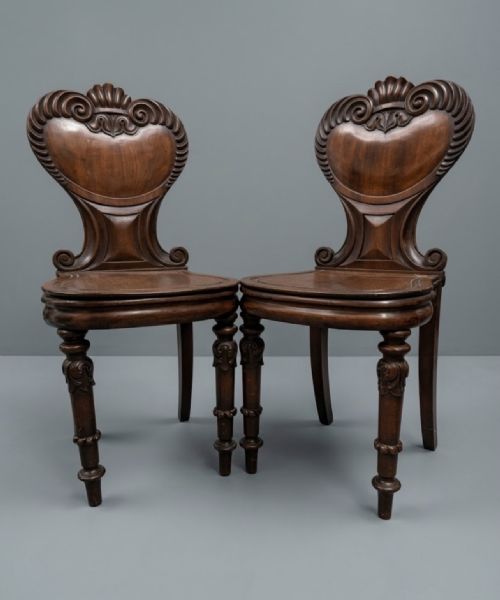
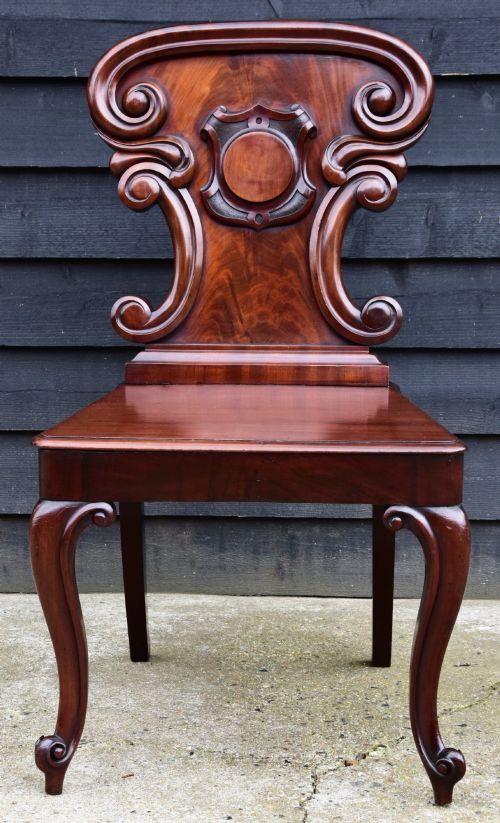
Dining chairs and carvers gathered around large mahogany tables for formal meals, while hall chairs served transient spaces like entrance halls and corridors.
Specialised forms such as piano stools, desk chairs, and reclining library seats fulfilled specific domestic tasks in private rooms.
How do I live with antique chairs?
Integrating these pieces into a modern interior involves pairing timber tones with contemporary tables or mixing single armchairs into a living room arrangement.
Routine care requires monitoring indoor humidity to protect traditional wood finishes and cane panels from drying out over time.
How can I tell the periods apart?
Georgian and early nineteenth-century pieces display lighter proportions, classical inlay, and fine mahogany or rosewood grains, whereas William IV and later revival examples often feature heavier frames, bolder scrollwork, and darker ebonised finishes.
Noting the transition from delicate shield backs to robust barbacks helps clarify the chronological progression.