
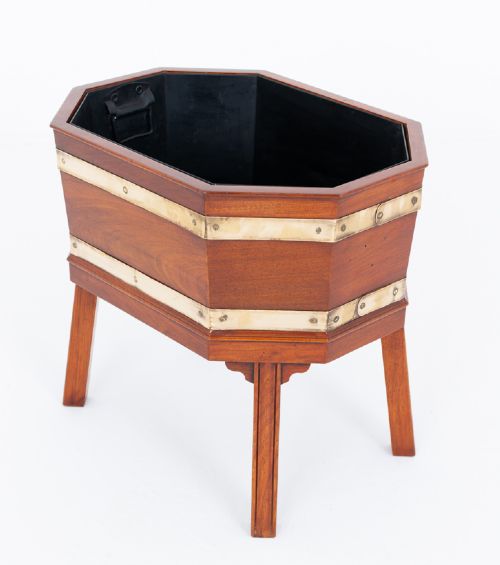


Regency Wine Bottle Stand
A regency wine bottle stand protects the dining table while holding decanters and bottles close at hand during the meal.
Regency Wine Bottle Stand
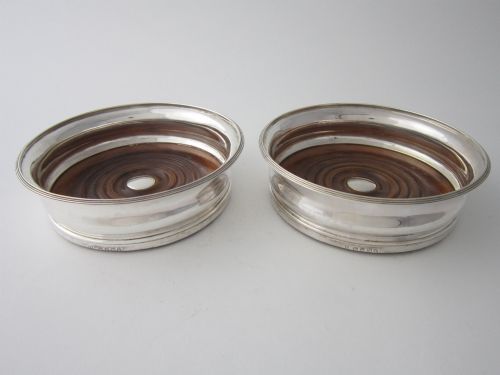
Most pieces date from the Georgian and Regency periods, spanning the late eighteenth and early nineteenth centuries, though later revival pieces also emerge. Makers during this era produced these items in circular formats with turned wooden galleries, pierced silver rims, or shaped papier-mâché edges. The selection bridges formal dining accessories and functional serving pieces intended for the consumption of port, madeira, and wine.
Materials and Construction
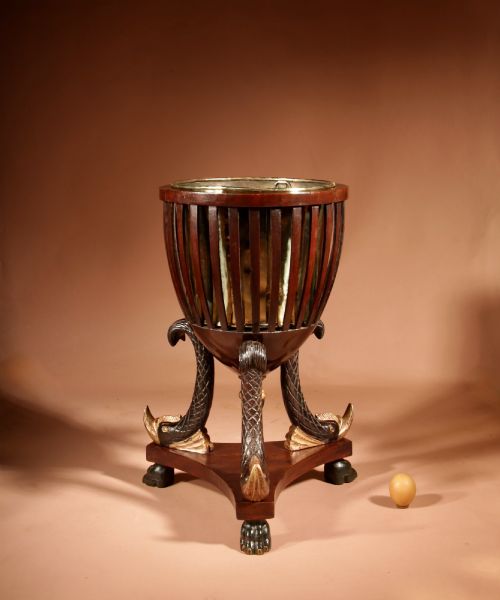
Timber forms the core of many pieces, with mahogany and rosewood chosen for their rich grain and durability during the Georgian and Regency eras. Cabinet makers turned these woods on lathes to create circular walls, often reinforcing wooden wine coolers with brass bands or incorporating weighted bases to ensure stability.
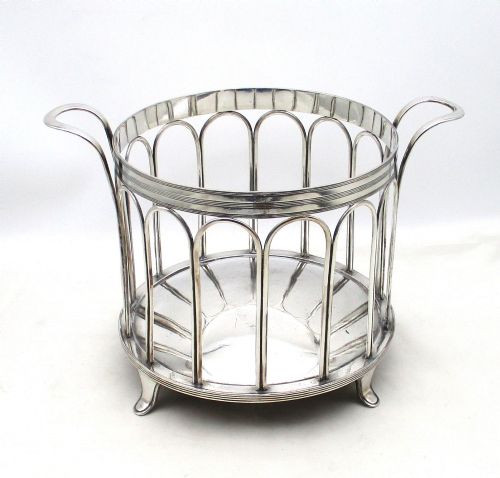
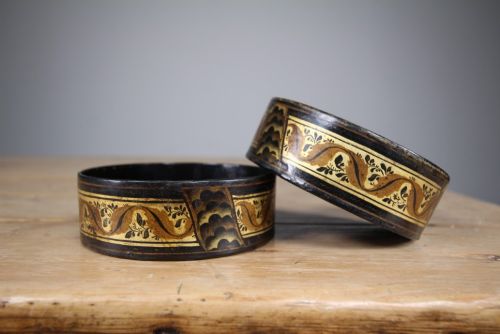
Metalwork defines the silver and plated items, utilising sterling silver and Old Sheffield Plate shaped into pierced galleries or solid rims. Papier-mâché also appears as a lighter base material, finished with dark lacquer and detailed with gilded decoration.
Listings feature items from the eighteenth, nineteenth, and twentieth centuries, utilising mahogany, brass, silver plate, papier-mâché, and copper.
Assessing the Craftsmanship
The standard of execution separates standard utility items from pieces commissioned for elite dining rooms. Superior examples display crisp chasing on metal mounts, finely turned wooden profiles, and well-preserved silver plating that retains its original brilliance over the base copper.
Material selection dictates longevity and visual impact, where dense figured mahogany and substantial gauge silver plate outlast lesser woods and thin metallic coatings. The integrity of internal linings, such as fitted wooden inserts or original baize bases, further distinguishes finer survivals.
Matthew Boulton·John and Thomas Settle·Mein of Kelso
The Regency Wine Bottle Stand Glossary
- Old Sheffield Plate
- A composite material made by fusing a thin sheet of sterling silver to a thicker copper base, common in nineteenth-century bottle stands. This technique produces a durable surface that shows subtle hints of the underlying copper where decades of polishing have worn the silver.
- Papier-mâché
- A composite substance formed from paper pulp or layers of paper bound with glue, baked, and finished with lacquer. It provides a lightweight yet sturdy foundation for painted and gilded decorative coasters.
- Cellarette
- A large freestanding box or container used to store wine bottles near the dining table. These floor-standing pieces often feature internal dividers and brass bands.
- Gallery
- The raised border surrounding the edge of a bottle stand or coaster. Galleries can be pierced with geometric patterns or turned from solid timber.
- Coaster
- A small circular tray designed to hold a wine bottle or decanter. They frequently incorporate baize or felt on the underside to protect the polished surface of a dining table.
Regency Wine Bottle Stand: Frequently Asked Questions
What is a regency wine bottle stand?
A regency wine bottle stand is a decorative tabletop accessory created to hold wine bottles and decanters securely during dining. These pieces protect polished wooden tables from drips and rings.
They appear in materials including mahogany, silver plate, and papier-mâché, often shaped as circular coasters or larger coolers.
How were these stands used?
Hosts placed these stands on the dining table to hold bottles of port, sherry, or wine as meals progressed. Some designs featured smooth undersides or small rollers so guests could slide them along the mahogany.
Larger floor-standing versions held multiple bottles near the sideboard, keeping drinks close to hand without cluttering the main dining surface.
How do I care for antique wood and metal?
Wooden stands require occasional treatment with suitable wax to preserve the grain and prevent the timber from drying out. Metal components benefit from gentle cleaning to maintain the finish without removing silver plate.
Keeping these pieces away from direct heat sources and moisture prevents warping in the timber and tarnishing in the metal mounts.
How can I tell the period?
Dating relies on examining the materials, construction methods, and stylistic cues present in the piece. Georgian and Regency examples often show hand-turned wooden elements, specific silver hallmarks, or traditional Old Sheffield Plate construction.
Later revival items from the twentieth century employ different manufacturing markers and standardised fittings that distinguish them from nineteenth-century work.