



Regency Weather Glass
A regency weather glass offers precise atmospheric reading housed in polished timber cabinetry that anchors a traditional room.
Regency Weather Glass
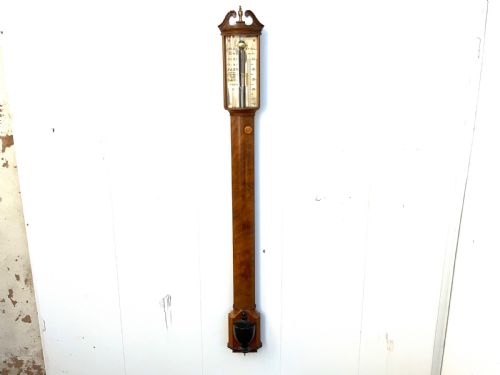
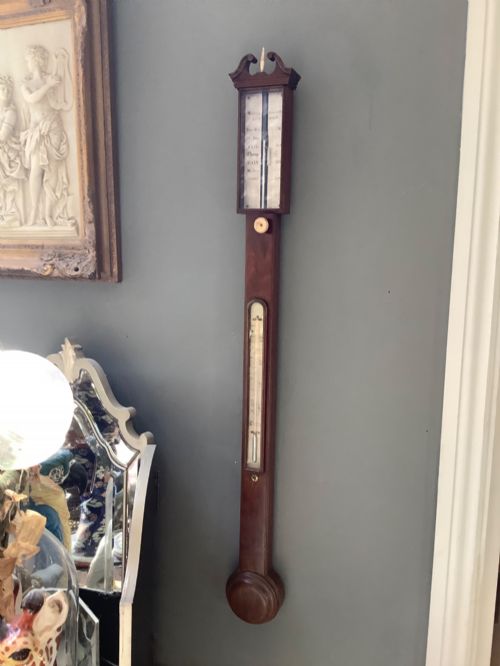
When you search for a regency weather glass, you encounter stick and wheel barometers dating from the nineteenth century, Georgian period, and specifically around 1800. These meteorological instruments served practical forecasting purposes in homes while displaying fine cabinetmaking.
Most examples take the form of either tall, slender stick barometers or broader wheel barometers with dial faces. These pieces originate from provincial towns and London workshops alike.
How they were made
Cabinets were constructed using dense hardwoods such as mahogany and rosewood, often shaped with bow fronts or distinct veneers. Birdseye maple supplied contrasting detail on select instruments.
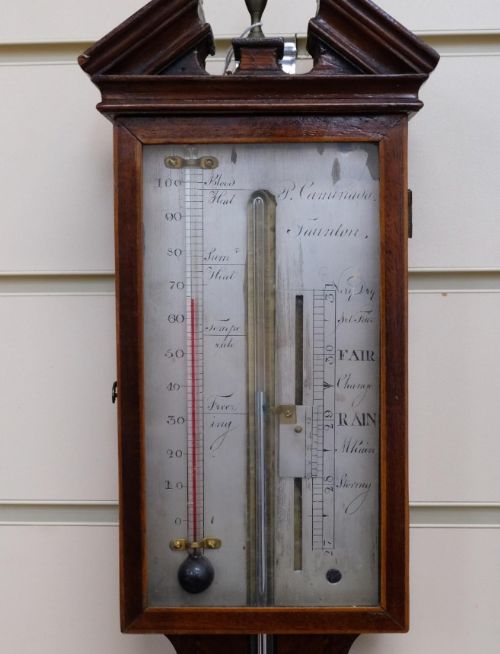
Dials were typically formed from silvered metal or brass, engraved with weather descriptions and barometric scales. Glass protected the fragile mercury tubes and indicator needles.
Regency Weather Glass Retail Price Guide 2026
Typical asking prices for regency weather glass among the pieces listed under this phrase on Sellingantiques today, from the lower quarter to the upper quarter. They describe what is for sale here now, not the wider market.
Listings span the nineteenth century, Regency era, and Georgian period, with specific dates including 1800 and 1920.
What varies in quality
The refinement of the cabinetwork and the legibility of the engraved silvered metal dial distinguish superior examples. Sharpness in the mahogany veneers and intact brass or bone adjusters mark better execution.
The reputation of the maker inscribed on the dial or scale plate influences the standing of the piece. Crispness in the instrument scaling reflects workshop proficiency.
P Caminada Taunton·Ganthony of London·JB Bergna Newcastle·Molton of Norwich·Bate of London·Sandrino of Liverpool·Vecchio And Co·Alexander Adie·Bassi·F Salteri And Co·Dominic Gatty·L Malacrida·George Dollond·Schiavi of Chesham
The Regency Weather Glass Glossary
- Stick barometer
- A tall, narrow instrument measuring atmospheric pressure via a vertical mercury column. It provides a direct reading of barometric height.
- Wheel barometer
- A dial-faced instrument connected to a siphon tube by a pulley and weight system. The pointer rotates round a circular scale to show pressure changes.
- Silvered metal
- A brass or copper plate treated with a silver solution to create a reflective, light-toned dial surface. Engraved inscriptions reveal dark against the pale background.
- Mahogany
- A durable, reddish-brown tropical hardwood favoured for nineteenth century furniture and barometer cases. It resists warping and takes a fine polished finish.
Regency Weather Glass: Frequently Asked Questions
What is a regency weather glass?
A regency weather glass is an atmospheric pressure indicator housed in a timber case, typically dating from the early nineteenth century. These instruments use mercury columns or wheel mechanisms to measure weather changes.
They combine scientific utility with decorative cabinetwork, featuring materials like mahogany, brass, and silvered metal dials.
How do stick and wheel barometers differ?
Stick barometers display a vertical column of mercury where you read the height directly on an engraved scale. They have tall, slender wooden bodies.
Wheel barometers convert column movement into needle rotation on a round dial face. They feature a broader case design often topped with a pediment.
Where were these barometers made?
Makers produced these instruments in London workshops as well as regional towns across Britain and Ireland. Names on the dials record makers from Norwich, Liverpool, Newcastle, and Dublin.
Many practitioners came from immigrant artisan families who established businesses in provincial trading centres.
How should I care for a mercury barometer?
Keep the instrument away from direct sunlight, central heating sources, and damp environments to protect the timber case and glass components. Secure the mercury tube properly if you need to transport the barometer.
Avoid tilting the body sharply, as sudden movement can damage the internal cistern or admit air into the glass tube.