



Regency Washstand Table
A regency washstand table brings architectural proportion and daily utility together, offering clean lines built for the practical needs of elite bedrooms.
Regency Washstand Table
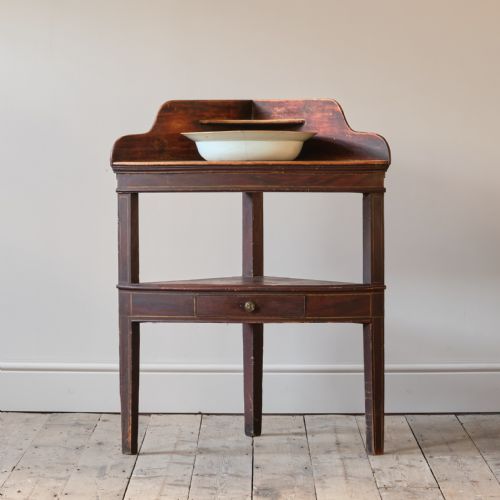
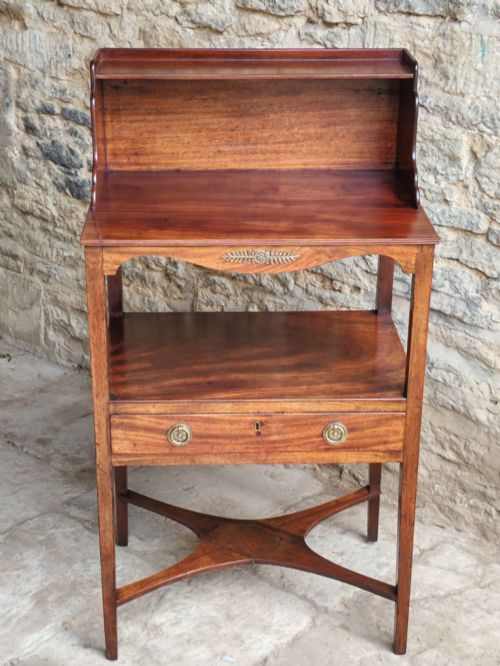
A regency washstand table combines the functional basin recess of the bedroom with the refined joinery of the period. These pieces appear most frequently in mahogany, flame mahogany veneer, and painted pine.
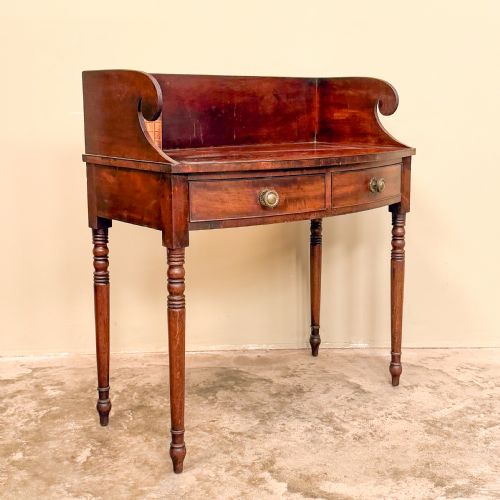
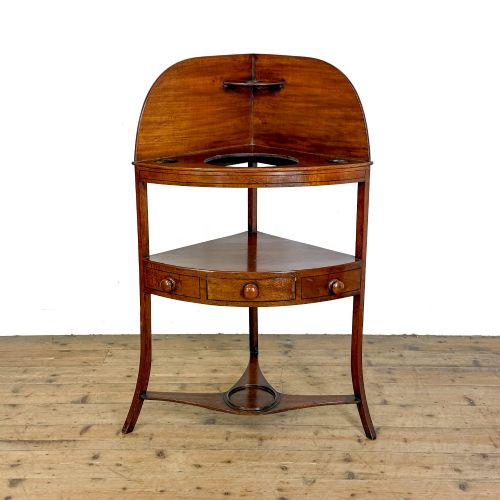
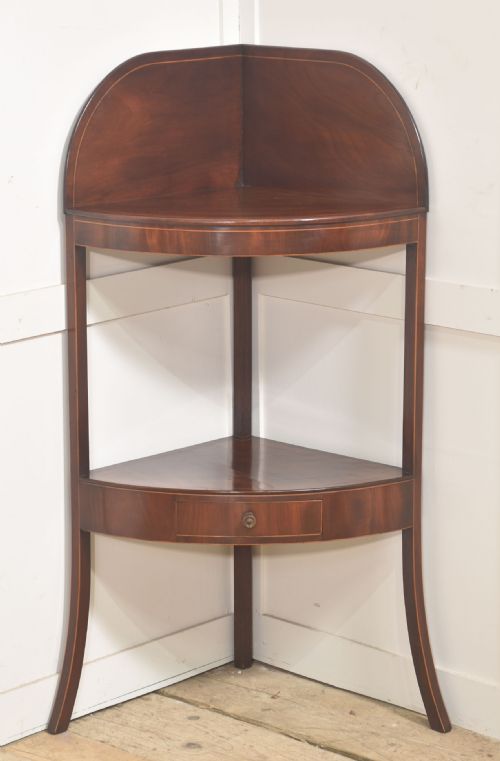
Forms range from bow-front and corner washstands to dressing tables and bedside cupboards. The selection spans the Georgian, Regency, and William IV periods, capturing both formal architectural designs and country variants.
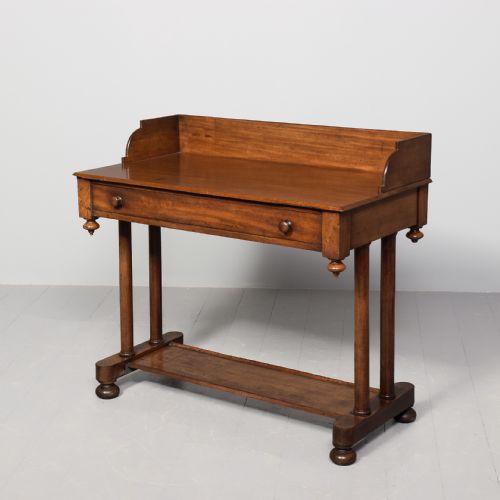
Buyers encounter corner models designed to fit tight spaces alongside freestanding knee-hole dressing tables equipped with galleries. Every version reflects the domestic habits of the nineteenth century.
How They Were Made
Cabinetmakers constructed these tables using solid mahogany, pine, and flame mahogany veneers, often applying boxwood stringing for subtle contrast. Selected pieces retain their original painted finishes or marble tops designed to handle water and daily use.
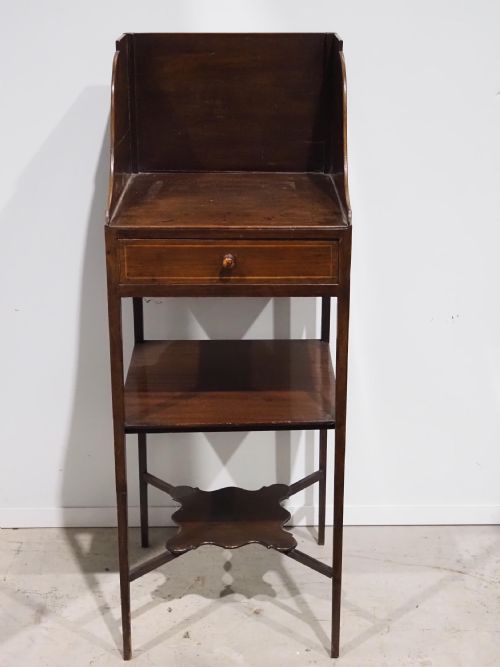
Joinery techniques included dovetailed drawers, turned legs, and three-quarter gallery surrounds to prevent items from sliding off the top. Brass hardware and occasional stamped maker signatures indicate workshop origin.
Listings feature mahogany, pine, marble, and boxwood across Georgian, Regency, and Victorian periods.
What Varies in Quality
The standard of timber selection and veneer matching defines the upper tier of pieces, where flame mahogany exhibits deep, natural movement. Simpler pine versions rely on original paint surfaces and intact structural proportions to hold their character.
Refined execution appears in architectural details such as bow fronts, concave knee-holes, and delicate boxwood inlays. Lower tiers show heavier alterations, replaced galleries, or loss of original surface finishes.
Gillows Lancaster
The Regency Washstand Table Glossary
- Gallery
- A raised wooden border surrounding the top of a table or washstand. This feature prevented water jugs, basins, and grooming items from slipping to the floor.
- Bow front
- A convex, curved front section typical of cabinetwork from the period. This shape softens rigid room corners and adds visual depth to smaller tables.
- Knee-hole
- A central recessed space beneath a dressing table or desk designed to accommodate the user's legs. It is often flanked by banks of small drawers.
- Flame mahogany
- A veneer cut from the fork of the mahogany tree where the grain creates a flickering, flame-like pattern. It was reserved for the most prominent visible surfaces.
- Stringing
- A narrow strip of contrasting wood inlaid into the surface of a panel or drawer front. Boxwood was frequently utilised for this decorative linear detail.
Regency Washstand Table: Frequently Asked Questions
How do I use a washstand today?
These tables adapt easily to modern rooms as bedside surfaces, hallway stands, or compact dressing tables. Their original basins are rarely present, leaving flat wooden or marble tops ready for lamps and everyday objects.
Placing one in a bedroom or bathroom preserves historical utility while providing practical storage through drawers and lower shelves.
What is the difference between a washstand and a dressing table?
Washstands generally feature cut-outs for basins or protective gallery backs designed to contain water splashes. Dressing tables focus on knee-hole recesses, drawers for grooming equipment, and spaces for mirrors.
Over time, makers often combined these functions, creating hybrid forms that served both washing and dressing purposes in the bedchamber.
How do I identify a Regency period piece?
Regency furniture draws on classical architectural motifs, featuring clean lines, rosewood or mahogany veneers, and restrained brass mounts. Proportions tend to be balanced and structural rather than heavily carved.
Pieces from this era often show turned or reeded legs, concave fronts, and structural forms influenced by ancient Greek and Roman design.
Are painted finishes original?
Many pine washstands and side tables retain early or original paint surfaces applied to mimic more expensive timbers or brighten country interiors. Examining the wear patterns and pigment layers helps determine age.
Original paint shows natural craquelure and softening around high-contact areas like drawer pulls and gallery edges.