
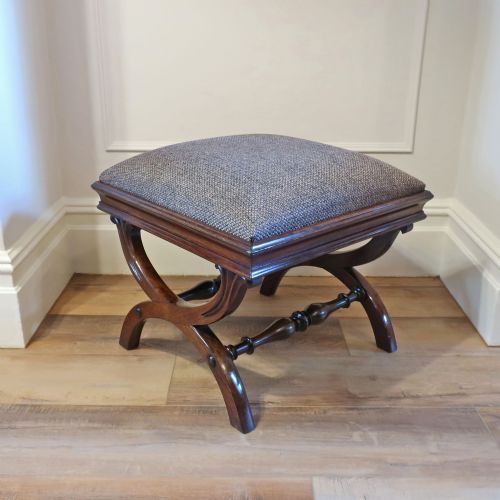


Regency Vanity Stool
These regency vanity stool pieces offer period seating designed for the dressing room, combining functional height with classical proportion.
Regency Vanity Stool
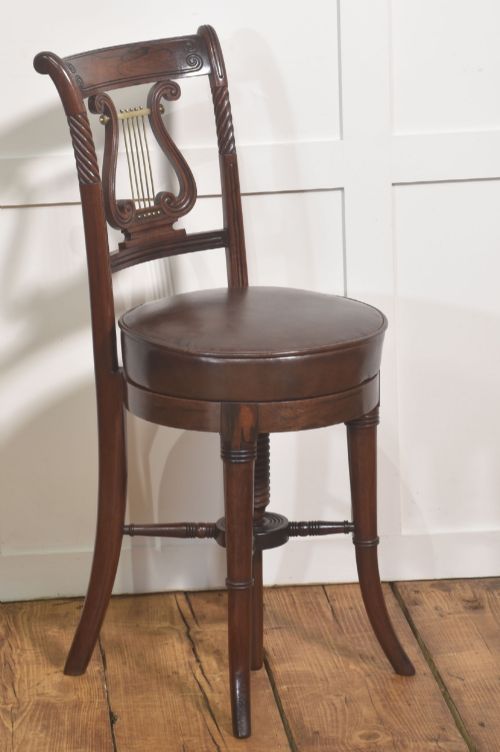
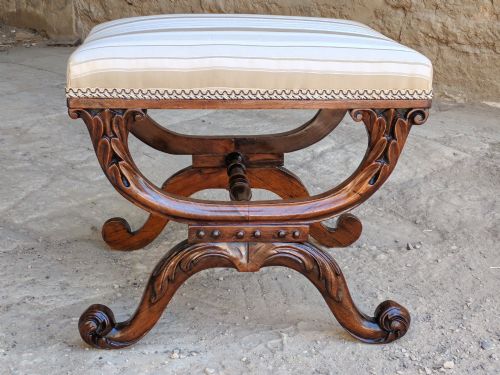
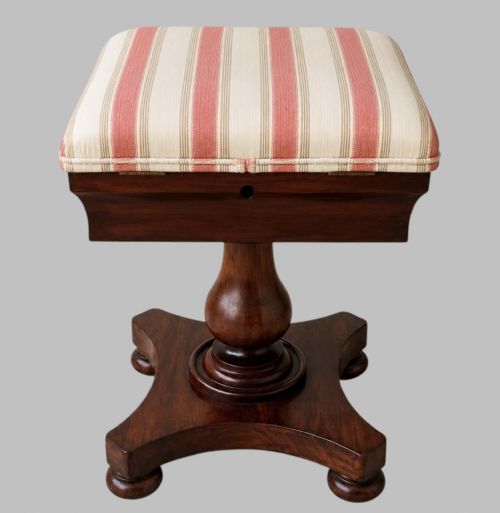
A regency vanity stool serves as traditional seating for the dressing table or dressing room, appearing across nineteenth century and Georgian periods. The forms include piano stools, window seats, ottomans, and X-framed dressing stools.
Most examples found here date from the nineteenth century and Regency eras, executed in mahogany and rosewood with upholstery in fabric, velvet, leather, or chenille. These pieces function equally well as low footstools or as dedicated dressing chairs.
How they were made
Cabinetmakers utilised dense timbers such as mahogany, rosewood, and giltwood to build the frames, often incorporating brass fittings and gesso decoration. Turned legs, saber legs, and curule X-frames provide the structural support.
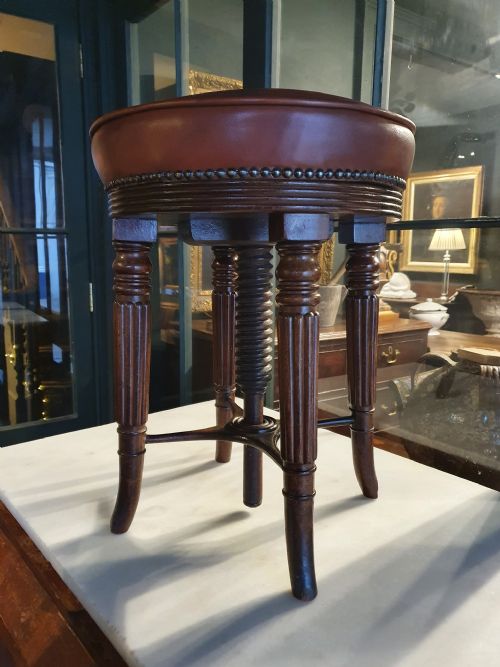
Upholstery techniques involve traditional stuffing secured with textiles like velvet, leather, chenille, and patterned fabric. Some piano stools incorporate clever mechanical screw mechanisms for adjustable height.
Recorded forms include piano stools, window seats, and X-framed dressing chairs upholstered in leather, velvet, and chenille.
What varies in quality
The refinement of the timber turning and the crispness of carved details distinguish finer pieces from simpler workshop output. Cabinetmaking quality shows in the tight joinery of the frame and the elegance of proportions, particularly in curved elements like saber legs or curule X-frames.
The choice of primary wood and secondary framing timber affects the overall integrity of the piece. Surviving original mechanical height adjustment screws and intact period upholstery materials add significantly to the character of a stool.
Gillows
The Regency Vanity Stool Glossary
- Curule stool
- An ancient Roman magistrate form of X-framed folding seat revived during the neoclassical and Regency periods. It uses crossing legs that form an X shape when viewed from the side.
- Saber leg
- A concave sweeping leg that tapers toward the foot, popular on chairs and stools during the Regency era. This profile echoes the curved blade of a military saber.
- Giltwood
- Timber coated with a thin layer of gold leaf or gilt paint over a prepared gesso ground. This finish provides a bright metallic sheen on decorative neoclassical frames.
- Ottoman
- A low upholstered seat without arms or a back, frequently used as a window seat or footstool in nineteenth century interiors. These pieces often feature generous squab cushioning.
Regency Vanity Stool: Frequently Asked Questions
How were regency vanity stools used originally?
These pieces provided convenient seating in bedrooms and dressing rooms while individuals dressed or tended to their hair. Adjustable versions allowed musicians to set the correct height at the piano.
They also served as window seats or low footstools in formal reception rooms, offering flexible seating that could be moved easily about the floor.
Where should I place a vanity stool today?
A vanity stool fits naturally in a bedroom before a dressing table or beneath a window as a slim seat. Their compact dimensions make them useful in hallways for putting on shoes.
They also work well as occasional seating in living spaces or tucked beside a desk where a full-sized chair would crowd the room.
How do I identify a Regency period stool?
Regency pieces often display classical neoclassical motifs, saber legs, or simulated rosewood finishes dating from around eighteen hundred to eighteen thirty. Look for architectural turning and characteristic timber choices like dark mahogany.
Later Victorian or Edwardian revival pieces tend to exhibit heavier proportions or different upholstery styles compared to genuine early nineteenth century examples.
Are piano stools and vanity stools the same?
While both serve as small seat furniture, piano stools frequently feature a central wooden screw mechanism for height adjustment. Vanity stools are typically fixed in height and designed primarily for dressing rooms.
Both forms share similar decorative frames, timber choices, and upholstery styles from the Georgian and nineteenth century periods.