


Regency Vanity Desk
A regency vanity desk brings dual-purpose practicality and refined architectural presence to a room, functioning as both a writing surface and a dressing table.
Regency Vanity Desk
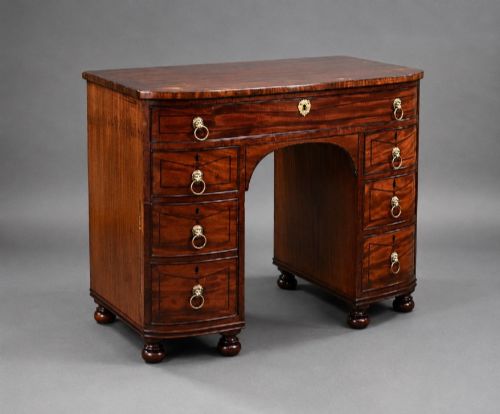
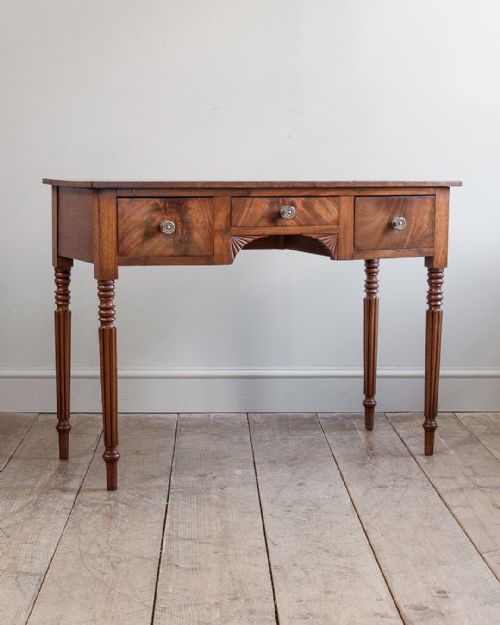
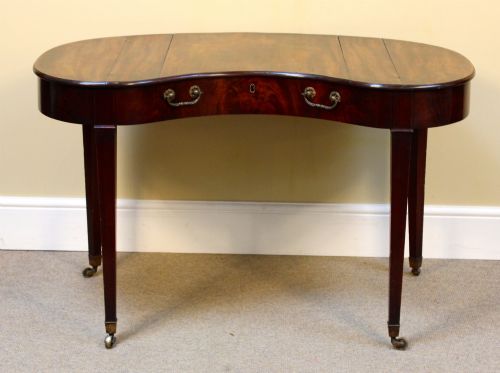
When searching for a regency vanity desk, buyers encounter forms that double as writing tables, dressing chests, and kneehole dressing tables originating from the nineteenth century. These pieces bridge the gap between personal grooming and correspondence, reflecting the domestic habits of the Georgian and Regency periods.
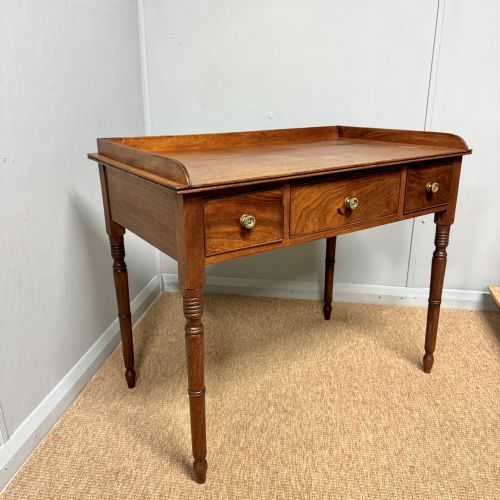
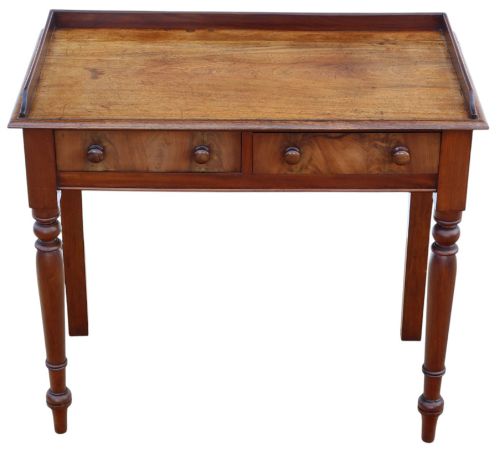
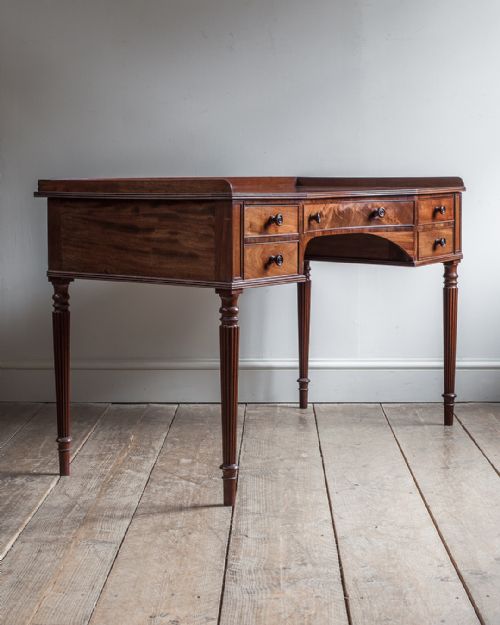
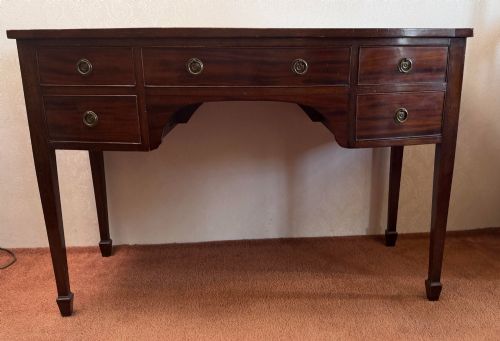
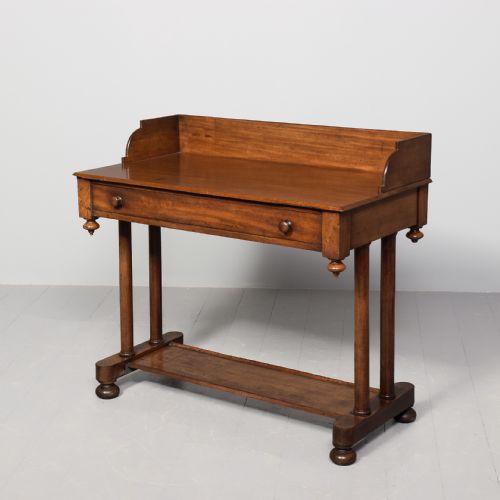
The versions most commonly met on this page are constructed from mahogany, often featuring bow-front designs, multi-drawer arrangements, and three-quarter gallery upstands. Examples span related nineteenth-century styles including William IV and George IV, alongside occasional later interpretations.
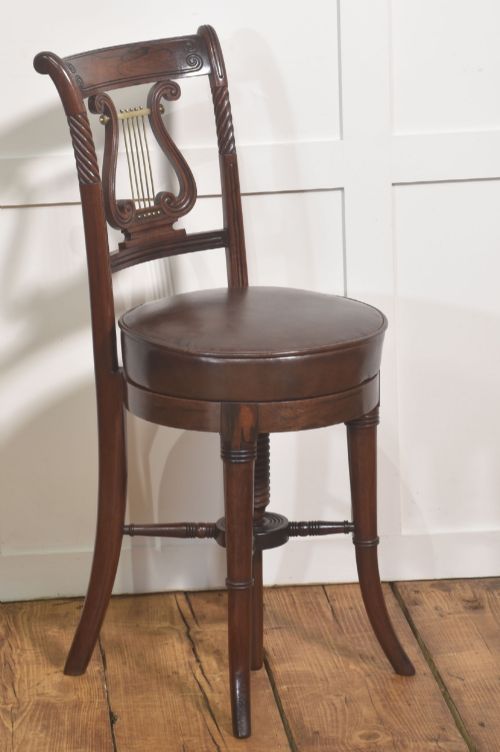
Makers and craftsmen of the period produced these tables with integrated compartments, adjustable mirrors, and occasional side seating such as dressing chairs. The structural variety ranges from compact country pine pieces to substantial flame mahogany examples.
How they were made
Construction relies heavily on solid mahogany and flame mahogany veneer applied over secondary timbers like pine, providing durable surfaces with striking grain patterns. Cabinetmakers utilised precise dovetailing for the multiple drawers found in kneehole and bow-front configurations.
Brass fittings, including handles, castors, and gallery supports, add structural accents that complement the dark timber tones. Leather writing inserts and fabric details appear on specific writing and dressing table variants.
The listings on this site feature mahogany as the primary material, alongside accents of brass, leather, and fabric across nineteenth-century forms.
What varies in quality
The standard of timber selection distinguishes finer examples, particularly where figured flame mahogany veneer is matched symmetrically across drawer fronts and top surfaces. Superior execution is evident in the crispness of turned legs, refined brass mounts, and the tight joinery of internal drawer structures.
The integration of dual functions - such as smoothly operating writing slides, compartmented top drawers, and intact gallery surrounds - reflects the original maker's ambition and the piece's subsequent survival through the nineteenth century.
Gillows of Lancaster
The Regency Vanity Desk Glossary
- Bow front
- A convex curved cabinet front that swells outward in the centre. This shape softens the linear geometry typical of many nineteenth-century case pieces.
- Flame mahogany
- A veneer cut from the fork of the mahogany tree where the branch joins the trunk. It creates a distinctive, fiery pattern with intense grain movement.
- Gallery
- A low raised railing or surround fitted to the back and sides of a tabletop. It prevents toilet mirrors, bottles, or writing implements from sliding off the edge.
- George IV
- A British design period spanning the early nineteenth century defined by classical restraint and robust proportions. Furniture from this era often incorporates heavy mahogany timbers and restrained brass detailing.
Regency Vanity Desk: Frequently Asked Questions
What is a regency vanity desk used for?
These pieces served nineteenth-century users for both morning grooming and daily correspondence, combining a surface for writing with storage for cosmetics and documents.
Many incorporate drawer arrangements, writing slides, and matching mirrors to accommodate these twin domestic duties.
How do I tell a writing table from a dressing table?
Dressing tables typically feature integrated compartments, galleries, or associated toilet mirrors designed for personal care items.
Writing tables focus on an unobstructed flat surface, sometimes lined with leather, intended primarily for paper and ink.
Are these desks suitable for modern daily use?
Their compact nineteenth-century proportions make them adaptable as modern dressing tables or writing desks in bedrooms and studies.
Kneehole configurations provide comfortable leg room while maintaining substantial drawer storage.
What woods were used for these tables?
Mahogany and flame mahogany veneer dominate the construction, often supported by secondary timbers such as pine.
Occasional examples utilise alternative materials including faux bamboo and bird's-eye maple.