
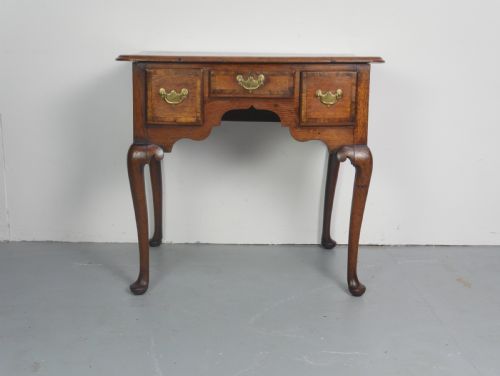
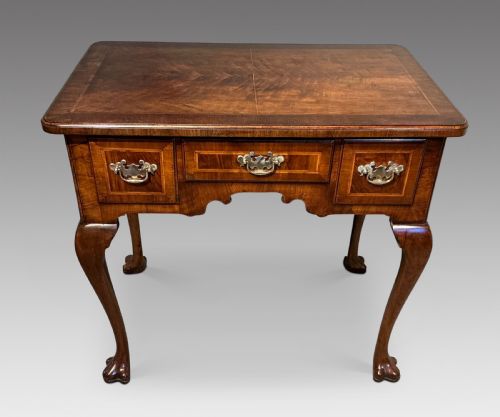


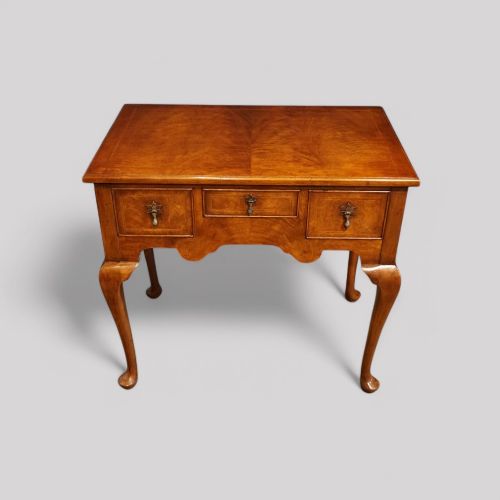
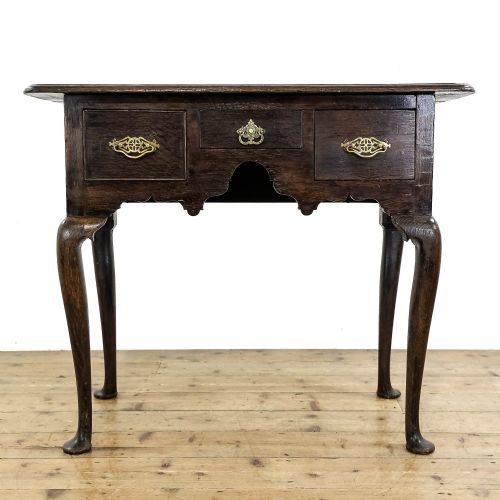
Antique Three Drawer Vanity
An antique three drawer vanity brings period timber and practical compartmentalised storage into the bedroom or dressing room.
Antique Three Drawer Vanity
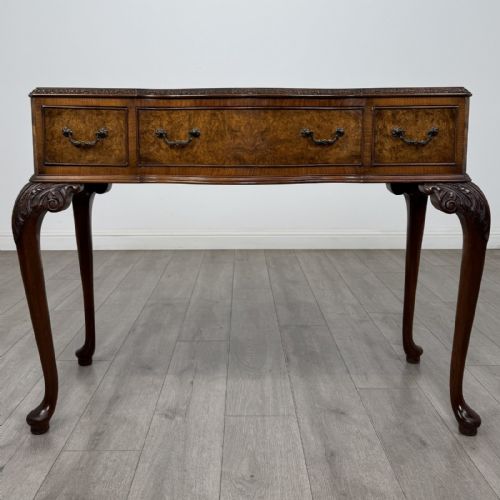
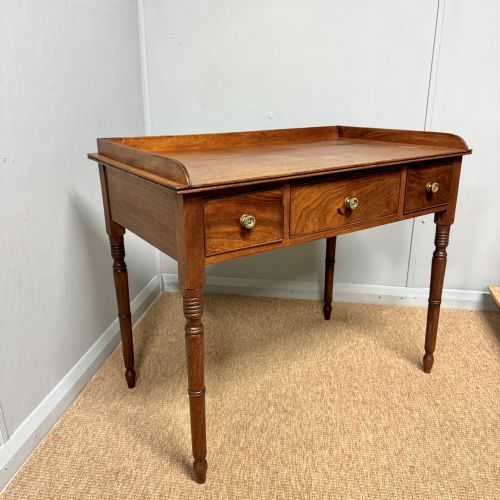
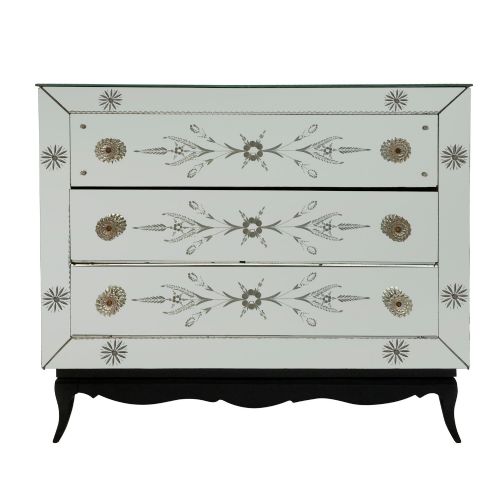
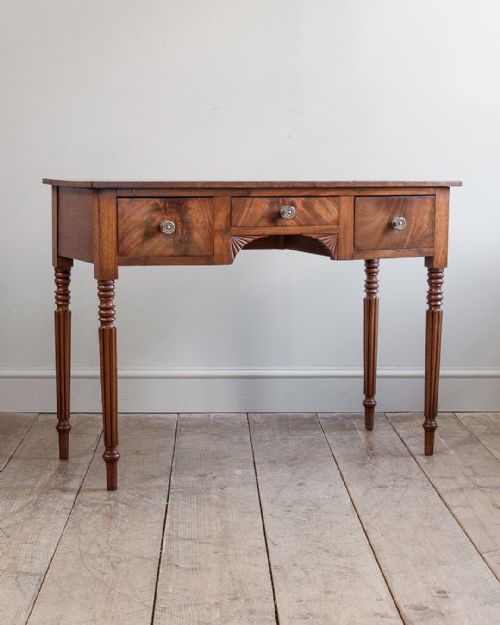
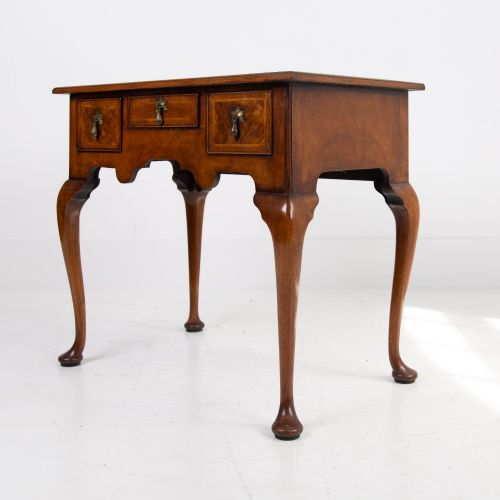
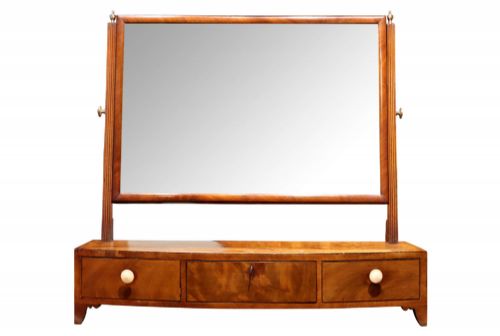
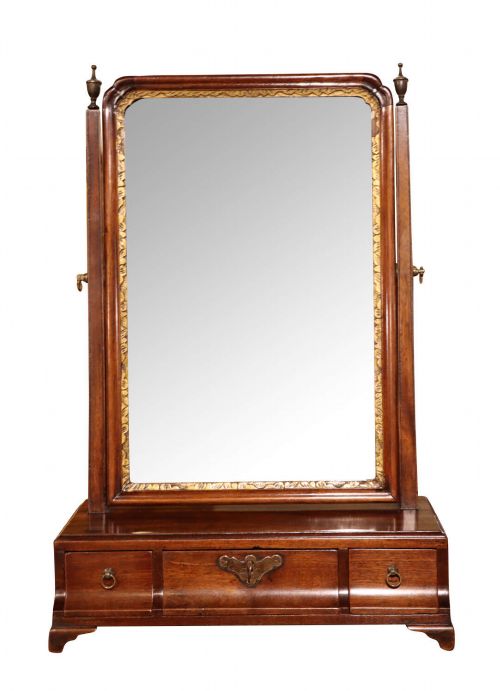
When buyers search for an antique three drawer vanity, they encounter a range of forms including lowboys, dressing table mirrors, and side tables fitted with storage.
The pieces span periods from the eighteenth century through the Georgian and Regency eras into the Victorian period and the 1920s and 1930s.
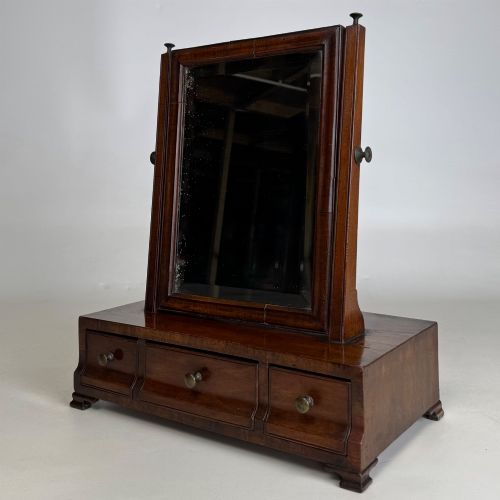
Lowboys and dressing mirrors dominate the selection, combining a compact writing or grooming surface with a tier of small drawers beneath.
Materials and construction
Cabinet makers utilised solid timbers and veneers such as mahogany, oak, and walnut, often selecting burr walnut for figured grain patterns on drawer fronts.
Construction details include hand-cut dovetails on the three drawers, brass drop handles or knobs, and occasionally glass elements in the attached mirrors or gallery tops.
Materials recorded across the inventory include solid mahogany, oak, walnut, burr walnut veneer, brass, and painted wood.
Factors determining quality
Quality rests in the choice of timber and the crispness of execution, from carved knees on cabriole legs to the fidelity of Queen Anne style revivals.
Proportion and surface finish dictate distinction, separating restrained Georgian utility pieces from later decorative walnut and mahogany interpretations.
The Antique Three Drawer Vanity Glossary
- Lowboy
- A small oak, walnut or mahogany table with drawers, typically used as a dressing table or side table in eighteenth-century interiors.
- Dressing mirror
- A swiveling mirror mounted on a box base containing three small drawers, also known as a toilet mirror or swing mirror.
- Cabriole leg
- A furniture leg that bends outward in a convex curve and tapers inward in a concave curve, ending in a pad or carved foot.
- Gallery top
- A low raised rim or rail running along the edge of a tabletop to prevent items from rolling off.
- Burr walnut
- A veneer sliced from the gnarled growth of a walnut tree, prized for its complex swirling grain patterns.
Antique Three Drawer Vanity: Frequently Asked Questions
How were these pieces used originally?
Lowboys functioned as dressing tables or side tables where users kept cosmetics, brushes, or writing materials close at hand in the drawers. Dressing mirrors sat atop larger chests or tables to assist with personal grooming.
The three drawer arrangement allowed for the separation of small personal items, keeping the main surface clear for daily tasks.
How do I date an antique vanity?
Dating relies on secondary woods, handle fixings, drawer construction, and stylistic markers such as cabriole legs or gallery tops. Eighteenth-century pieces typically display hand-cut dovetails and pegged joints.
Later Victorian and 1920s revivals often reproduce earlier Queen Anne or Georgian styles while utilising machine-cut elements and distinct timber preparations.
Where should I place one at home?
An antique three drawer vanity fits comfortably in a hallway, bedroom, or living room as a compact side table or writing surface. Their modest proportions make them suitable for smaller spaces.
Pairing a lowboy with a simple chair creates a functional dressing area, while mirror variations suit the top of a chest of drawers.