
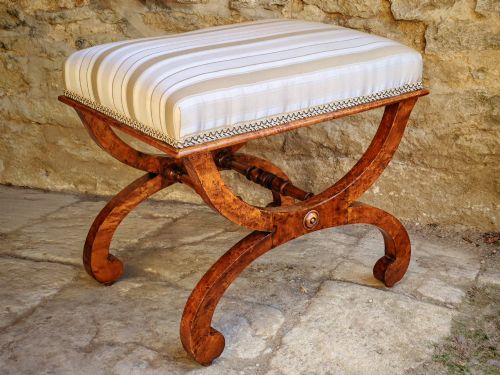


Regency Upholstered Ottoman Bench
A Regency upholstered ottoman bench provides firm seating and rich timber work, bringing period comfort and formal elegance to a traditional interior.
Regency Upholstered Ottoman Bench
When you search for a regency upholstered ottoman bench, you encounter sturdy seating forms developed across the nineteenth century, including stools, footstools, window seats, and long benches. These pieces originate from periods such as the Georgian, Regency, and William IV eras, reflecting neoclassical and French Empire design influences.
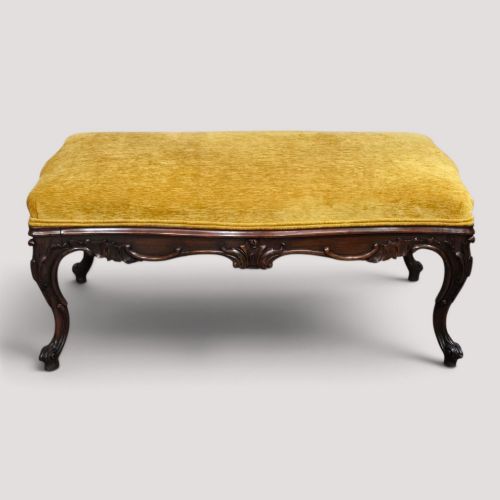
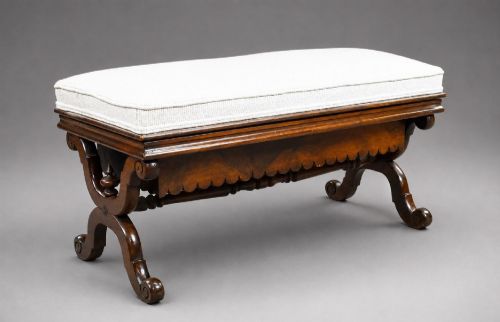
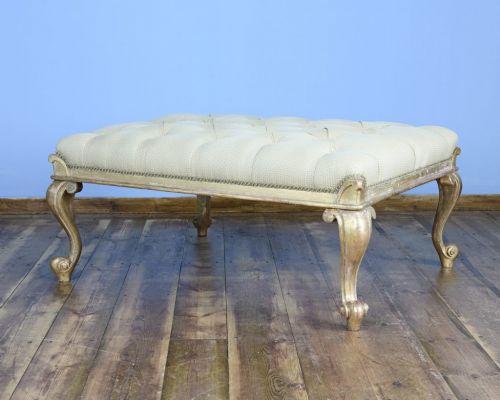
The versions most commonly met on this page combine timber frames in mahogany, rosewood, or giltwood with upholstered tops in leather, velvet, or woven fabric. Makers of the time utilised scrolling X-frames, cabriole legs, and fluted supports to elevate domestic interiors.
Forms range from compact box ottomans to grand scale window seats and long stools designed for the foot of a bed or a formal parlour. The overarching aesthetic relies on classical proportions and rich materials rather than excessive ornamentation.
How they were made
Makers constructed the structural frames from dense hardwoods such as mahogany and rosewood, frequently incorporating parcel gilt highlights or giltwood surfaces for formal reception rooms. Timber selection dictated the weight and durability of each stool or bench.
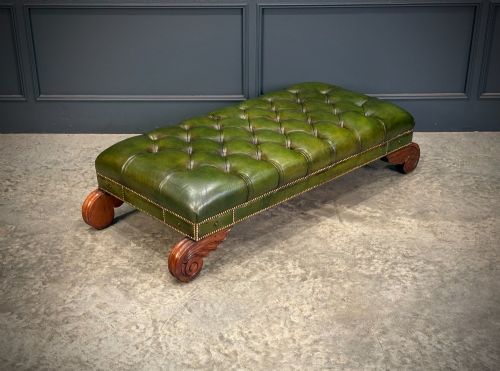
Upholstery techniques involved buttoning, heavy leather covers, and plush velvet or textile panels secured over internal padding to provide resilient seating. Brass details and turned or fluted legs completed the assembly.
Listings feature rosewood, mahogany, and giltwood frames paired with leather and velvet upholstery across the nineteenth century.
What varies in quality
The grade of timber and the precision of the timber carving set superior pieces apart from standard workshop output. Dense grain in rosewood and mahogany indicates a higher standard of material selection.
Structural complexity, such as an intricate X-frame curule design or parcel gilt detailing, demonstrates greater craftsmanship than plain rectilinear forms. The integrity of the frame construction determines the longevity of the bench.
Miles & Edwards
The Regency Upholstered Ottoman Bench Glossary
- Curule stool
- A classical seat form featuring intersecting convex legs shaped like an X, inspired by ancient Roman magistrates' chairs.
- Giltwood
- Timber coated with a thin layer of gold leaf or gesso, commonly utilised on formal nineteenth-century seating frames.
- Box ottoman
- A hinged or lidded seating form designed to conceal interior storage beneath an upholstered top.
- Window seat
- An elongated stool or bench engineered specifically to fit the architectural recess of a domestic window.
Regency Upholstered Ottoman Bench: Frequently Asked Questions
Where should I place a long bench?
These long upholstered benches suit placement at the foot of a bed or along a wide hallway where formal seating is required.
They also function effectively beneath large windows, echoing the historical placement of period window seats.
How do I identify a Regency frame?
Regency frames typically exhibit classical architectural motifs, fluted legs, and rich dark timbers like mahogany and rosewood.
Look for neoclassical influences and structural elements such as X-frames or saber legs that define the early nineteenth-century aesthetic.
Are leather or fabric tops better?
Leather tops offer a durable surface that develops a rich patina over decades of use, suiting studies and libraries.
Fabric and velvet upholstery provide softer textures appropriate for formal drawing rooms and bedrooms.
Can I use an ottoman as a seat?
Historical box ottomans and sturdy footstools were engineered with robust timber frames capable of supporting regular sitting.
Their solid construction ensures they remain functional pieces of furniture rather than purely decorative items.