
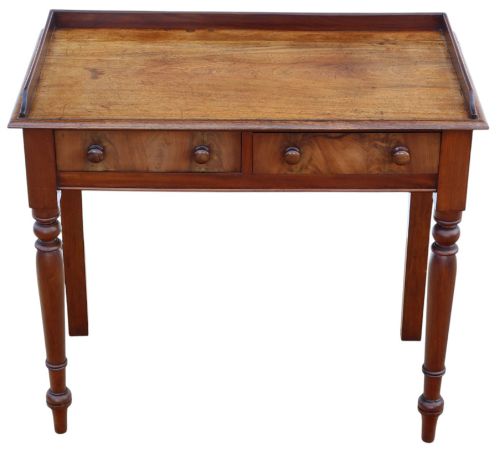
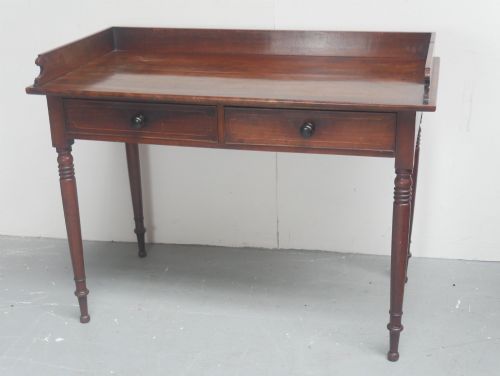
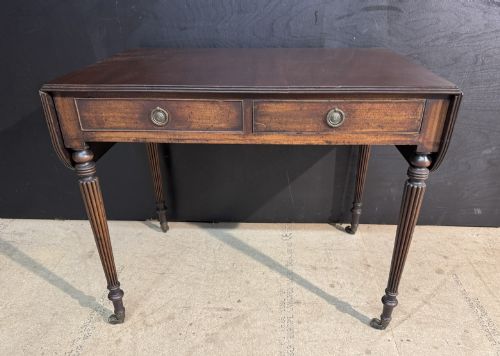
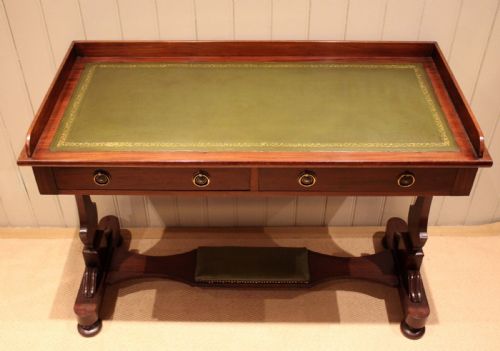
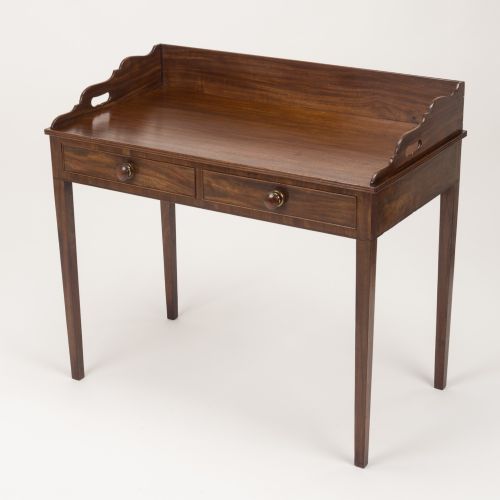
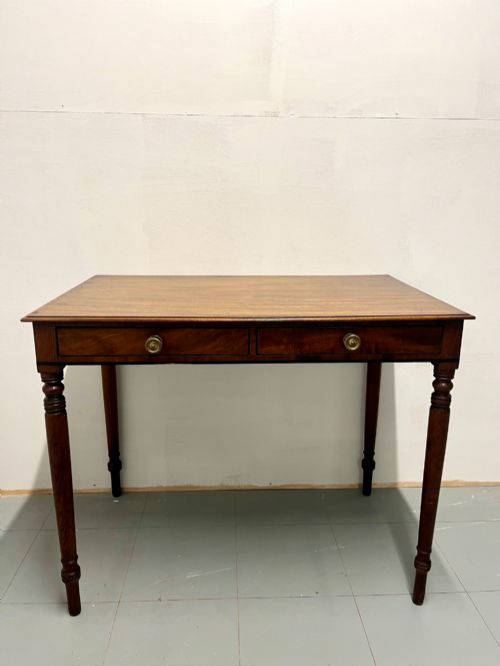


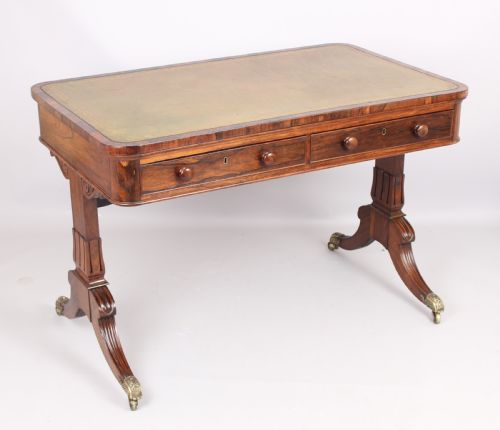
Regency Two Drawer Desk
A regency two drawer desk offers a compact writing surface framed in rich timber, combining utility with classic period design.
Regency Two Drawer Desk
A regency two drawer desk encompasses various forms including writing tables, sofa tables, and library tables from the nineteenth century, Georgian, and Victorian periods. Buyers search for these pieces to gain a functional writing space defined by period craftsmanship.
What varies in quality
The choice of timber grain significantly impacts the overall appearance, with highly figured mahogany and rosewood representing superior selections. The precision of brass inlay and boxwood stringing distinguishes finer examples from simpler utilitarian pieces.
Construction methods and timber selection determine structural integrity, particularly in free-standing library tables and sofa tables designed to be viewed from all sides.
Some tables include hand-painted geometric tops, proving that even serious Regency scholars enjoyed a touch of pattern.
The Regency Two Drawer Desk Glossary
- Regency
- A British design period spanning the early nineteenth century, known for classical restraint and inspiration from ancient Greek and Roman forms.
- Sofa table
- A rectangular table traditionally placed in front of a sofa, featuring drop leaves on either side and two small drawers.
- Library table
- A freestanding desk or table designed for large rooms, finished on all sides to allow placement away from walls.
- Stringing
- A thin inlay of contrasting wood, such as boxwood or ebony, used to outline drawers and borders.
- Chiffonier
- A low cabinet or sideboard, occasionally incorporating a writing drawer and tier shelves.
Regency Two Drawer Desk: Frequently Asked Questions
Where did these tables sit?
These pieces found placement in libraries, drawing rooms, and studies as functional writing surfaces or centre tables.
Freestanding library and sofa tables were positioned away from walls to utilise all sides in open rooms.
What wood was used?
Cabinet makers relied heavily on mahogany and rosewood for their durability and rich grain presentation.
Accents of ebony, boxwood, and brass inlay added decorative contrast to the primary timber surfaces.
How do I identify a Regency piece?
Regency items date from the early nineteenth century and typically display classical restraint, balanced proportions, and dark timbers.
Details like brass inlay and specific leg configurations help separate this period from later Victorian interpretations.
Are writing tables finished on the back?
Library tables and centre tables are traditionally finished on all sides because they stood in the middle of rooms.
Other side tables and desks intended for placement against a wall may feature plain secondary timbers at the rear.