



Regency Tray Top Cabinet
A regency tray top cabinet is a compact bedside piece designed to keep essentials close at hand while adding classic elegance to a room.
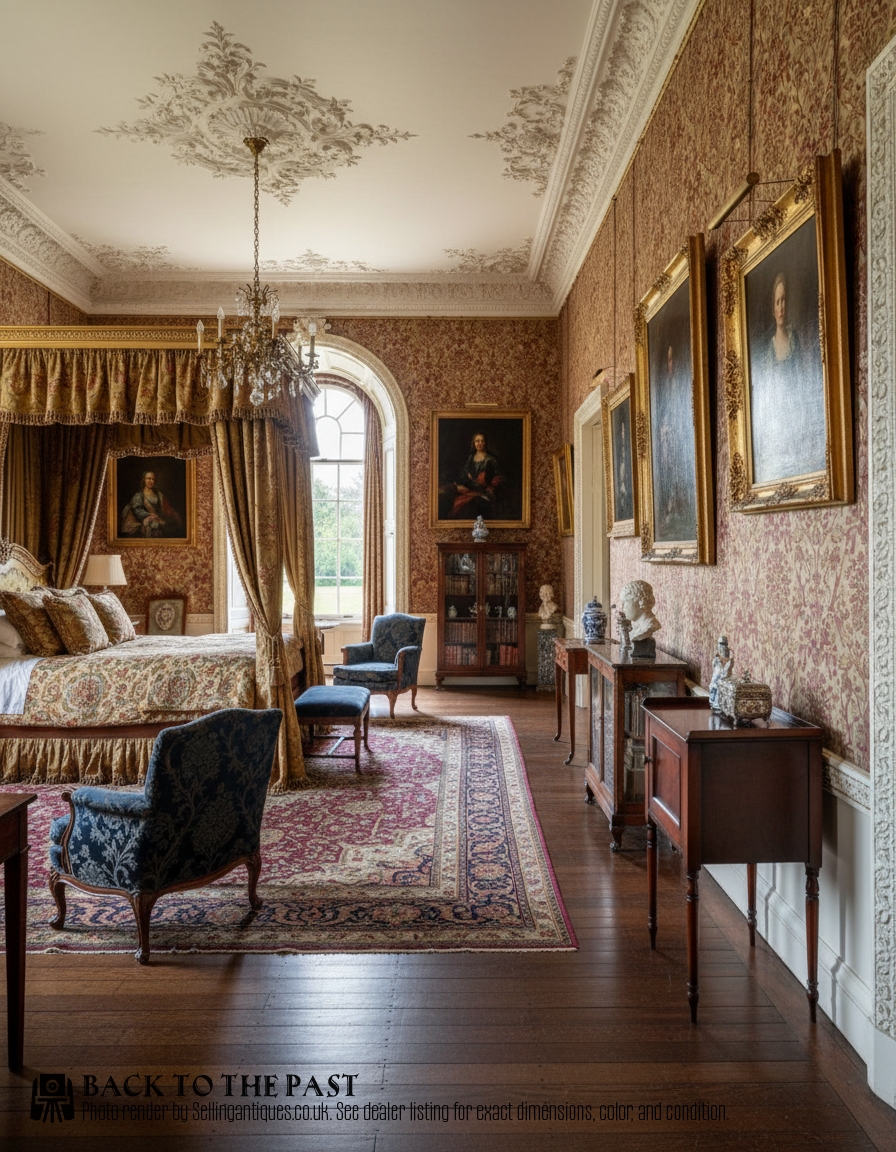
Regency Tray Top Cabinet
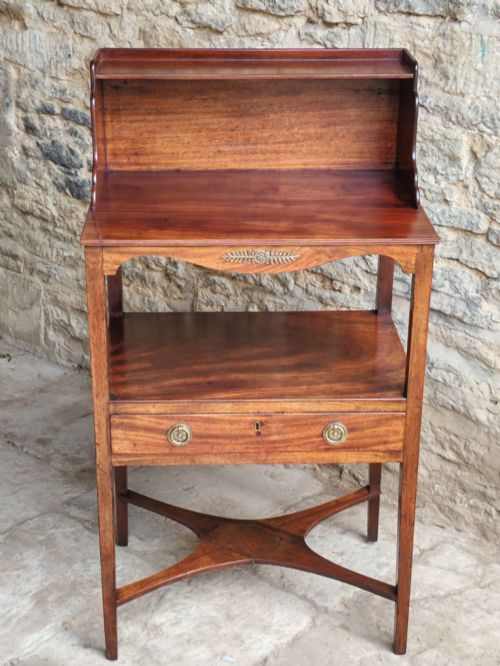
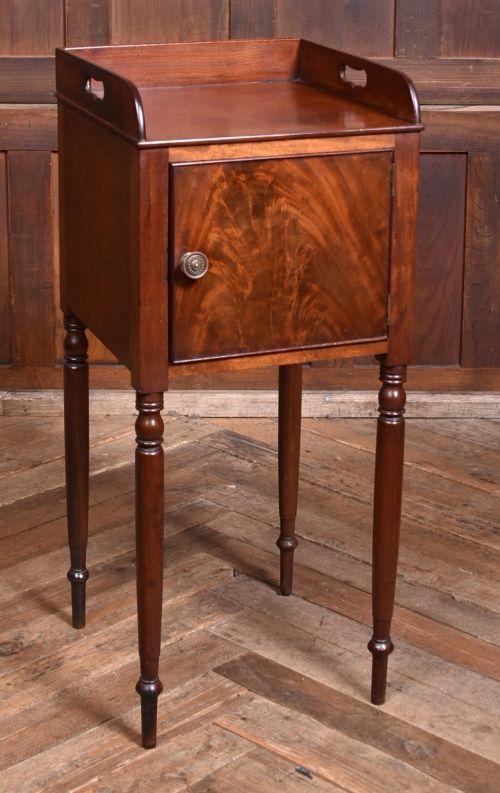
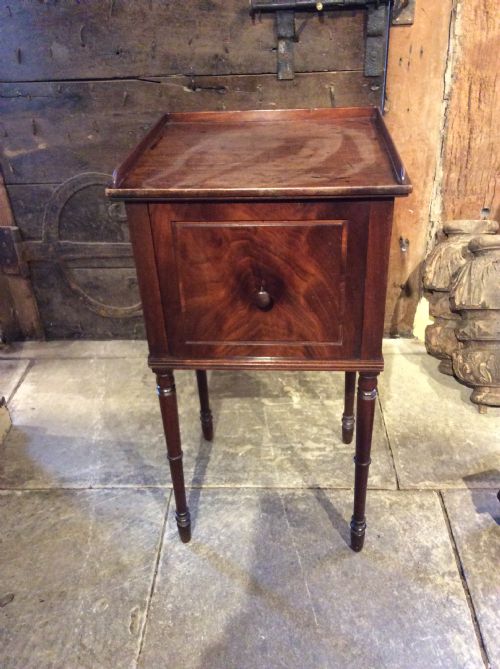
A regency tray top cabinet serves primarily as a bedside table or pot cupboard, offering a small surface enclosed by a raised rim to prevent items from rolling off. The pieces seen here date predominantly from the Regency period and the wider nineteenth century, with occasional twentieth century interpretations.
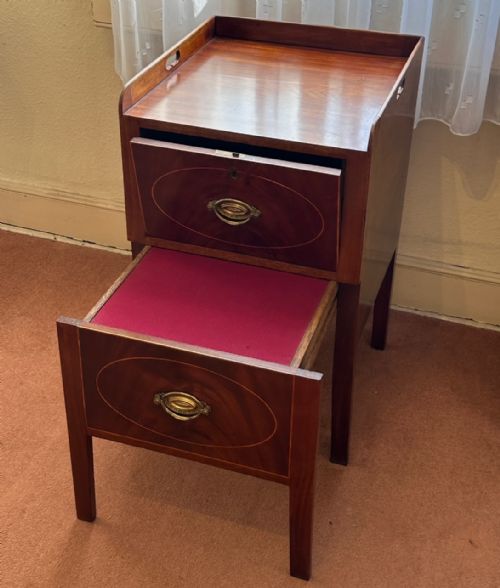
Forms include square bedside cabinets, bedside commodes, and side tables fitted with helpful additions such as pull-out steps. Buyers are most likely to encounter mahogany examples featuring enclosed lower storage alongside the characteristic raised gallery top.
How they were made
Cabinet makers relied heavily on solid mahogany and flame mahogany veneer, often accentuating the timber with boxwood stringing and subtle inlay work. Brass hardware, including handles and fittings, provides functional contrast to the dark wood.
Construction techniques focus on creating sturdy utility for the bedroom, balancing enclosed cupboard space with the distinctive tray top surface.
Some nineteenth century bedside cabinets doubled as discreet indoor plumbing companions.
What varies in quality
Quality rests in the selection of timber figures, particularly the vibrancy of flame mahogany veneers and the crispness of any boxwood inlay. The integration of the raised tray top and the proportion of the piece define the higher tier of these cabinets.
Finer examples retain original brass fittings and mechanical elements like pull-out steps, whereas simpler or later iterations demonstrate more utilitarian construction without decorative stringing.
The Regency Tray Top Cabinet Glossary
- Tray top
- A tabletop finished with a raised moulded or pierced gallery edge designed to secure objects. This feature prevents items from sliding off the surface during use.
- Pot cupboard
- A small bedside cabinet originally constructed to enclose a chamber pot. They typically feature a cupboard door above a closed base.
- Flame mahogany
- A distinct timber veneer cut from the branch junction of the mahogany tree, producing a flickering flame-like pattern. It was favoured for high-status furniture fronts.
- Boxwood inlay
- Narrow strips of pale yellowish boxwood inserted into contrasting dark wood surfaces to create geometric borders. This decorative technique highlights the structural lines of the cabinet.
- Commode
- A piece of furniture containing storage cupboards or drawers, which in earlier periods often concealed sanitary equipment. In the bedroom, it functioned as a sophisticated bedside unit.
Regency Tray Top Cabinet: Frequently Asked Questions
What is a tray top cabinet used for?
These cabinets serve primarily as bedside tables, offering a flat surface enclosed by a raised rim for holding nighttime essentials.
The lower cupboard provides discreet storage for personal items, keeping the bedroom neat and orderly.
How do I identify a Regency piece?
Look for characteristic timber choices like mahogany, often enhanced with subtle boxwood inlay or flame veneer patterns.
Proportions tend to be neat and architectural, reflecting the classical design influences of the early nineteenth century.
Are these cabinets suitable for modern bedrooms?
Their compact dimensions make them highly practical as bedside tables beside contemporary or traditional bed frames.
The enclosed storage hides modern clutter while the top surface holds lamps and books.
What is the difference between a table and a cabinet?
A bedside table may feature an open shelf or simple tray top surface without internal storage compartments.
A cabinet specifically includes a door enclosing a cupboard space beneath the top surface.