





Regency Tiered End Table
These regency tiered end table pieces combine multiple levels with classic lines, offering compact surface space and timeless elegance for any room.
Regency Tiered End Table
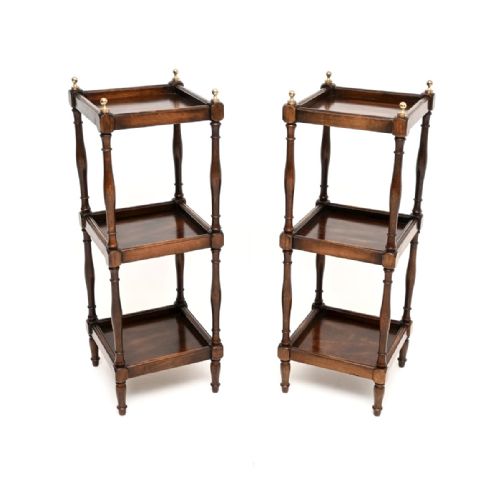
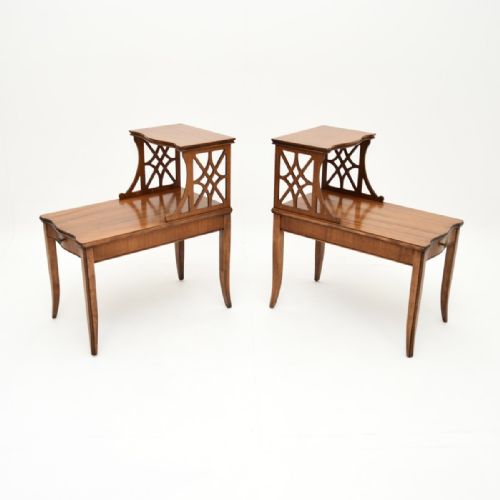
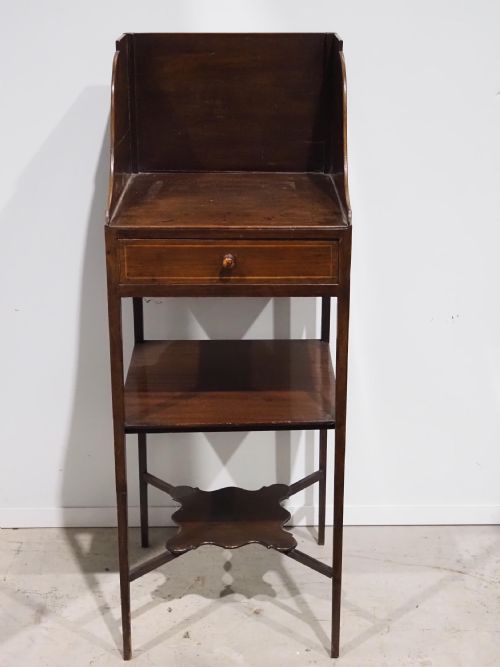
A regency tiered end table brings vertical surface area to a room through stacked tiers, functioning as a side table, occasional table, etagere, bedside table, or whatnot. These pieces often feature two or more levels designed to hold lamps, books, and decorative objects.
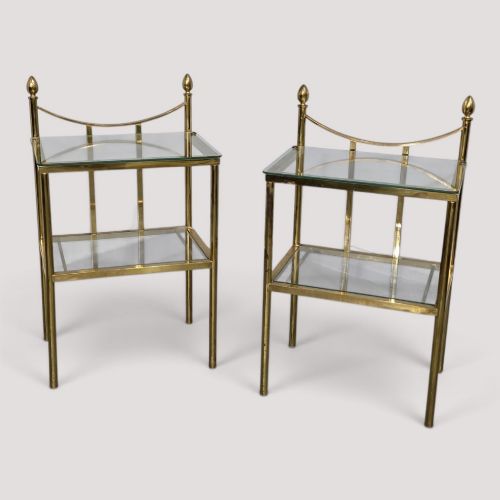
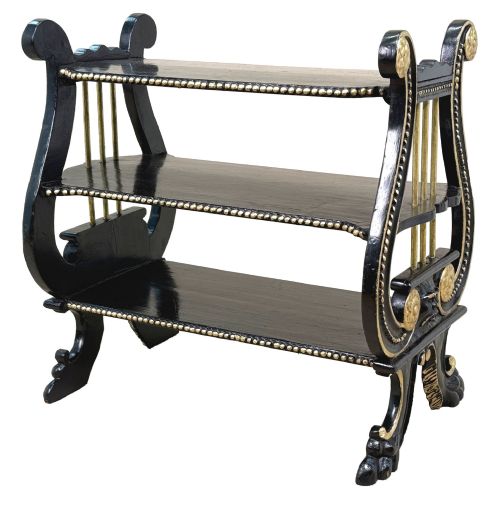
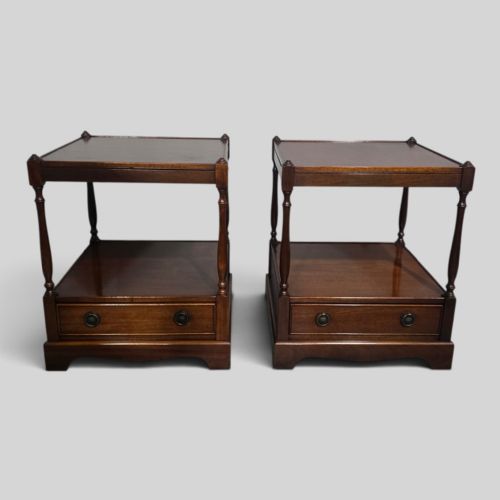
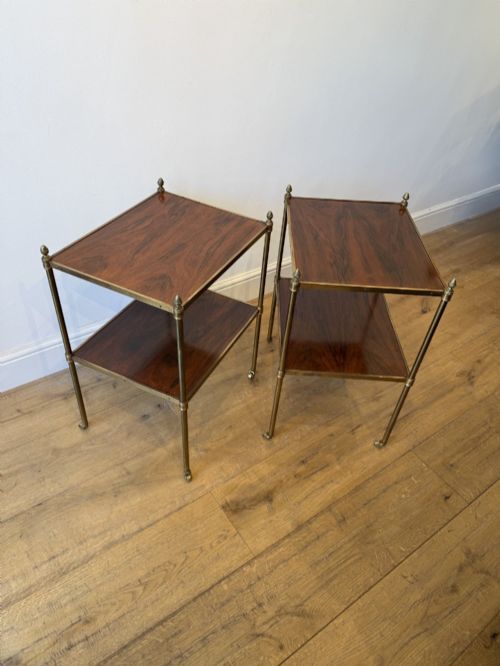
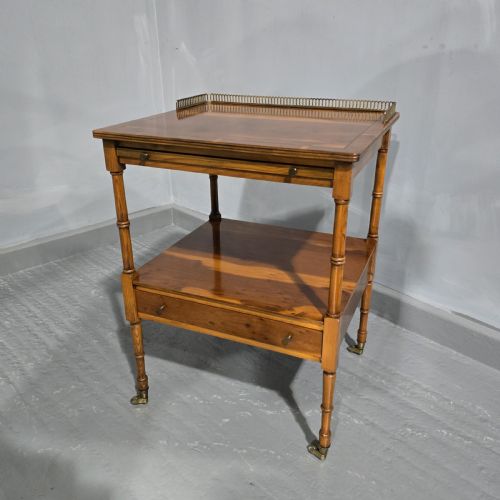
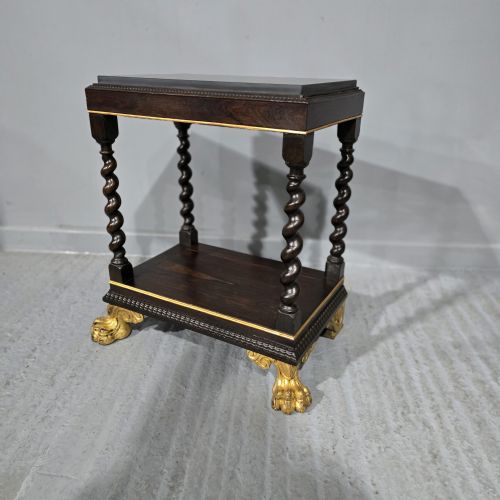
The selection ranges from genuine Regency period pieces to later revivals from the Georgian, Victorian, 19th century, 1920s, 1930s, and various neoclassical or Hollywood Regency styles. Buyers will frequently encounter mahogany, rosewood, and yew wood lamp tables alongside brass and glass étagères.
Forms vary from compact side tables with drawers to elaborate tiered étagères and lacquered occasional tables. Whether you seek a small bedside table or a brass lamp table, the multi-tiered design provides practical utility without dominating the floor space.
How they were made
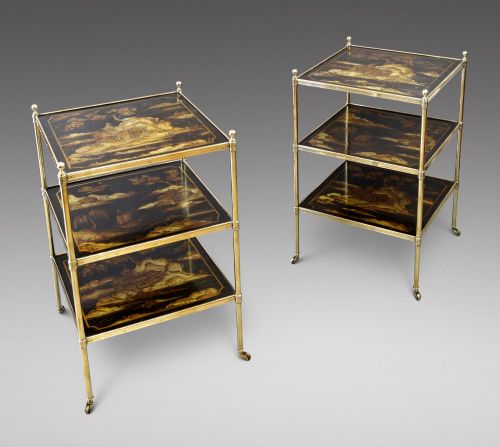
Cabinetmakers constructed these tables using dense timbers such as mahogany, rosewood, and yew wood, often applying ebonised wood, parcel gilding, or black, gilt, and red decoration in Chinoiserie styles. Leather tops also appear on select multi-tiered tables.
Metal and glass feature prominently in many designs, utilising brass frames, chrome structures, mirrored glass, and standard glass panes to create open, reflective tiered étagères and lamp tables.
Current listings feature pieces spanning the 18th century, Georgian period, Regency era, Victorian epoch, and the 1920s to 1930s.
What varies in quality
The distinction between standard examples and top-tier pieces rests on the choice of materials and the refinement of surface decoration, such as hand-applied gilt work, lacquering, or fine timber grain. Attribution to notable makers like Gillows or Mallett also elevates a piece.
Structural integrity and the crispness of turned supports, brass mounts, or parcel gilded details separate master craftsmanship from simpler revival productions.
Mallett·Gillows
The Regency Tiered End Table Glossary
- Whatnot
- A traditional term for an open multi-shelved piece of furniture used for storage or display. They function effectively as end tables or lamp tables in living spaces.
- Parcel Gilded
- Partially covered or accented with gold leaf or gilding. This technique highlights carved details, mouldings, or specific decorative motifs on the wood.
- Chinoiserie
- European decorative art style reflecting Chinese artistic influences. Pieces often showcase distinctive black, gilt, and red decoration.
- Occasional Table
- A small table designed for intermittent use in a room, such as beside a chair or sofa. They include lamp tables, end tables, and bedside variants.
Regency Tiered End Table: Frequently Asked Questions
What is a tiered end table?
A tiered end table is a small piece of furniture featuring two or more horizontal surfaces stacked vertically. It provides extra space for lamps and decorative items while occupying a minimal footprint.
These tables appear in various forms, including lamp tables, bedside tables, and etageres, spanning periods from the Regency era through to the twentieth century.
How were etageres used historically?
Etageres served primarily as display units for ornaments, books, and treasured possessions in formal rooms. Their multiple tiers allowed owners to exhibit collections without cluttering main surfaces.
Over time, smaller versions evolved to function beside seating areas as lamp tables or occasional tables.
Where should I place an end table?
These tables fit naturally beside sofas, armchairs, or beds where surface space is needed within arm's reach. Their multi-tiered design makes them particularly useful for holding reading materials and lighting simultaneously.
Smaller models work well in corners or narrow gaps between furniture pieces.
How do I identify a Regency piece?
Regency pieces often display classical proportions, dark timbers like mahogany or rosewood, and restrained decorative elements such as brass inlay or parcel gilding. Attribution marks or specific construction methods can also help confirm the era.
Revival pieces from later centuries frequently emulate these classic design characteristics.