

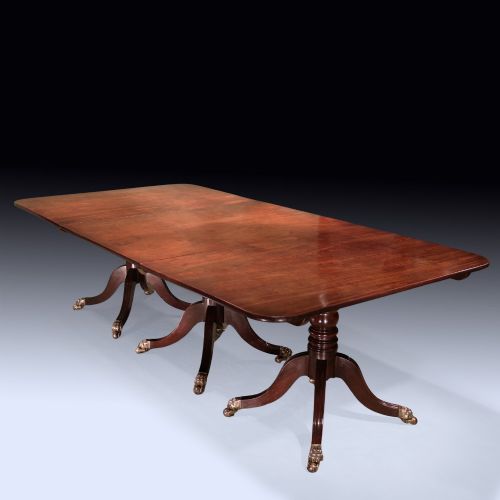
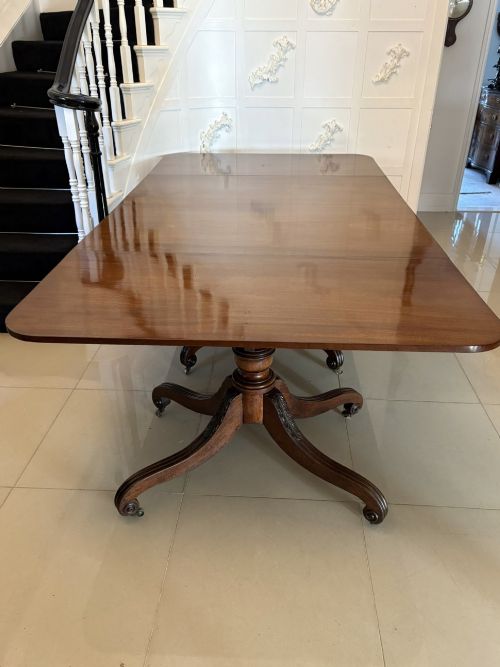
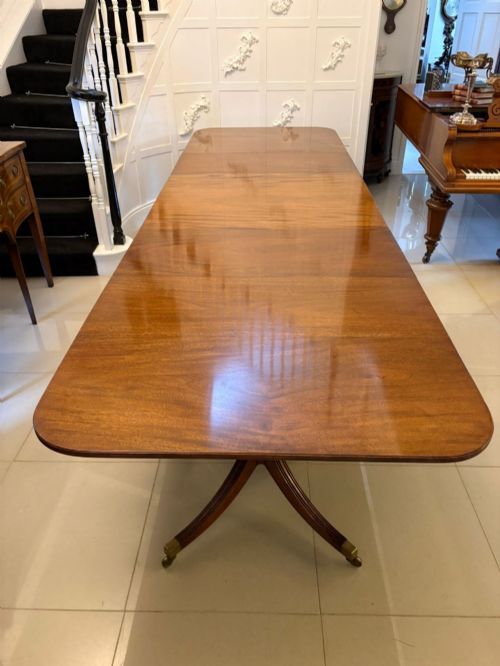
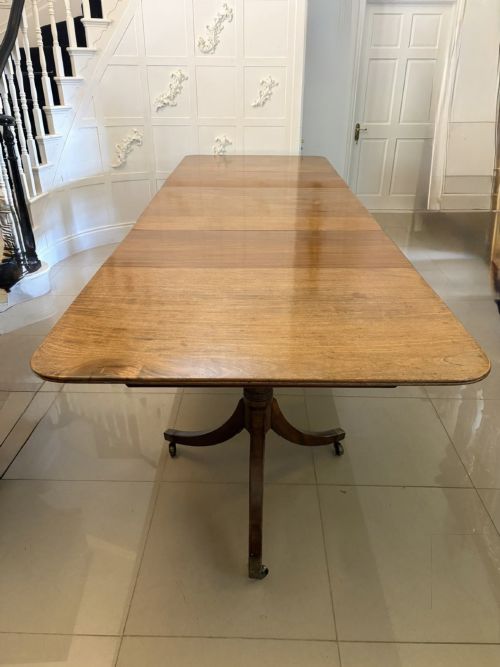



Regency Three Pedestal Table
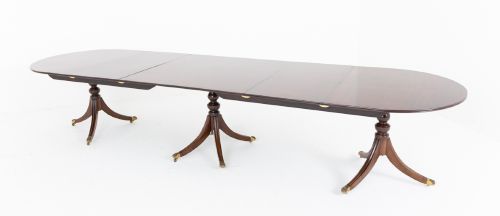
A regency three pedestal table is a grand extending dining piece built for large rooms, prized for its classic proportions and modular flexibility.
Regency Three Pedestal Table
When you search for a regency three pedestal table, you encounter substantial dining furniture designed to seat ten people or more using multiple independent pillars. These items originate predominantly from the nineteenth century and the Georgian period, alongside later revivals from the Edwardian era and the early twentieth century.
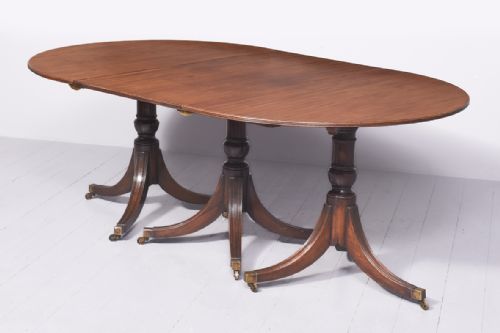
The format typically involves three separate wooden pedestals supporting a long top, often accompanied by removable leaves for extension. While large dining tables dominate this search phrase, the listings also include related forms such as dumb waiters, wine tables, and occasional tripod tables sharing the same period aesthetic.
Most examples found on this page adhere to the Regency style, George III designs, or later Regency Revivals. Buyers often select these pieces to anchor a spacious dining room with traditional British craftsmanship and modular seating capacity.
Materials and construction methods
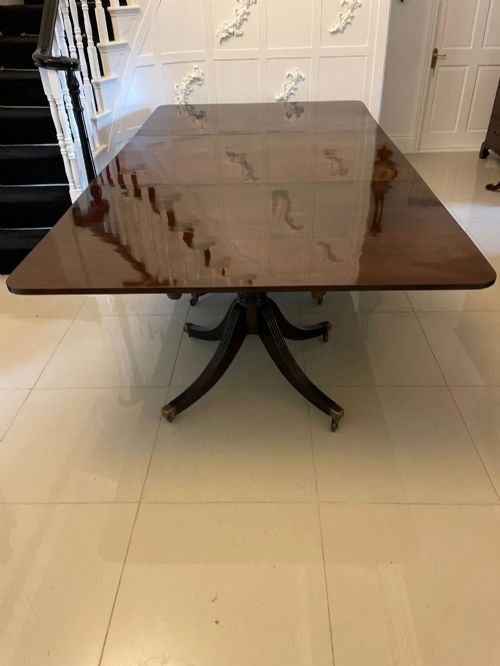
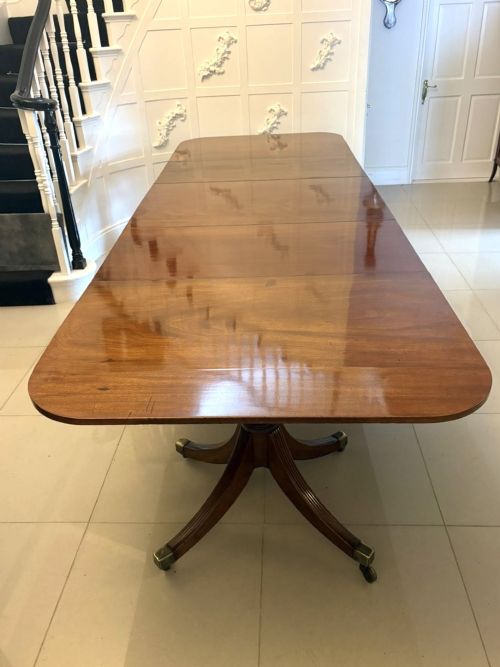
Makers constructed these tables primarily from solid and figured mahogany, occasionally utilising rosewood for later revival pieces. Fiddleback grain patterns and subtle inlay work appear across the tops, supported by timber frameworks built to bear heavy extending leaves.
Brass fittings frequently feature on the pedestal feet and castors, allowing these large dining tables to move smoothly across floors. Cabinetmakers built the pillars with stability in mind, balancing substantial top weights upon tripod or quadruped base designs.
Regency Three Pedestal Table Retail Price Guide 2026
Typical asking prices for regency three pedestal table among the pieces listed under this phrase on Sellingantiques today, from the lower quarter to the upper quarter. They describe what is for sale here now, not the wider market.
Current listings feature nineteenth-century and Georgian pieces alongside 1920s revival models, constructed primarily in mahogany with occasional rosewood and brass details.
Factors that define quality
The standard of timber selection sets individual pieces apart, with highly figured mahogany and well-matched grain patterns indicating superior workshop output. The depth of the colour and the crispness of the turning on each pedestal pillar further distinguish finer examples.
Mechanism integrity dictates daily utility, particularly in how smoothly the extending sections and leaf joints operate. The weight and solidity of the brass castors and the precision of the pedestal joinery complete the measure of quality.
The Regency Three Pedestal Table Glossary
- Pedestal
- A central support pillar beneath a table top, often featuring branched legs with castors. Multiple pedestals allow long surfaces to extend safely.
- Extension leaf
- A removable board inserted into the centre of a dining table to increase its seating capacity. These are stored separately when fewer seats are required.
- Figured mahogany
- Timber exhibiting decorative grain patterns such as flame or fiddleback. Cabinetmakers reserved these boards for prominent table top surfaces.
- Tripod base
- A pedestal support featuring three radiating feet. This configuration provides stable ground contact on uneven historic flooring.
- Castor
- A small wheel attached to the base of furniture legs for ease of movement. Brass versions are typical on nineteenth-century dining tables.
Regency Three Pedestal Table: Frequently Asked Questions
How many people does a three pedestal table seat?
These large dining tables commonly seat between ten and sixteen guests, depending on the addition of extension leaves. Some substantial formats accommodate up to eighteen people comfortably.
The modular nature of the three pillars provides strong structural support along the entire length, preventing sag even when fully extended for large gatherings.
How do I care for a mahogany table top?
Protect the polished timber surface from direct heat and moisture by using mats and coasters during everyday use. Regular dusting with a soft, dry cloth maintains the natural lustre of the wood.
Avoid placing these tables in direct sunlight or beside strong heat sources, as extreme temperature changes can cause the historic mahogany to dry out or split.
How do I distinguish an original period table from a revival?
Examine the construction methods beneath the table top, including the timber shrinkage, hand-cut joinery marks, and the wear patterns on the brass castors. Nineteenth-century originals show distinct signs of age compared to Edwardian or later twentieth-century revival pieces.
Wood patination also offers vital clues, as genuine antique mahogany develops a deep, rich colour and softness over generations of use and polishing.
Can I remove the leaves for smaller rooms?
Yes, the extension leaves lift out easily from the centre framework, allowing you to shorten the table for daily use. The remaining three pedestals still offer balanced support when the leaves are stored away.
This flexibility makes these large dining pieces surprisingly adaptable for different room layouts and varying numbers of household diners.