
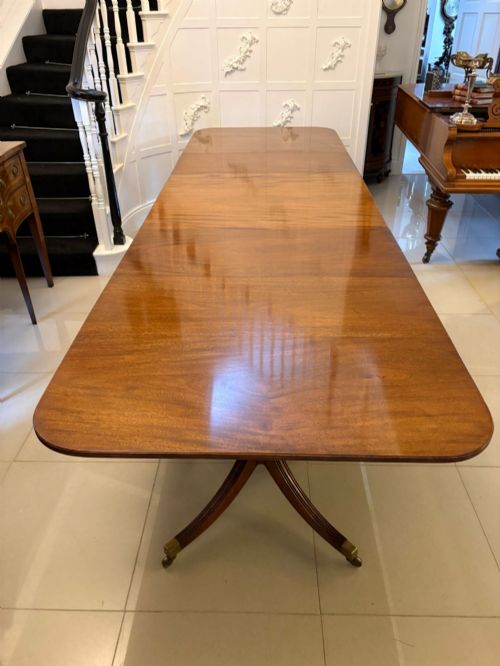
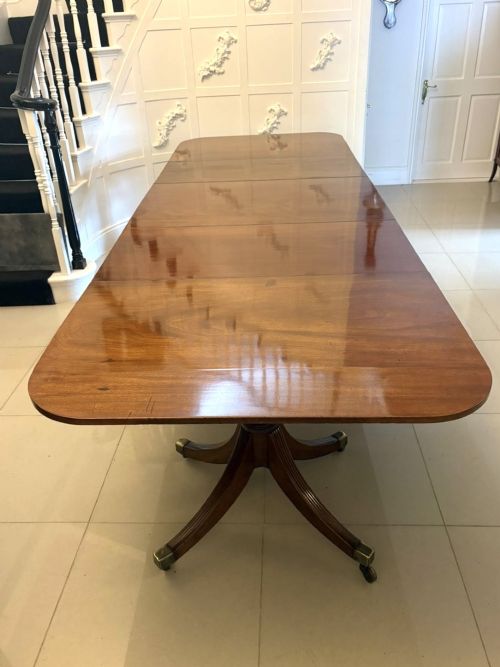
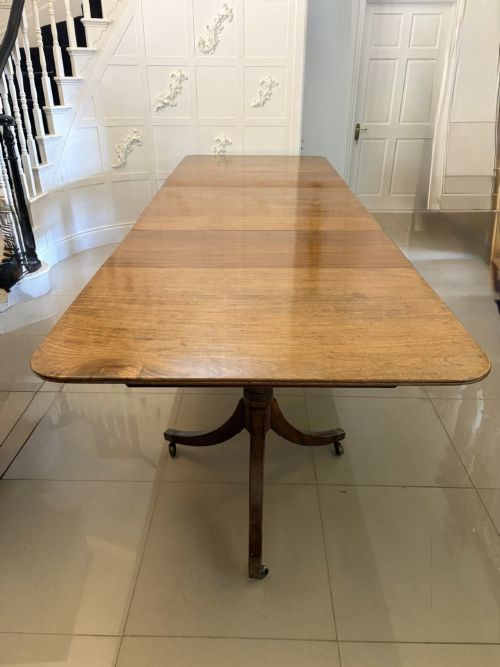

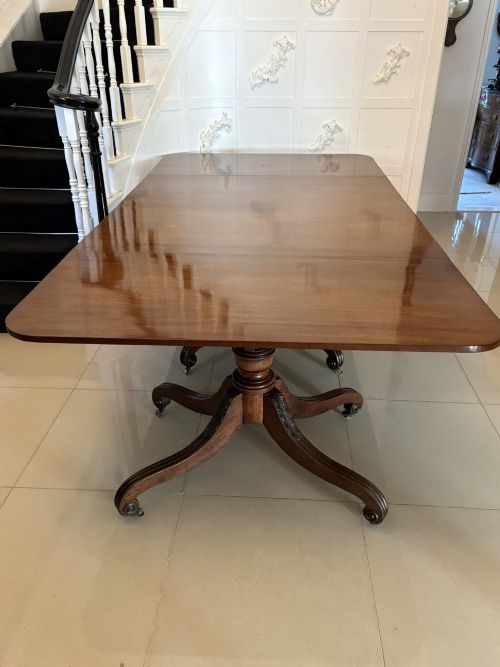


Three Pillar Table
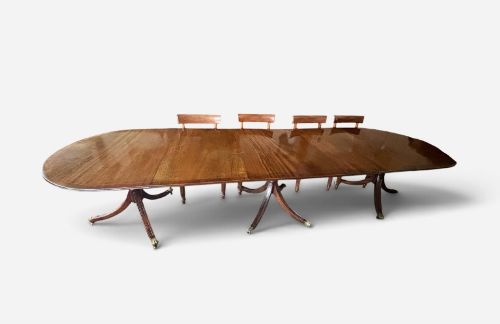
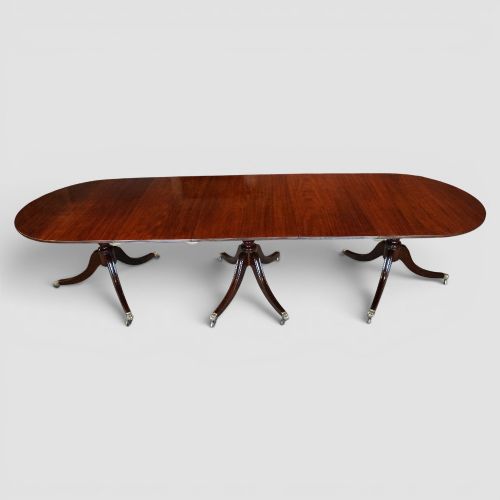
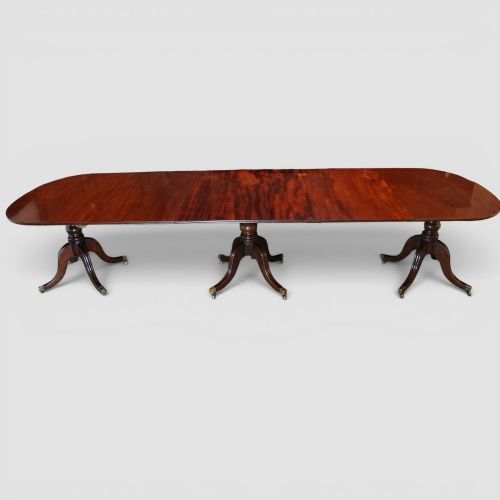
A three pillar table is a substantial dining piece built to seat large numbers, bringing undeniable presence to a room.
Three Pillar Table
A three pillar table is an extending dining table supported by three distinct pedestals rather than traditional corner legs, designed to accommodate large dinner parties. When you search for this phrase, you will most frequently encounter mahogany examples spanning the Georgian, Regency, and Edwardian periods, alongside later revival pieces.
The format typically includes drop-in leaves that allow the table to expand significantly in length. These pieces range from twelve-seater formats to grand tables capable of seating sixteen to eighteen guests.
The underlying architecture relies on a central pedestal flanked by two matching outer supports, ensuring stability across extended lengths. This configuration became especially popular during the Regency and Georgian eras for formal dining rooms.
How they were made
Cabinet makers built these tables using solid and figured mahogany, often selecting timber with rich grain patterns such as flame mahogany or burr walnut for the top surfaces. Brass fittings frequently appear on the pedestal feet or castor mounts.
The construction of the pedestals involves heavy timber turned or carved into pillars, mounted onto splayed legs that terminate in castors for mobility. Leaves were engineered to be removable, resting on telescopic or pull-out wooden runners within the main frame.
Some tables are so long they require an extra pair of legs just to prevent the middle from gossiping.
What varies in quality
The choice of timber grain sets the visual standard, with highly figured mahogany and matched veneer panels marking out the finer examples. Plain timber tops indicate more utilitarian or later revival production.
Engineering touches like the smoothness of the extending mechanism and the weight and casting quality of the brass hardware distinguish superior workshops from standard output. The proportions of the pillars relative to the overall length dictate the visual balance of the table.
The Three Pillar Table Glossary
- Pedestal
- A central support column holding up the main surface of the table. These are usually set upon three splayed legs.
- Extending dining table
- A table designed with removable leaves and internal runners to increase its overall length. This allows the furniture to adapt for larger gatherings.
- Figured mahogany
- Timber selected for distinctive and decorative grain patterns such as flame or curl figures. It was favoured for high-status dining surfaces.
- Castor
- A small wheel fitted to the base of the pedestal legs to allow easier movement across floors. They are frequently cast in brass.
Three Pillar Table: Frequently Asked Questions
How many people do these tables seat?
These tables generally seat anywhere from eight up to eighteen guests depending on the length and the number of inserted leaves.
Larger formats appearing in Georgian and Regency styles were specifically built for substantial dining rooms.
How do I use the extending mechanism?
The top pulls apart in sections along wooden runners housed beneath the frame to create a gap for extra leaves.
Drop-in leaves are then placed into the centre and secured to lengthen the dining surface.
How can I tell a Georgian piece from a revival piece?
Original period pieces display construction methods, timber ageing, and hand-cut joinery consistent with the late eighteenth and early nineteenth centuries.
Revival pieces, such as those from the Edwardian era or later, often use standardised machine-cut joints and different secondary timbers.
Are all three pillar tables made of mahogany?
Mahogany is by far the predominant timber recorded across both period and revival examples.
Alternative timbers such as burr walnut also appear on select tables from various periods.