





Regency Tea Table Drawer
A regency tea table drawer brings together fine timber and practical storage, offering the elegance expected from early nineteenth-century furniture.
Regency Tea Table Drawer
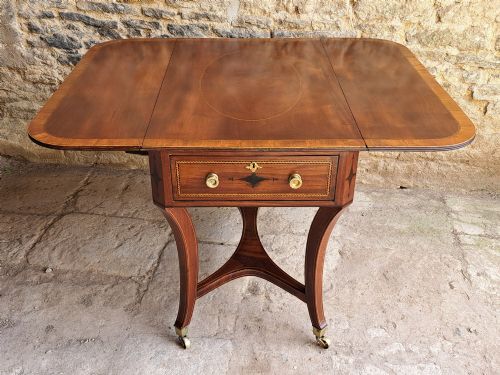
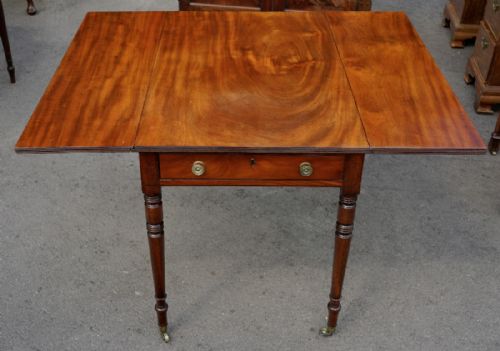
When searching for a regency tea table drawer, a buyer encounters pieces designed for domestic entertaining and writing during the Georgian, Regency, and William IV periods. These versatile items typically function as side tables, occasional tables, or Pembroke tables equipped with useful storage compartments.
Materials and construction methods
Cabinet makers relied heavily on rich timbers such as mahogany and rosewood, sometimes incorporating satinwood for contrast and visual depth. These woods were chosen for their durability and capacity to take a deep, lustrous polish.
Joinery techniques included pegged joints and dovetailed drawer construction to ensure stability across folding flaps and extending leaves. Brass fittings, including castors and drawer pulls, frequently completed the construction of these tables.
Regency Tea Table Drawer Retail Price Guide 2026
Typical asking prices for regency tea table drawer among the pieces listed under this phrase on Sellingantiques today, from the lower quarter to the upper quarter. They describe what is for sale here now, not the wider market.
Baby Pembroke tables offer a miniature take on the classic drop leaf design, perfect for smaller nineteenth-century writing tasks.
Assessing quality in period tables
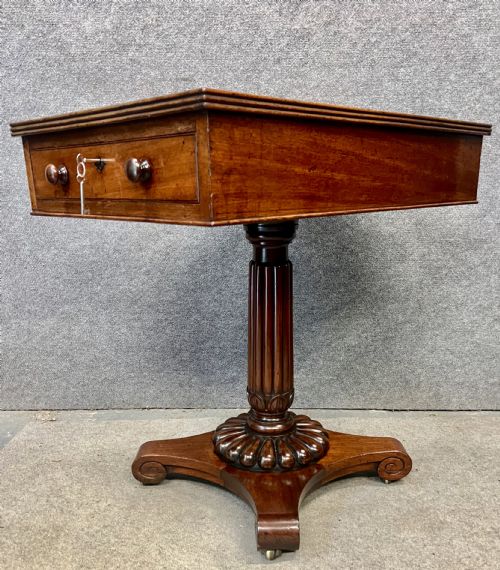
Quality rests significantly on the figure of the mahogany or rosewood, where a lively and well-matched grain distinguishes superior examples from plain stock. The crispness of turning on pedestal bases and the neatness of dovetailing inside the drawer further indicate superior workshop standards.
Proportion and structural integrity dictate the upper tier of the range, ensuring that drop leaves operate smoothly and the table remains balanced when extended. Lesser pieces often display heavier proportions or timber selections that lack the depth and warmth of better-figured examples.
The Regency Tea Table Drawer Glossary
- Pembroke table
- A small table featuring two hinged flap leaves on opposite sides. It typically includes one or more drawers and originated in the eighteenth century.
- Drop leaf table
- A table with a fixed centre section and hinged flaps that fold down. This design allows the footprint to expand or contract according to space and use.
- Occasional table
- A small, light table intended for sporadic use in a principal room. These pieces were easily moved to serve various domestic functions.
- Satinwood
- A durable, yellowish-gold timber valued for its lustrous sheen and smooth texture. It frequently appears in fine stringing and decorative inlay work.
- Dovetail
- A traditional wood joint formed by interlocking wedge-shaped fingers. This method provides exceptional tensile strength for drawer construction.
Regency Tea Table Drawer: Frequently Asked Questions
What is a regency tea table drawer used for?
These tables served multiple functions in the home, initially designed to support tea paraphernalia or social gatherings. The integrated drawer also provided convenient storage for small documents, writing materials, or sewing items.
Over time, their adaptable surfaces made them suitable as writing desks or lamp tables in principal reception rooms. Their compact footprint allowed owners to reposition them easily around the house as daily needs shifted.
How do I identify a Regency period table?
Regency pieces often display classical restraint, featuring dark woods like mahogany and rosewood accented by brass details. Turning on the legs frequently follows architectural motifs derived from ancient Greek and Roman designs.
Construction details such as hand-cut dovetails and traditional timber seasoning also point toward the early nineteenth century. Comparing the proportions to documented examples helps confirm the era of manufacture.
How should I care for antique mahogany furniture?
Keep wooden surfaces away from direct sunlight and strong heat sources to prevent the timber from drying out or splitting. Regular dusting with a soft, dry cloth maintains the finish without building up unwanted residues.
Applying a traditional beeswax polish occasionally helps nourish the grain and preserves the warm patina of the wood. Avoid using modern silicone sprays, which can permanently alter the surface sheen.
Are these tables suitable for modern homes?
Their modest proportions and versatile storage make these tables exceptionally practical for contemporary living spaces. They function readily as side tables in a sitting room or as compact writing desks in a study.
The rich tones of mahogany and rosewood also introduce warmth and historical texture to modern interior schemes. Their sturdy construction ensures they remain fully functional for daily use.