


Regency Style Shelving
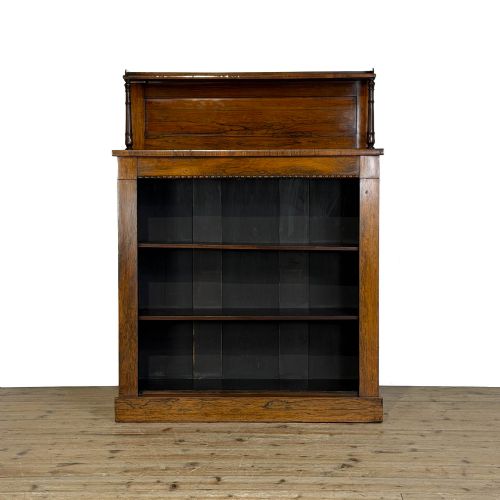
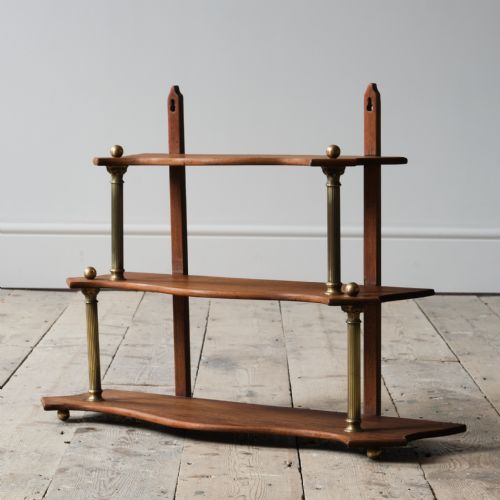
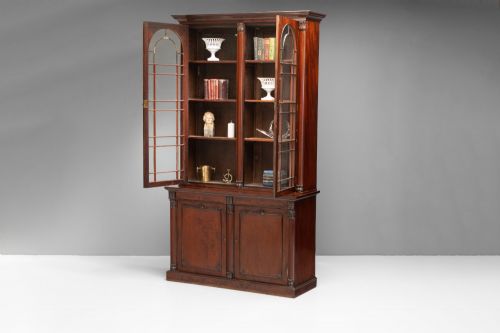
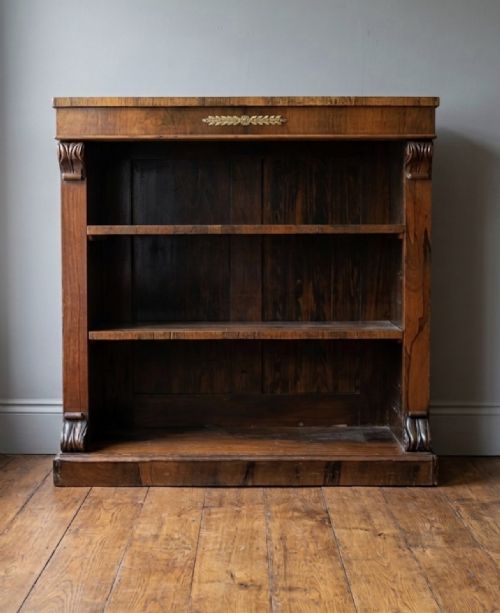
Regency style shelving brings structured elegance to rooms through tiered open bookcases, delicate hanging wall shelves, and multi-tier whatnots.
Regency Style Shelving
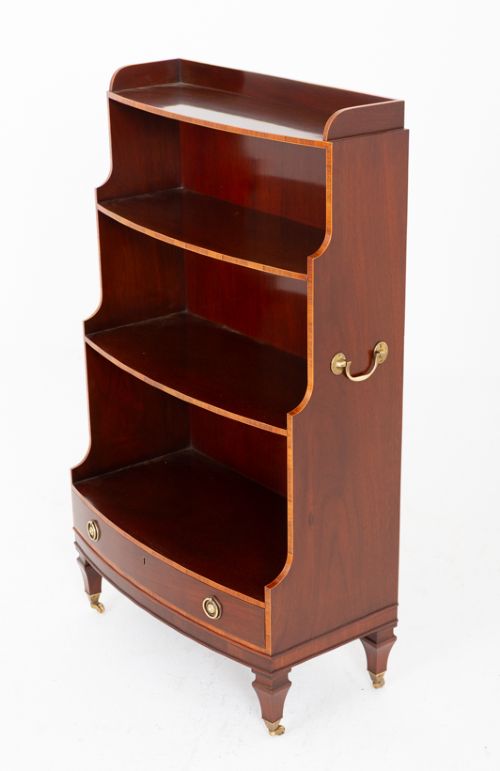
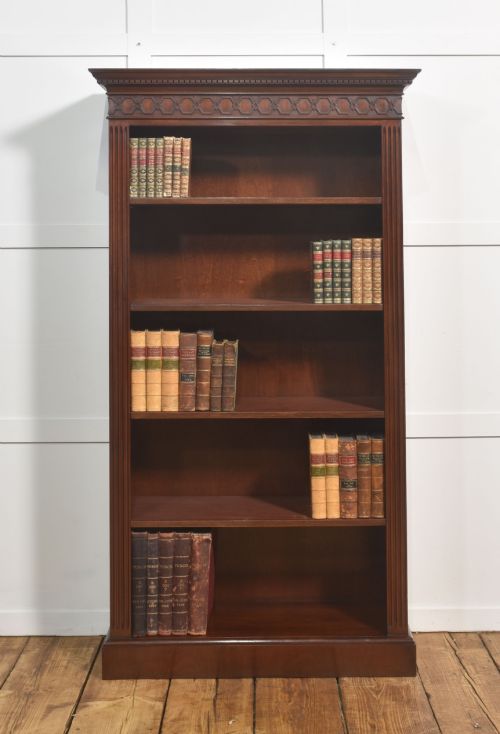
Regency style shelving encompasses open bookcases, wall hanging shelves, and whatnots designed to organise books and display objects with classic proportion. When searching for regency style shelving, buyers encounter pieces spanning the Regency period itself alongside later Victorian, Edwardian, and twentieth-century revivals.
Origins stretch from genuine nineteenth-century workshops to early twentieth-century revivals styled after Regency, William IV, Georgian, and Empire aesthetics. These items serve today as practical storage for libraries, living rooms, and studies.
Factors That Distinguish Quality
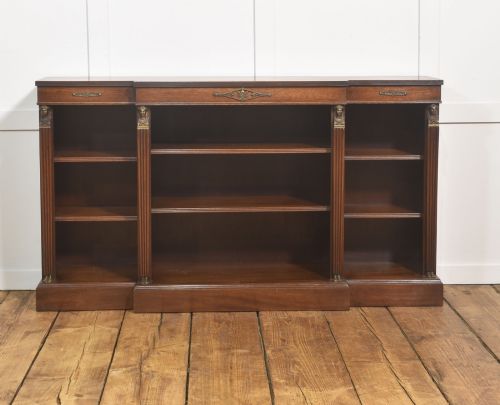
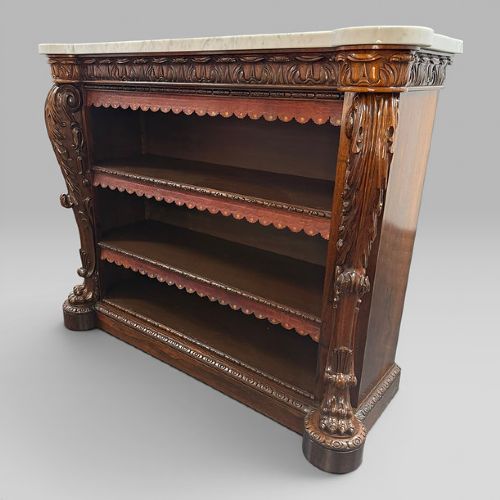
The calibre of timber selection and veneer matching defines the visual weight of each piece, distinguishing modest joinery from master workshops. Grain continuity across breakfront profiles and open shelves reveals the maker's discipline.
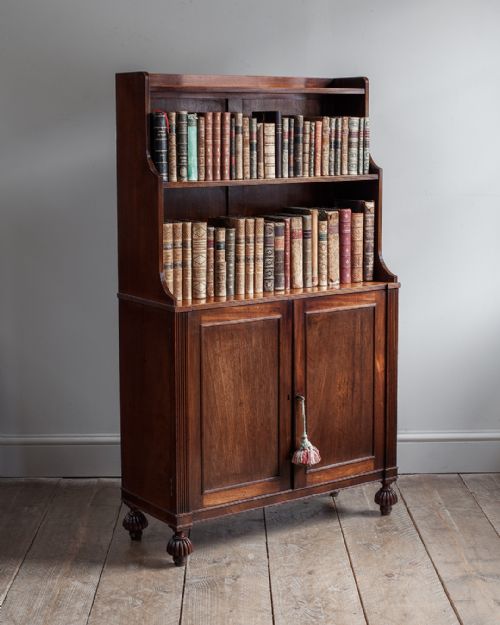
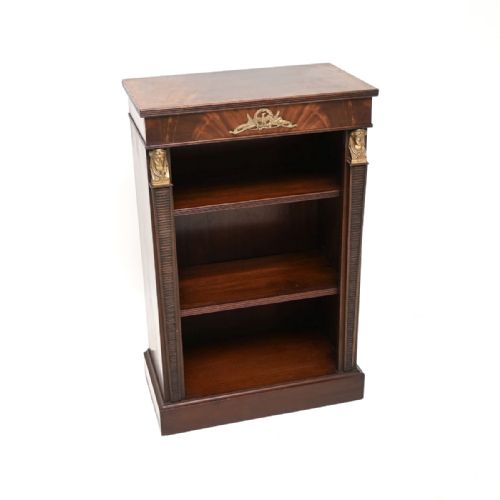
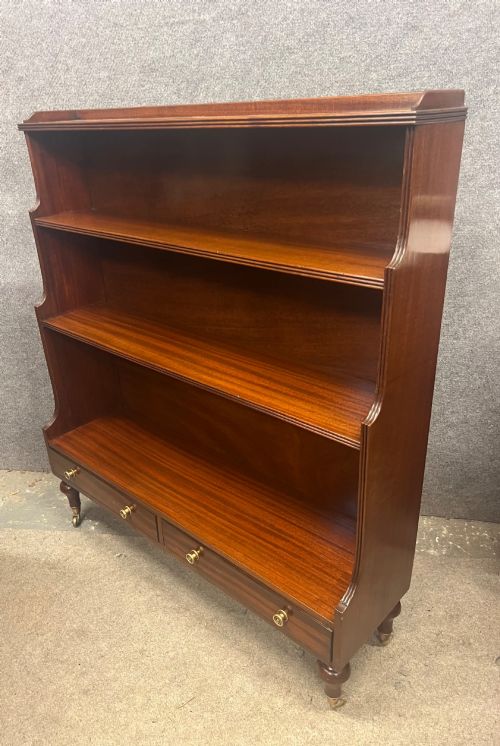
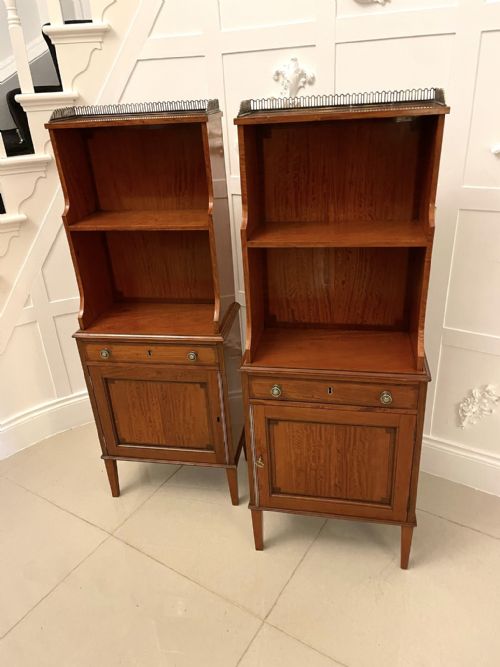
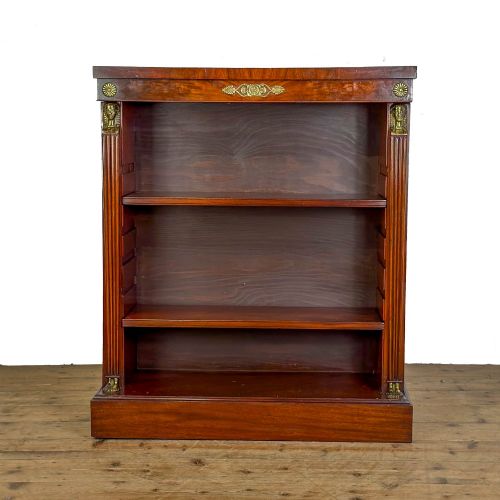
Refinement in secondary details such as brass gallery rails, crisp mouldings, and integrated ormolu mounts separates standard production items from distinguished cabinet work. Structural harmony in stepped waterfall tiers ensures both elegance and stability.
Certain bookcases include clever leather dummy books designed to conceal actual storage compartments.
Gillows
The Regency Style Shelving Glossary
- Waterfall bookcase
- A tiered open bookcase where each shelf steps outward from the one above, creating a cascading silhouette popular in Regency and revival periods.
- Whatnot
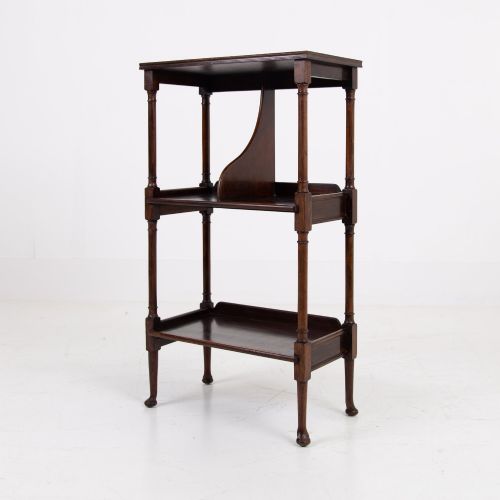
- A multi-tiered piece of freestanding furniture designed for displaying ornaments, books, or writing materials.
- Breakfront
- A cabinet or bookcase whose central section projects forward from the flanking wings.
- Ormolu
- Gilded bronze or brass mounts applied as decorative ornaments to furniture surfaces.
- Crossbanding
- A narrow strip of veneer laid across the grain direction of a panel to form a decorative border.
Regency Style Shelving: Frequently Asked Questions
How were hanging wall shelves used?
Hanging wall shelves provided compact storage for books and small decorative objects in rooms with limited floor space.
They frequently incorporated brass supports and were hung securely above side tables or desks.
What distinguishes a whatnot?
A whatnot is an open, multi-tiered shelving unit designed specifically for holding ornaments, collections, and accessible books.
These pieces often stood independently in drawing rooms and combined open display surfaces with small drawer bases.
How do I identify Regency style from original pieces?
Original pieces date from the early nineteenth century and exhibit period timber choices, hand-cut joinery, and authentic brass hardware.
Revival items from later decades often replicate these classic proportions using similar mahogany and rosewood veneers.