
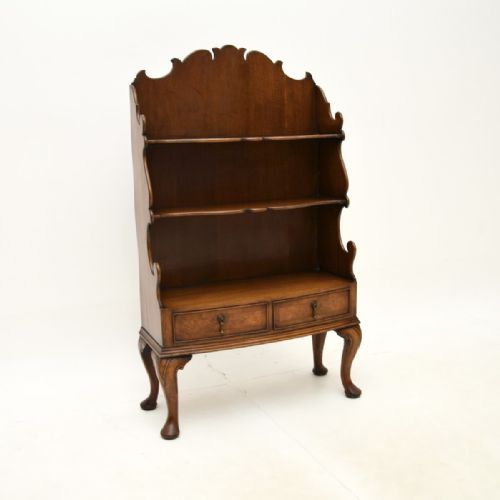
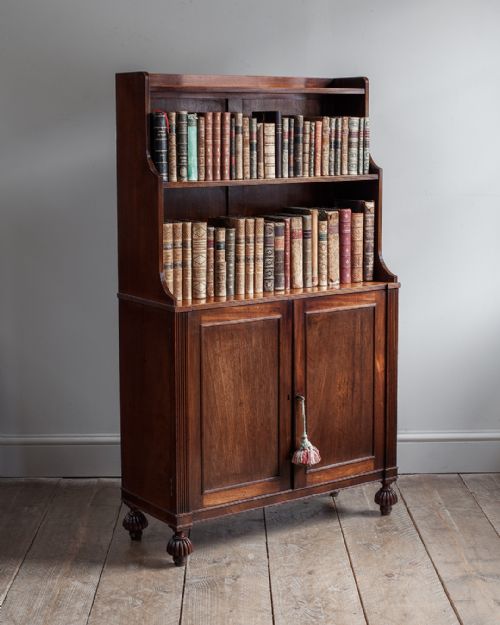
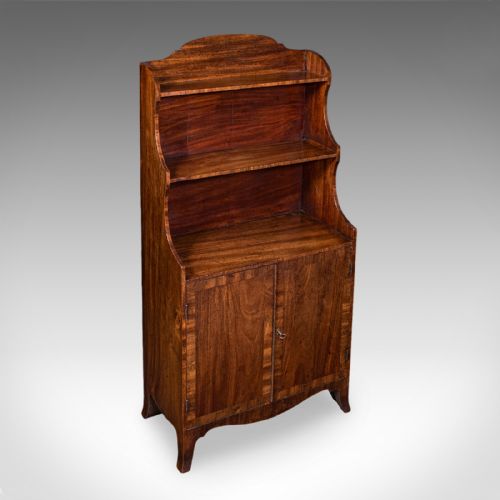
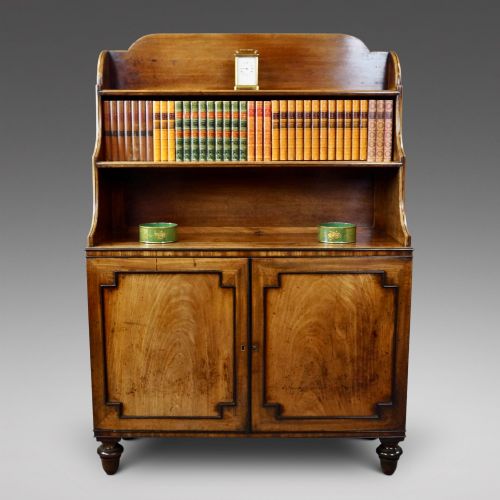
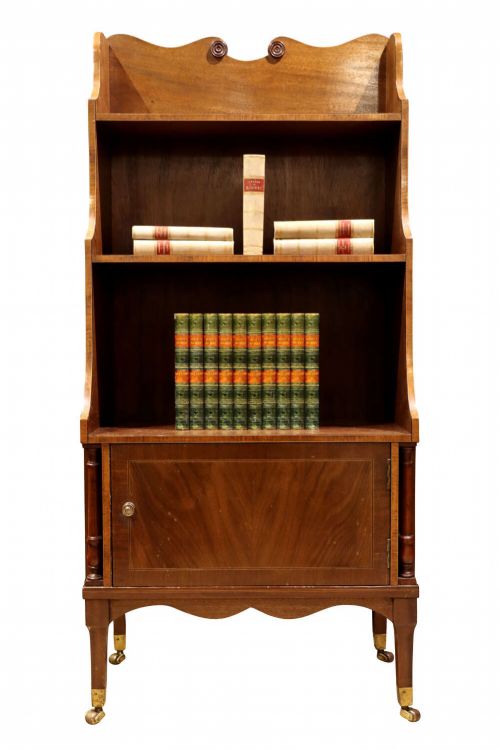


Vintage Waterfall Bookcase
A vintage waterfall bookcase brings tiered shelving and rich timber character to any room, offering practical display space with distinctive stepped profiles.
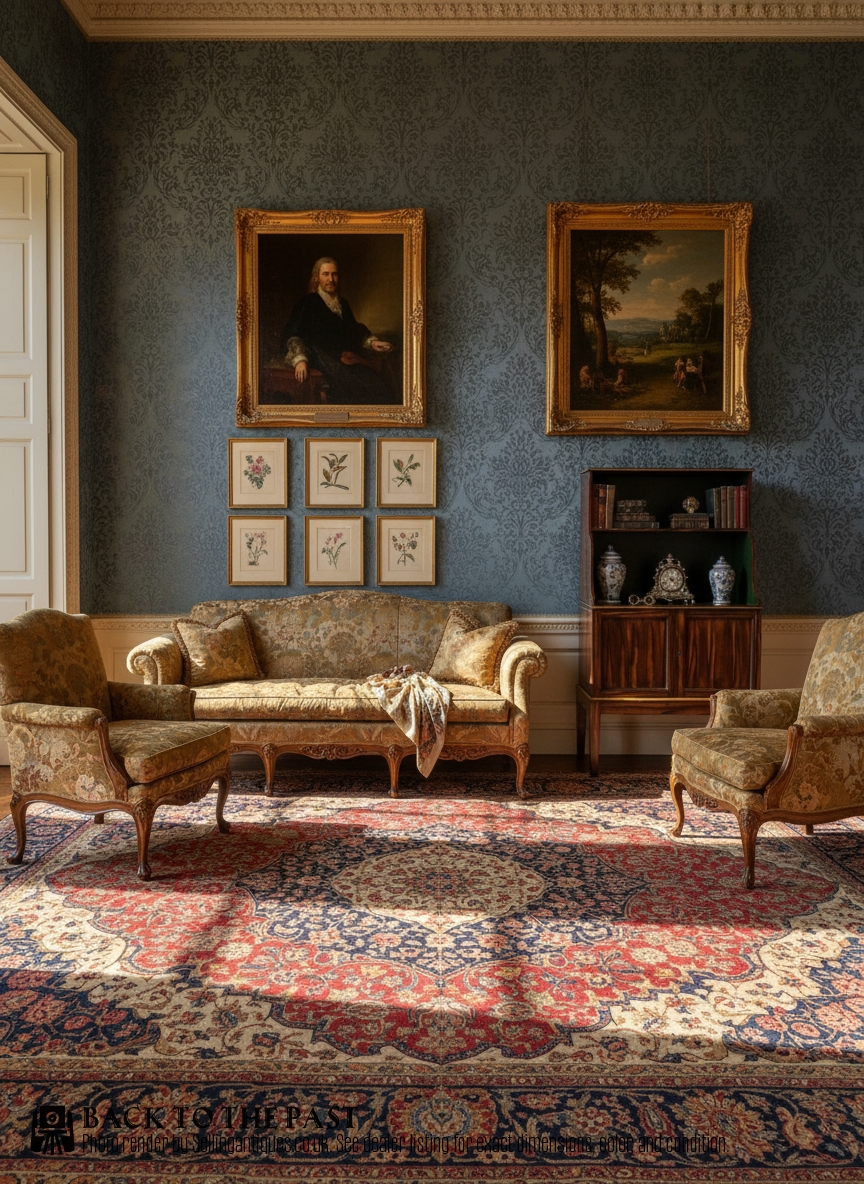
Vintage Waterfall Bookcase
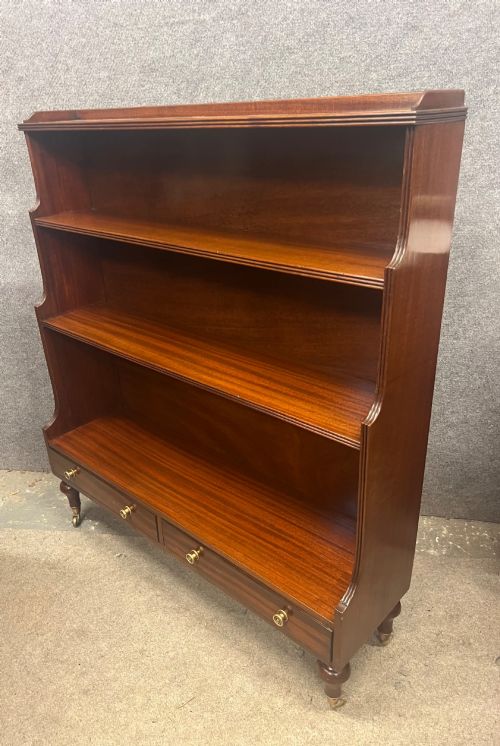
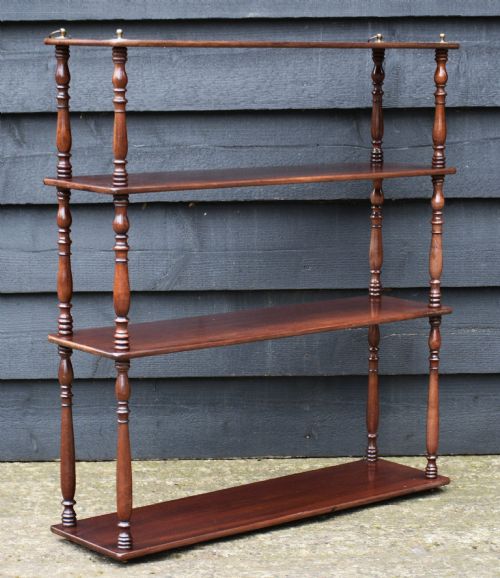
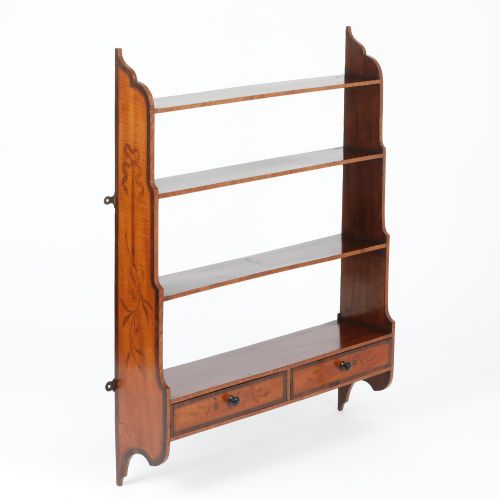
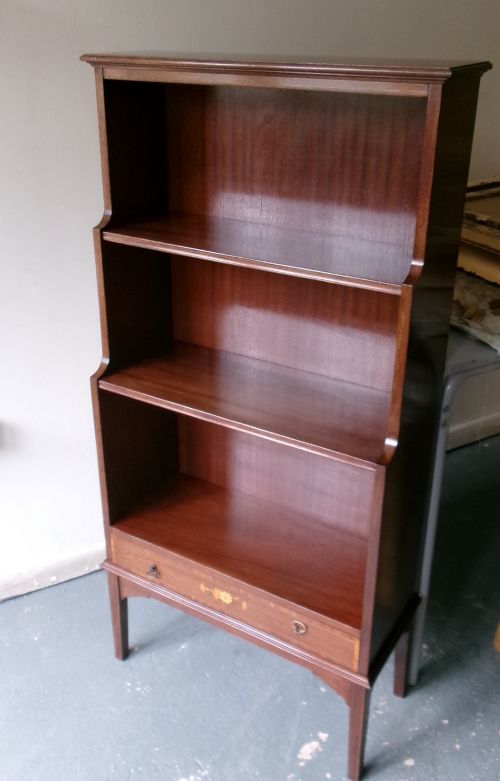
The format ranges from compact wall hanging shelves and petite chiffonier cupboards to larger freestanding mahogany cabinets fitted with brass castors. Many versions incorporate lower storage drawers or small panelled doors beneath the open graduated tiers.
Makers utilised various regional interpretations, producing pieces in styles spanning from formal Georgian and Regency designs to Arts and Crafts and French influences. The most frequently seen items combine traditional open shelving with the characteristic graduated depth that defines the genre.
Materials and Construction
Cabinetmakers relied heavily on solid mahogany and figured veneers such as flame mahogany, burr walnut, and satinwood to build these tiered structures. Carpenters highlighted the natural grain of the timber on the prominent shelf edges and back panels.
Secondary woods like oak and yew appear in the internal framework and shelving supports of period pieces. Brass details, including castors, gallery rails, and drawer handles, provide functional contrast to the dark timber surfaces.
Materials recorded across the inventory include mahogany, satinwood, burr walnut, oak, yew wood, and brass.
Evaluating Quality and Craftsmanship
Superior examples demonstrate careful selection of timber veneers that match symmetrically across the graduated tiers and cabinet doors. Fine joinery is evident in the flush fitting of drawers and the secure housing of each stepped shelf into the side supports.
Shapland and Petter
The Vintage Waterfall Bookcase Glossary
- Waterfall Bookcase
- A piece of furniture featuring multiple open shelves that step back progressively from bottom to top. This stepped arrangement allows smaller books to sit at eye level while deeper volumes rest below.
- Flame Mahogany
- A prized veneer cut from the fork of a mahogany tree where the branches join the trunk. It exhibits a fiery, undulating grain pattern that catches the light.
- Chiffonier
- A low cabinet or sideboard equipped with shelves or a small cupboard space above. In these listings, petite versions often combine lower storage with upper waterfall tiers.
- Stringing
- A narrow line of contrasting inlay wood embedded into the surface of a panel or drawer front. Cabinetmakers used this decorative technique to define the borders of Edwardian and Georgian furniture.
- Open Gallery
- A low decorative railing, often made of brass or pierced wood, fitted along the top or back edges of shelves. It prevents items from sliding off the rear or sides.
Vintage Waterfall Bookcase: Frequently Asked Questions
How do I style a waterfall bookcase?
Place taller books on the deeper bottom shelves and lighter volumes or decorative objects on the smaller upper tiers. This visual weight distribution mirrors the natural stepped architecture of the furniture.
Keep surrounding items simple so the cascading profile remains the visual focal point of the wall or corner.
Are these bookcases sturdy enough for heavy books?
Period pieces constructed from solid mahogany or oak are structurally robust and easily support substantial volumes on their lower shelves. The graduated design inherently places the heaviest books at the deepest base.
Avoid overloading the shallow top shelves with dense encyclopaedias, reserving them instead for lighter novels and small ornaments.
How can I tell a Regency piece from a later copy?
Examine the timber stock, construction joints, and backboards for signs of period hand-tooling and natural ageing. Regency examples often display dense San Domingo mahogany and simpler joinery methods without modern mechanical fasteners.
Later revival styles from the Edwardian period or nineteen-twenties frequently utilise lighter secondary woods and machine-cut elements.
Can I place a wall hanging shelf on any wall?
Hanging bookshelves require secure fixings into wall studs or masonry to support the combined weight of the timber frame and books. Check the load-bearing capacity of your wall before mounting any antique display shelf.
Ensure the hanging brackets or screw holes on the back of the piece are sound before installation.