
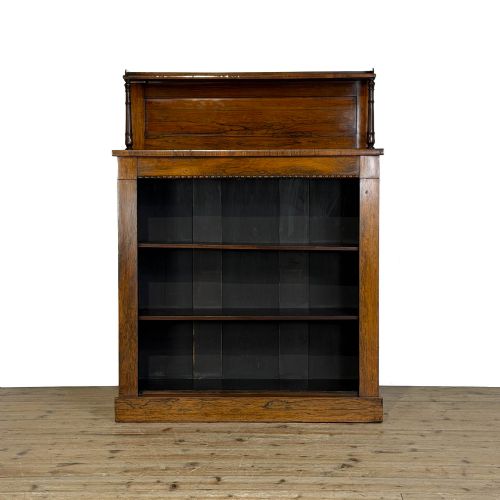
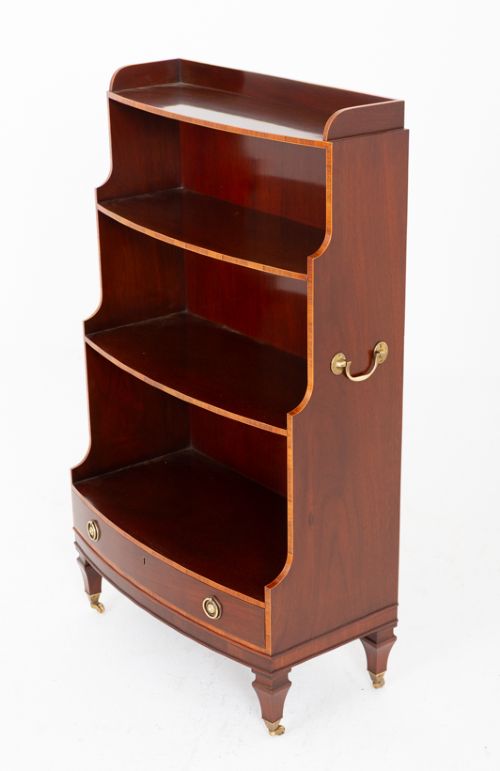
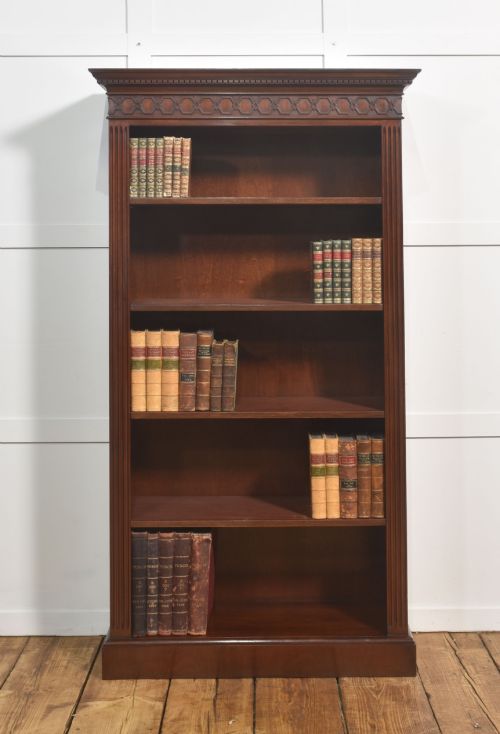
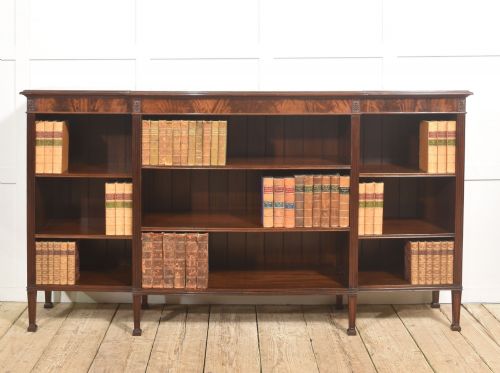


Regency Open Front Bookcase
A regency open front bookcase brings architectural clarity and accessible shelving to a room, offering immediate display space for a growing library.
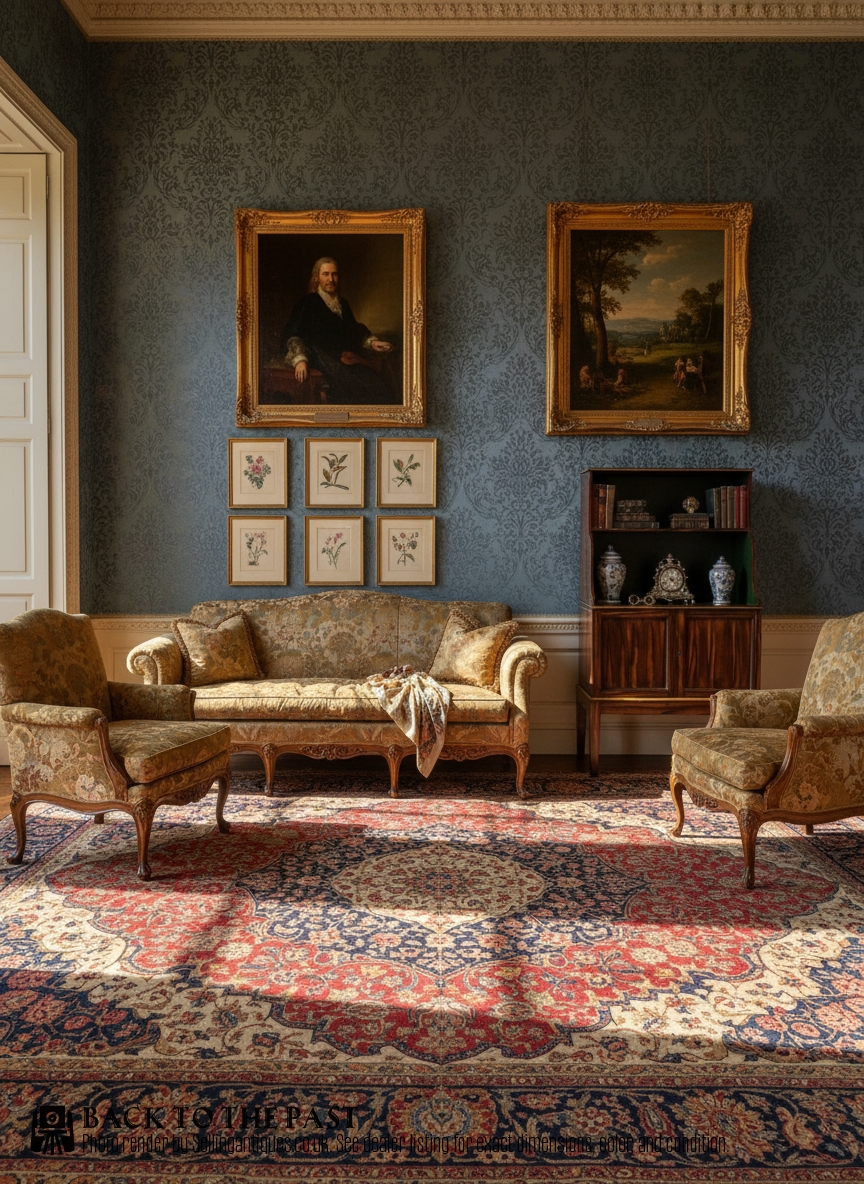
Regency Open Front Bookcase
A regency open front bookcase provides wall storage without the visual weight of glazed doors, making it practical for daily book retrieval. These pieces range from compact dwarf models to substantial breakfront library bookcases designed to anchor larger rooms.
The selection here draws primarily upon nineteenth-century pieces alongside later revivals from the early twentieth century. Cabinets emerge in varying proportions, featuring low formats suited for display surfaces as well as taller library variants.
Makers and designers working in this tradition utilised rich timbers to create clean, linear facades. The open format allows bindings and papers to remain visible, contributing a warm, lived-in character to domestic interiors.
Materials and construction methods
Cabinet makers built these bookcases using solid and veneered hardwoods, selecting dense timbers for durability and fine grain patterns. Mahogany and rosewood appear frequently, complemented by satinwood and oak in specific regional or period examples.
Decorative detailing relied upon natural wood figuring, such as flame mahogany or crossbanding, alongside subtle brass inlays. Shelving was often adjustable to accommodate varying volumes, supported by straightforward internal wooden tracks or brackets.
Several bookcases include adjustable shelves, proving that past readers also owned books of awkward heights.
Assessing quality and finish
Quality rests upon the selection of timber veneers and the precision of the cabinet work. Superior examples display consistent grain matching across the facade and neat, tight joints that withstand decades of use without shifting.
The sophistication of decorative elements, from fine brass stringing to well-proportioned plinths and cornices, distinguishes standard utility furniture from finer library pieces commissioned for prominent homes.
The Regency Open Front Bookcase Glossary
- Breakfront
- A cabinet design where the central section projects forward from the flanking wings. This configuration adds depth and visual interest to the primary elevation.
- Waterfall bookcase
- A shelving unit where each successive shelf steps back from the one below it, creating a profile resembling descending water. This form gained popularity during the nineteenth and early twentieth centuries.
- Crossbanding
- A narrow strip of veneer laid around the border of a panel so that the grain runs at right angles to the central wood. It provides a neat, framed edge to tabletops and shelves.
- Chiffonier
- A low cabinet featuring shelving or a small superstructure above the main body. These pieces frequently double as display surfaces for books and decorative objects.
- Simulated rosewood
- Painted or stained timber treated to imitate the rich grain and dark contrast of genuine rosewood. This technique offered an economical alternative during periods of material scarcity.
Regency Open Front Bookcase: Frequently Asked Questions
How do I clean my bookcase?
Dust the timber regularly with a soft, dry cloth to prevent dirt accumulation. Avoid modern silicone sprays that can damage older French polish and wax finishes.
Apply a traditional beeswax polish sparingly once or twice a year to nourish the wood and maintain its natural lustre.
Can the shelves be adjusted?
Many period and revival open bookcases feature adjustable shelving supported by wooden bearers or brass pins. This allows you to alter the shelf heights for different book sizes.
Older mechanisms can be stiff, so adjust them gently to avoid damaging the interior veneer or shelf edges.
Where should I place my bookcase?
Position your bookcase against an interior wall away from direct sunlight and heat sources. Rapid temperature changes can cause timber to warp and veneers to lift over time.
Ensure the floor is level so the cabinet rests evenly without putting strain on the structural joints.
How do I distinguish revival pieces?
Twentieth-century revival pieces often show machine-sawn timber marks and standardised internal fixings compared to earlier hand-tooled construction. Check the secondary woods used for drawer linings and backboards for clues to the period.
Comparing the timber density and finishing techniques helps clarify whether a piece originates from the nineteenth century or a later workshop.