


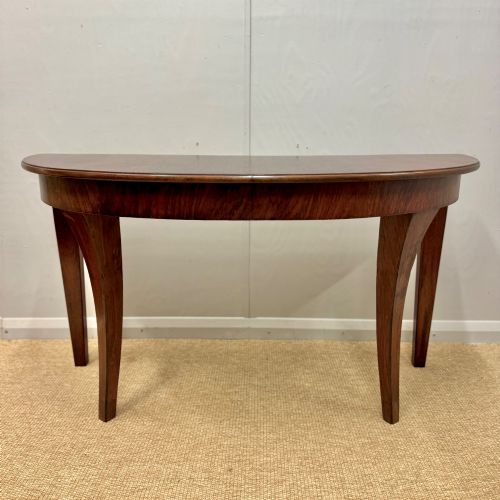


Regency Style Pier Table
A regency style pier table brings classic architectural proportion and surface weight to a hallway, often topped in cool marble.
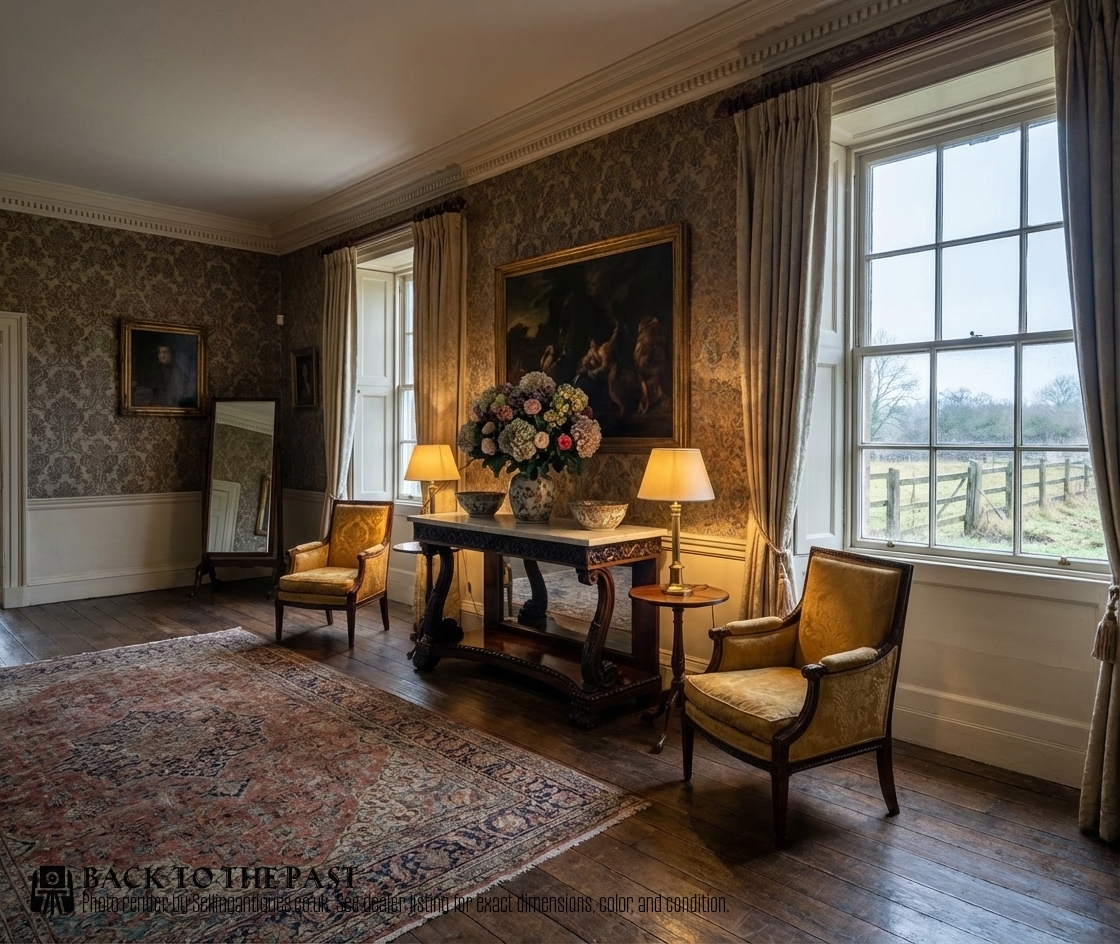
Regency Style Pier Table
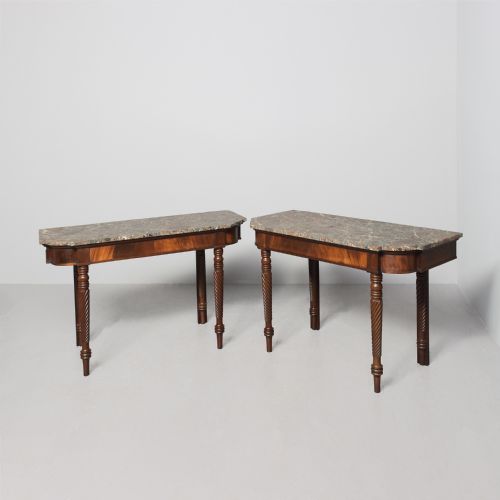
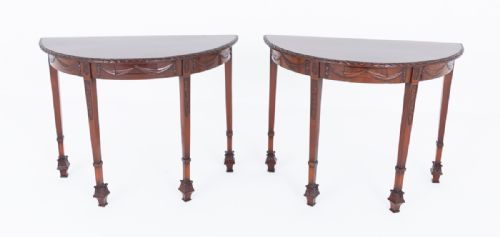
A regency style pier table sits flat against a wall, designed originally to fill the narrow pier of wall space between two windows. The selection on this page spans console tables, side tables, and hall tables created across the nineteenth century and later revival periods.
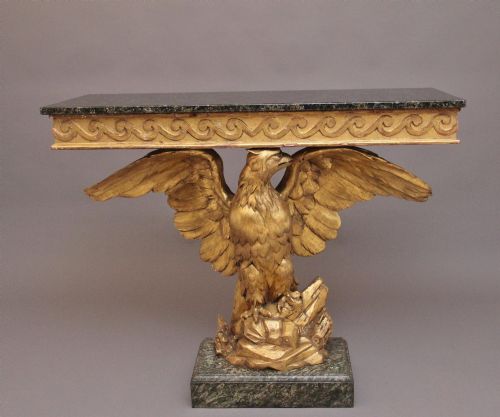
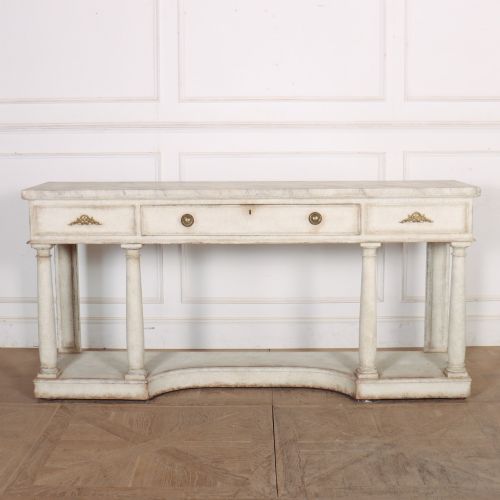
Makers drew on neoclassical design, producing forms that vary from restrained mahogany structures to painted and gilt pieces with concave legs. Buyers encounter both genuine period items and later nineteenth or early twentieth-century revivals sharing the same architectural footprint.
The objects frequently feature stone surfaces, specifically marble tops paired with timber frames in mahogany, rosewood, or satinwood. Proportions remain shallow and elongated to suit narrow architectural spaces.
Assessing quality
The standard of timber selection and veneer matching defines the upper tier of these tables, where grain patterns flow naturally across the surfaces. Finer examples display crisp carving on mahogany frames or precise execution in painted and gilt decoration.
Construction methods reveal the hand of skilled workshops through tight joinery and substantial marble slabs that fit securely within the wooden framing. Lesser examples rely on heavier, less refined timber sections and simpler surface finishes.
Regency Style Pier Table Retail Price Guide 2026
Typical asking prices for regency style pier table among the pieces listed under this phrase on Sellingantiques today, from the lower quarter to the upper quarter. They describe what is for sale here now, not the wider market.
Several tables include concave legs designed to let grand Victorian dresses pass without a snag.
Gillows
The Regency Style Pier Table Glossary
- Pier table
- A table designed to stand against the wall between two windows, often placed beneath a mirror. These pieces feature shallow depths to fit narrow architectural spaces.
- Console table
- A table supported by wall brackets or console legs rather than four independent vertical supports. They share a similar silhouette to traditional pier tables.
- Giltwood
- Timber coated with a thin layer of gold leaf or gesso paint to imitate solid gold. This finish frequently highlights carved details on neoclassical furniture.
- Parcel gilt
- A decoration method where only specific carved elements or details of an object receive gold leaf application. It creates contrast against a painted or dark wood background.
- Polychrome
- Painted in several distinct colours, often found on decorative side and hall tables from the period. This technique allows for intricate floral or geometric surface patterns.
Regency Style Pier Table: Frequently Asked Questions
Where should I place a pier table?
These tables suit narrow hallways, entranceways, or living room walls where floor space is limited. Their shallow depth prevents them from obstructing movement.
Pairing a table with a matching mirror hung directly above creates a traditional interior arrangement.
How do I care for a marble top?
Wipe marble surfaces regularly with a soft, damp cloth and avoid acidic cleaners that can etch the stone. Using coasters prevents liquid rings from forming on porous marble.
Applying a specialist stone wax helps maintain the sheen over time.
What is the difference between revival and period pieces?
Period items date from the original Regency and William IV eras in the early nineteenth century. Revival pieces date from later Victorian and early twentieth-century periods when makers copied earlier neoclassical designs.
Both categories utilise similar materials like mahogany and marble but carry different production dates.
Can these tables support heavy objects?
The heavy marble slabs provide a solid weight, but the structural integrity depends on the wall attachment or leg stability. Most function well for lamps, vases, and decorative items.
Heavier consoles include wall brackets to ensure safety against tipping.