
Regency Standing Shelf
A regency standing shelf brings tiered display and open storage into a room with slender uprights and neat proportions.
Regency Standing Shelf
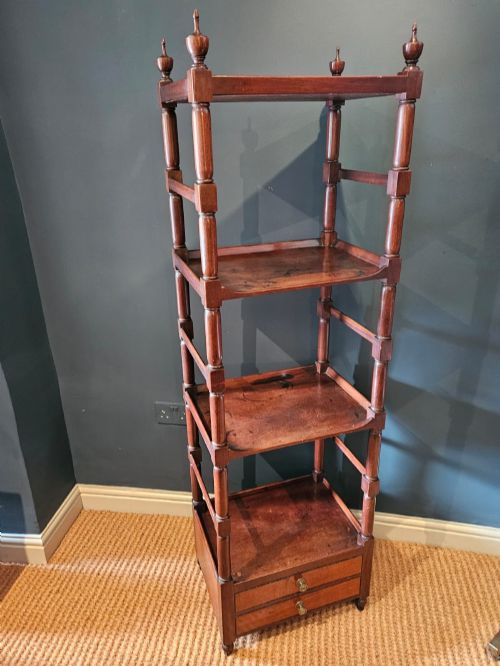
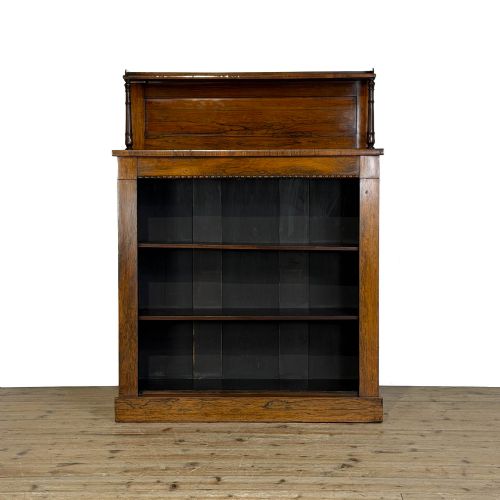
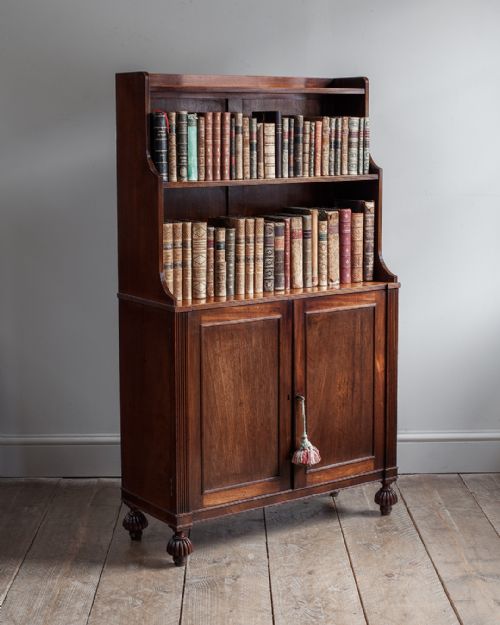
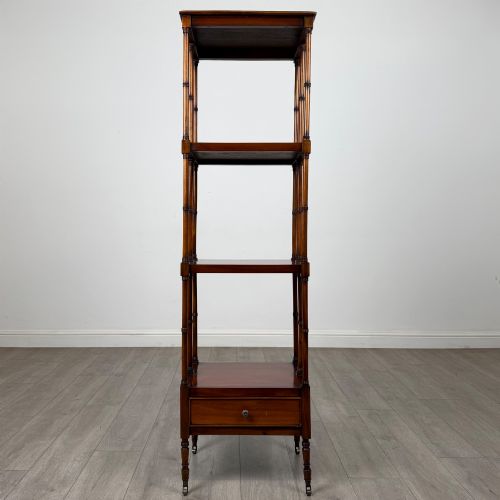
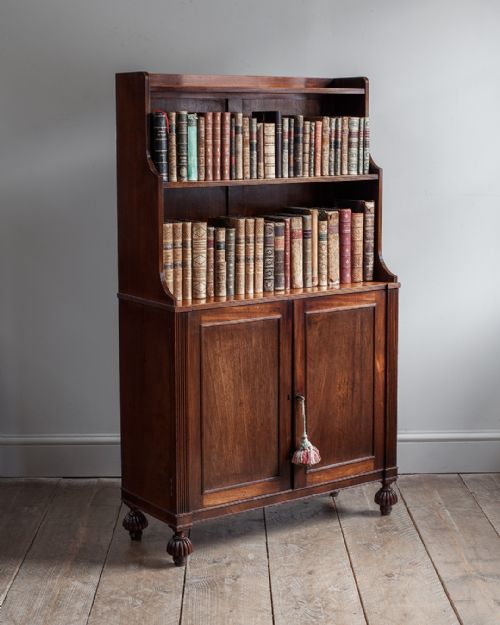
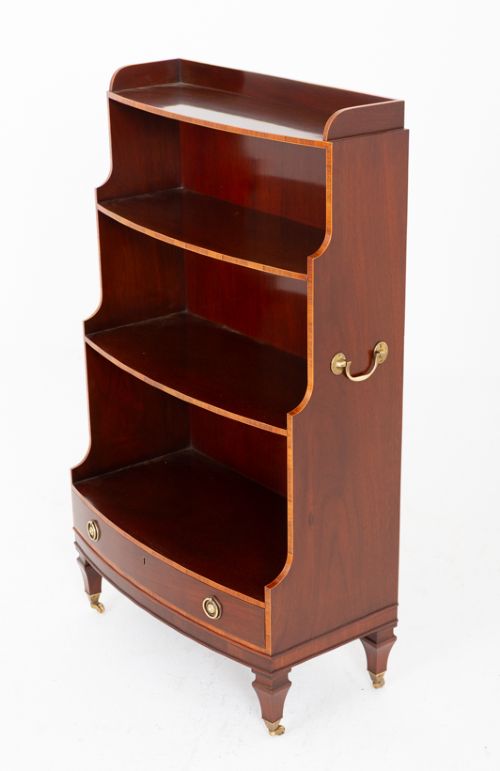
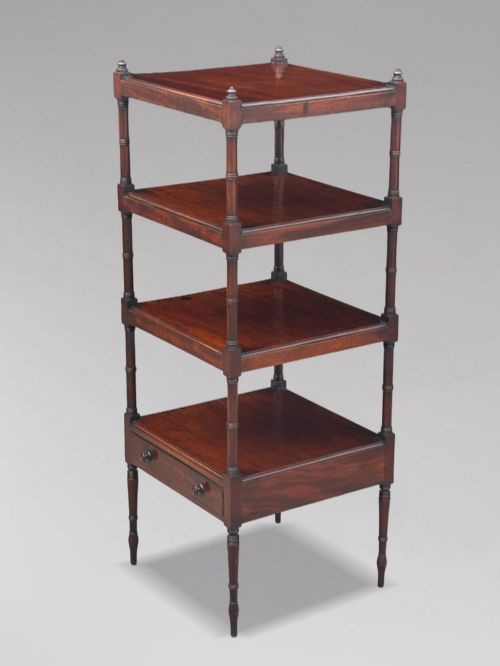
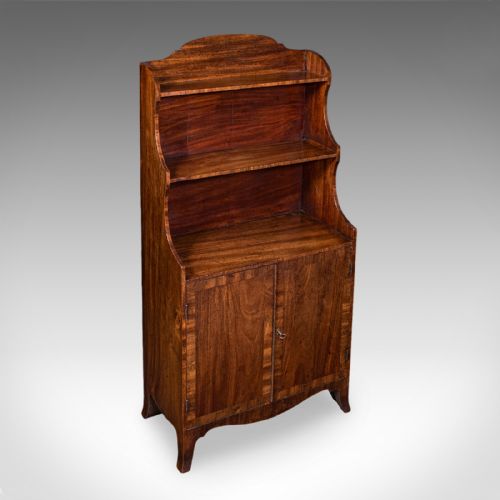
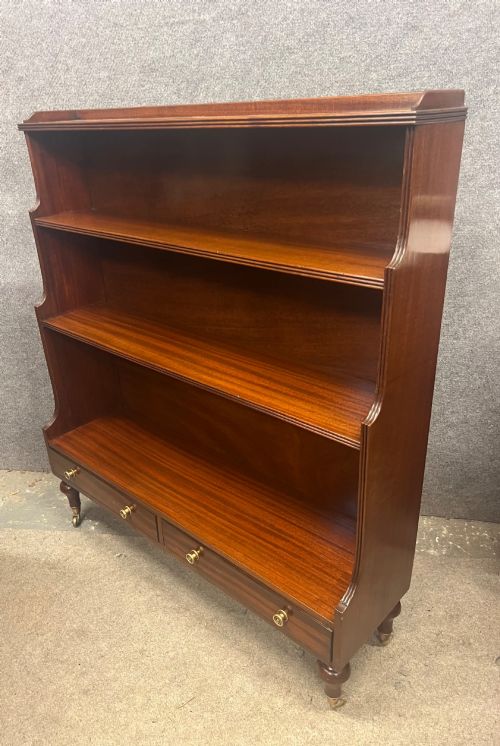
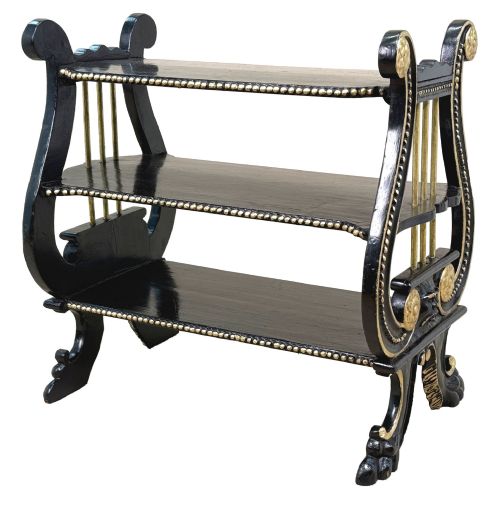
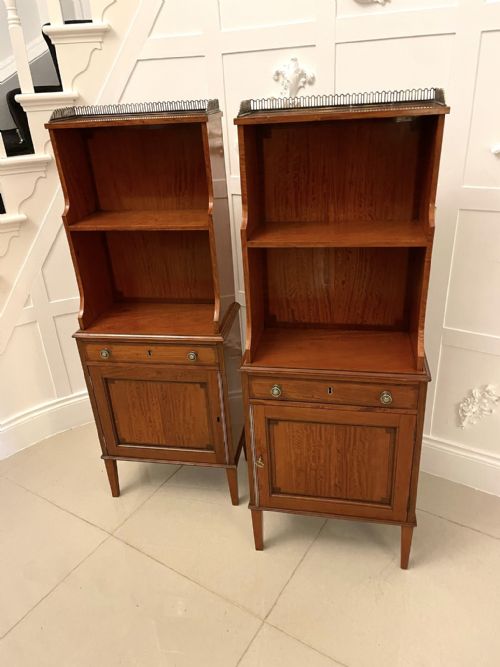
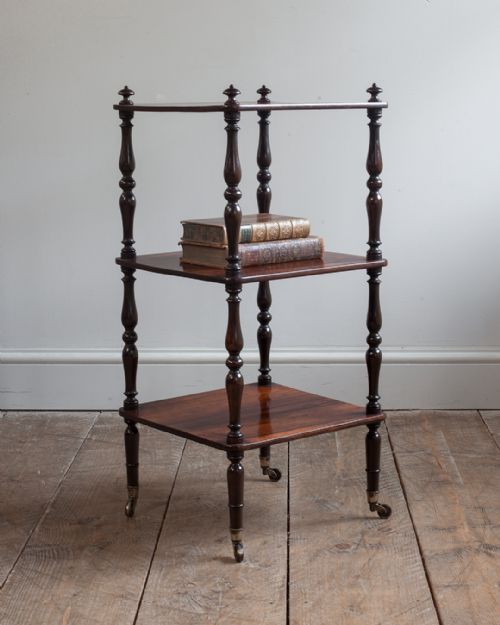
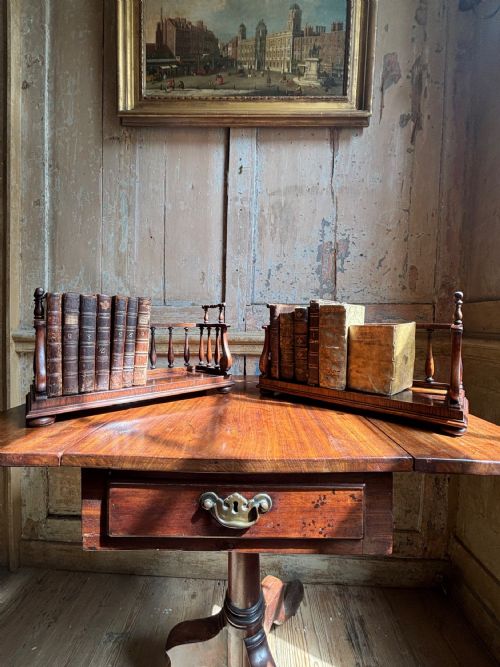
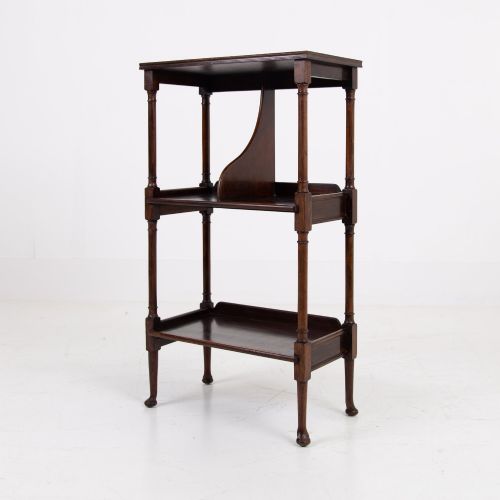
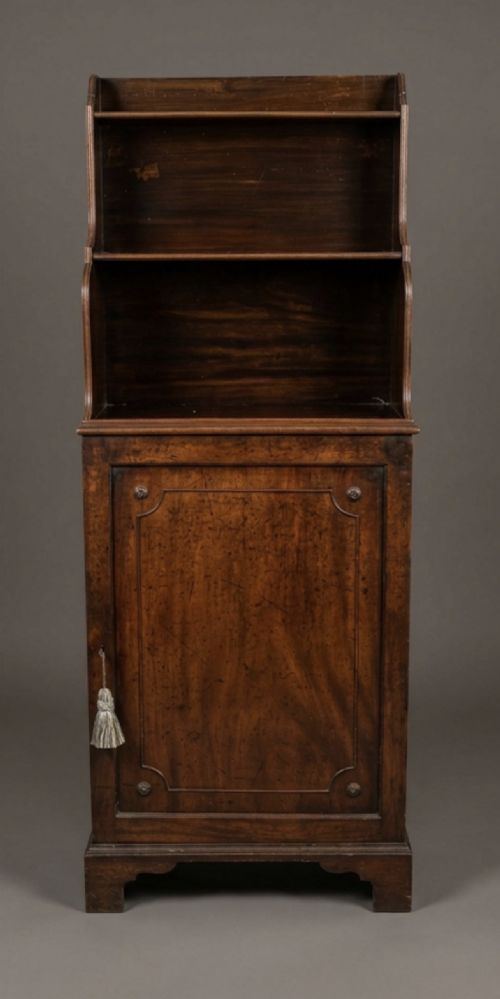
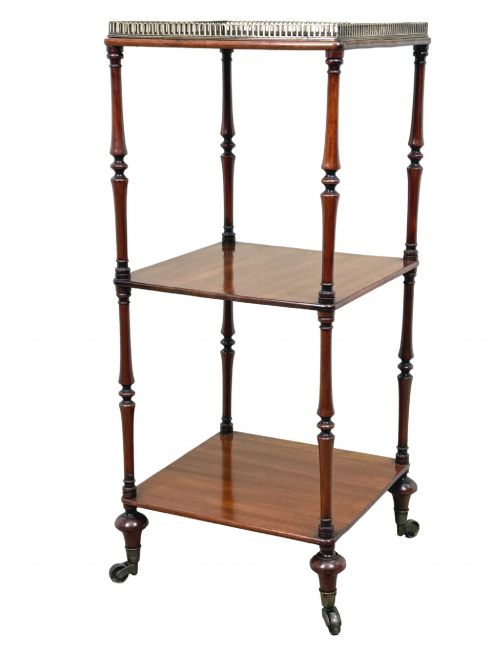
A regency standing shelf encompasses tiered open bookcases, multiple-tier whatnots, and graceful waterfall bookcases designed for display and utility. These pieces emerge predominantly from the nineteenth century, including the Regency, Georgian, and William IV periods, alongside later revival interpretations.
Makers and cabinetmakers of the era constructed these freestanding units to house books, music sheets, and decorative objects on stacked tiers supported by turned columns or side panels. Buyers frequently encounter mahogany and rosewood variants featuring open shelving, sometimes paired with lower cupboards or drawers.
The inventory includes corner stands, tiered etageres, and portable bookshelves that reflect the domestic habits of early nineteenth-century interiors. While many date directly to the Regency and George IV eras, subsequent Edwardian and twentieth-century revivals also populate the category.
Distinctions in Standard
Quality rests upon the selection of timber figures, such as rich rosewood or figured mahogany, and the crispness of turned columns and applied brass elements. Superior examples demonstrate balanced proportions across multiple tiers without heavy or clumsy framing.
The integration of secondary timbers and the precision of joints distinguish workshop pieces from standard commercial production. Finer items retain original surfaces and subtle decorative details like boxwood inlay rather than relying on later additions.
Some nineteenth-century models doubled as music stands, keeping sheet compositions tidy during parlour recitals.
Gillows
The Regency Standing Shelf Glossary
- Whatnot
- A moveable set of open shelves used for displaying ornaments, books, or collections. This versatile piece became popular during the late eighteenth and nineteenth centuries.
- Waterfall bookcase
- A graduated set of open shelves where each tier steps back from the one below it. The profile resembles descending cascades of water.
- Étagère
- A piece of furniture consisting of a set of open shelves for displaying small objects or ornaments. French in origin, it appears frequently in refined nineteenth-century interiors.
- Flame mahogany
- Timber cut from the fork of the mahogany tree to produce a distinctive flickering flame pattern. Cabinetmakers reserved this veneer for prominent surfaces.
- Parcel gilded
- Partially covered with gold leaf to highlight carved details or mouldings. This technique adds contrast against dark ebonised or polished wood.
Regency Standing Shelf: Frequently Asked Questions
What is a regency standing shelf?
A regency standing shelf is a freestanding tiered unit designed for holding books or displaying objects. These pieces use slender upright supports to create multiple open levels.
They appear in forms such as whatnots, etageres, and waterfall bookcases, originating primarily from the nineteenth century.
How were these shelves used originally?
Original interiors utilised these tiers in parlours, libraries, and drawing rooms to organise books, music folios, and decorative ornaments. Their open design kept frequently consulted volumes close to hand.
Lower cupboards, where present, offered concealed storage for smaller household items or writing materials.
How do I identify a period piece?
Period pieces display construction methods typical of the early nineteenth century, including hand-cut joints and dense native or imported hardwoods. Examining the timber grain and secondary woods reveals the age of the structure.
Revival pieces from later decades often imitate these proportions but employ twentieth-century manufacturing signatures.
Where should I place a whatnot?
These units suit corners, alcoves, or freestanding positions against living room and library walls where open display is desired. Their compact footprints allow them to fit into narrow spaces without crowding a room.
Ensure the floor is level so the upright structure remains stable across all tiers.