
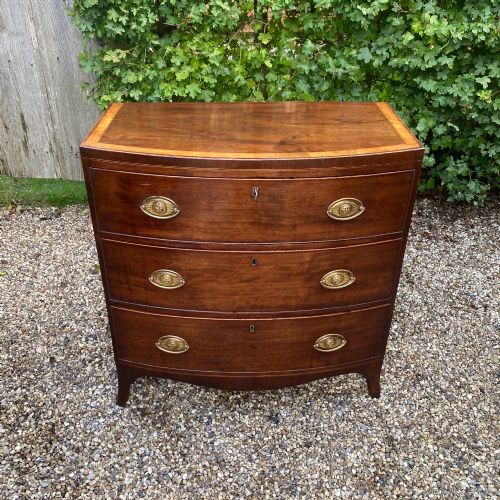
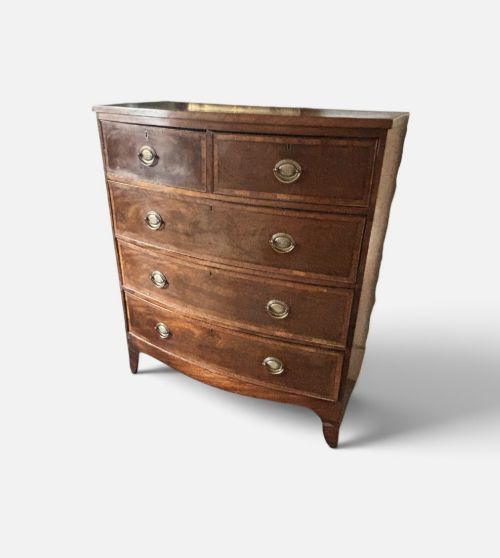
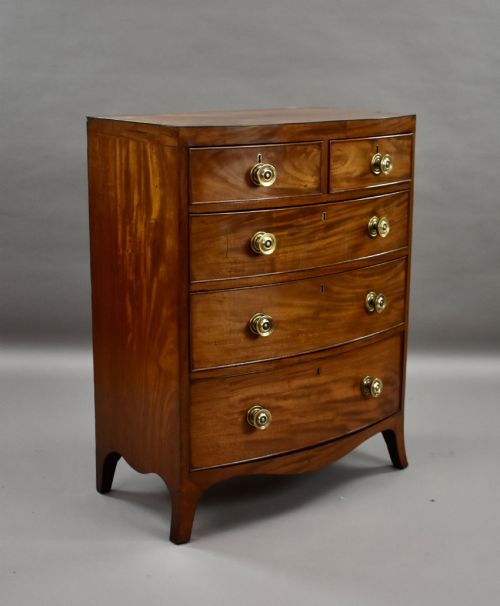
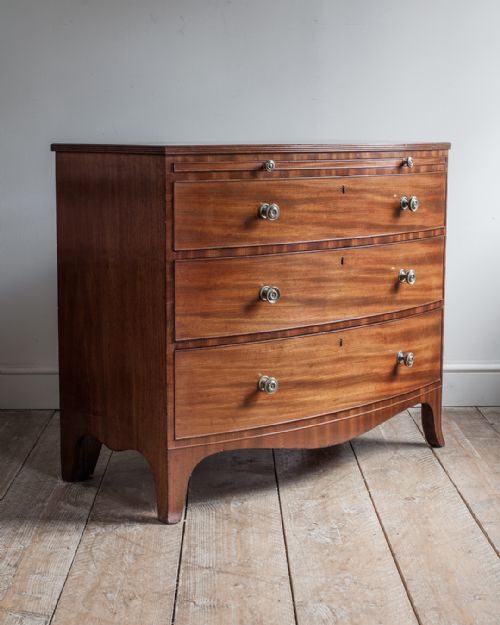
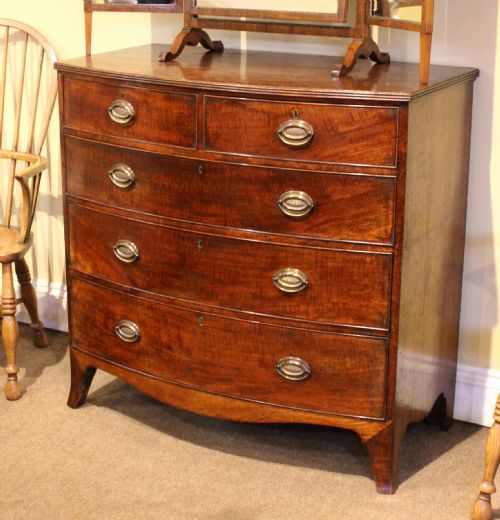


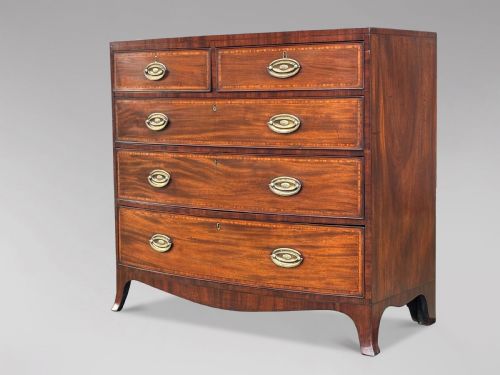

Regency Splayed Foot Chest
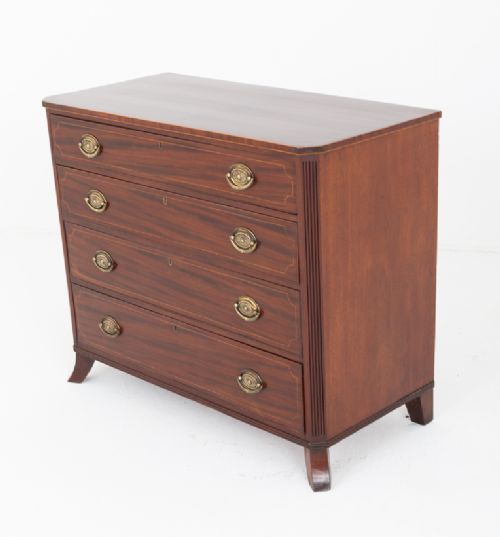
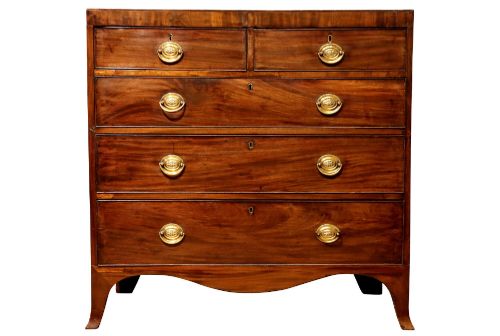
These regency splayed foot chest examples are elegant storage pieces defined by outward-angled supports and classic proportions, offering timeless utility for the home.
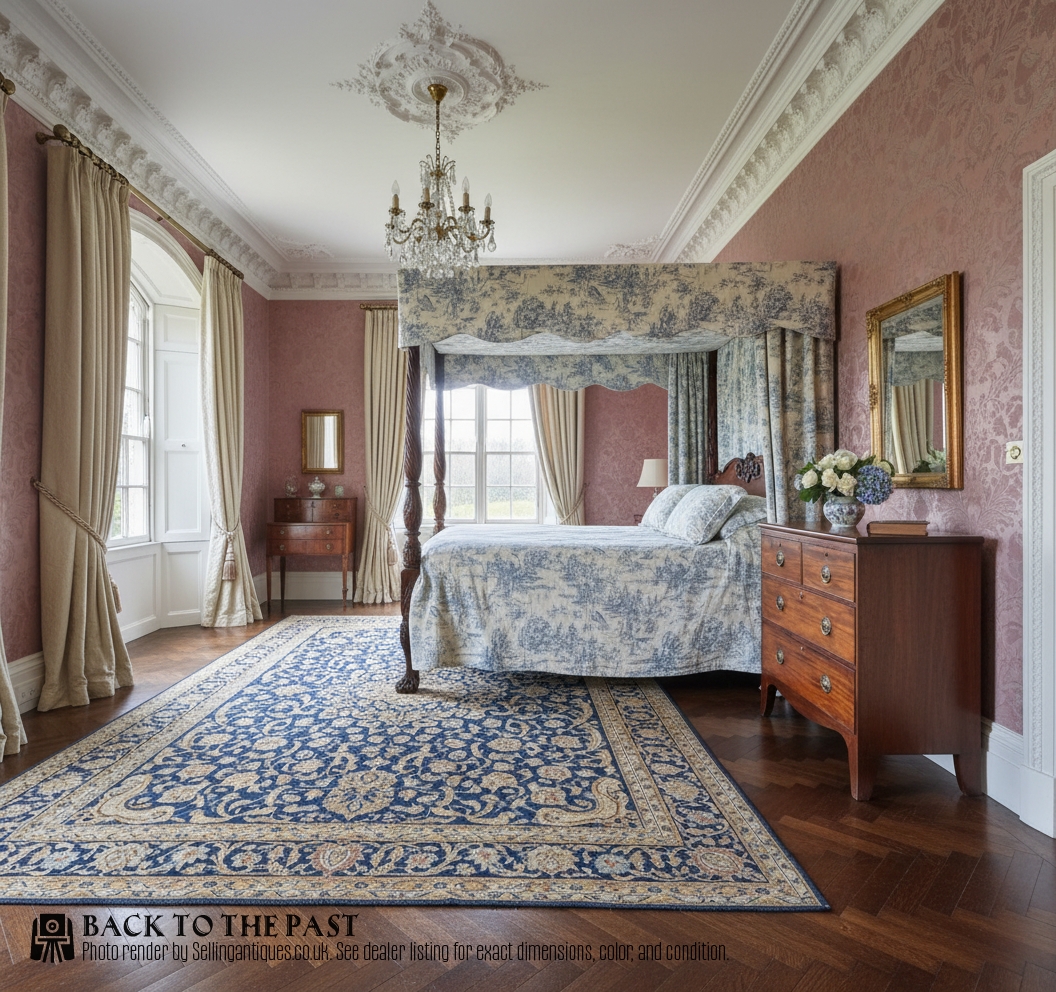
Regency Splayed Foot Chest
A regency splayed foot chest provides traditional bedroom or hallway storage through stacked horizontal drawers housed within compact, graceful carcases. These pieces predominantly date from the Regency and Georgian eras, spanning the late eighteenth and early nineteenth centuries.
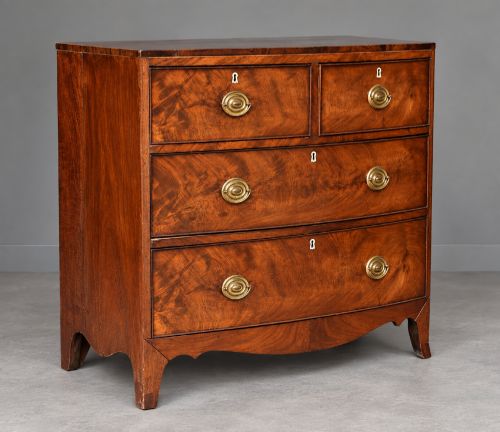
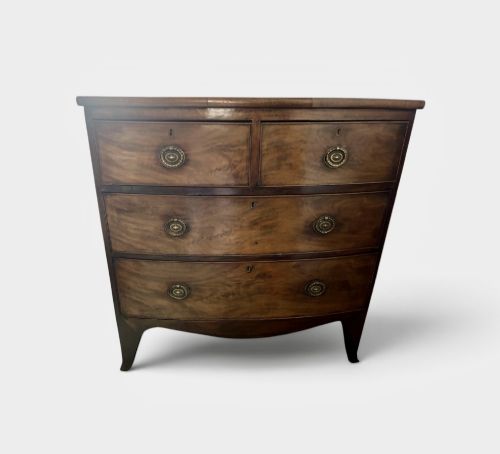
Buyers will most frequently encounter bow front designs on this page, alongside rectangular and serpentine forms. These chests often incorporate smaller proportions suitable for period interiors without overwhelming floor space.
What varies in quality
The selection of face veneers dictates much of the visual depth, with highly figured flame mahogany and crisp satinwood crossbanding marking finer examples. Grain continuity across drawer fronts also separates standard items from superior workshop output.
Structural refinement shows in the delicacy of the bracket or splayed foot supports and the tightness of the dovetail joints. Subtle details such as fine boxwood inlay and well-preserved original brass mounts elevate a piece above simpler variants.
Secret compartments occasionally hide behind the top drawer moulding, designed for securing family currency and secret love letters.
The Regency Splayed Foot Chest Glossary
- Bow front
- A convex curved cabinet front that swells outwards from the corners towards the centre. This shape became particularly popular during the Regency period for chests of drawers.
- Satinwood
- A durable, hard timber yielding a lustrous golden-yellow grain used extensively for veneers and decorative inlay. It contrasts sharply with darker woods like mahogany.
- Caddy top
- A raised furniture top with a moulded edge resembling the lid of a tea caddy. This profile adds architectural depth to the upper surface of a chest.
- Crossbanding
- A strip of veneer laid perpendicular to the surrounding grain along the border of a panel or drawer front. It creates a neat framing effect using contrasting timber species.
- Serpentine
- A gently undulating furniture front featuring a concave centre flanked by convex outer curves. This complex shape requires skilled woodworking and appears on select Georgian pieces.
Regency Splayed Foot Chest: Frequently Asked Questions
What is a regency splayed foot chest?
A regency splayed foot chest is a traditional storage unit featuring multiple horizontal drawers raised on outward-angled supports. These pieces date primarily from the late eighteenth and early nineteenth centuries.
They combine practical bedroom storage with decorative cabinet work, utilising figured veneers and subtle inlay to create a refined silhouette.
How do I style a bow front chest?
A bow front chest works well in a hallway, bedroom or living room as a focal point for displaying lamps or decorative objects. Their curved fronts soften linear architectural spaces.
Ensure adequate clearance around the protruding drawer fronts so the piece can be accessed comfortably in smaller rooms.
How do I date a Georgian chest?
Dating relies on examining construction methods, timber choices and stylistic details such as bracket feet or hardware. Earlier Georgian pieces often use oak linings and simpler proportions.
Later Regency examples introduce brighter veneers like satinwood crossbanding and more pronounced bow fronts alongside splayed foot supports.
Are these chests suitable for daily use?
These chests offer deep, sturdy drawers that easily accommodate modern clothing and household linens. The seasoned timbers remain stable and robust after centuries of use.
Routine care involves maintaining stable indoor humidity and polishing the timber surfaces with traditional beeswax to protect the finish.