

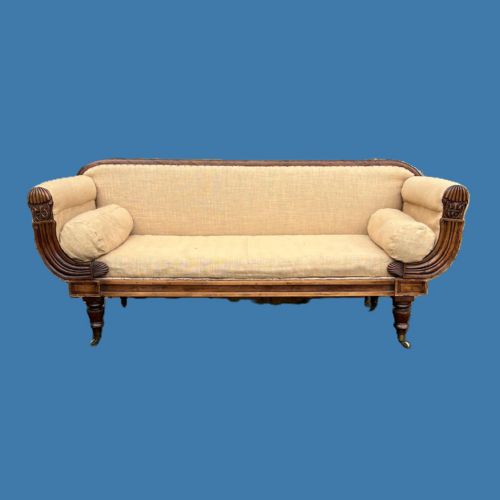

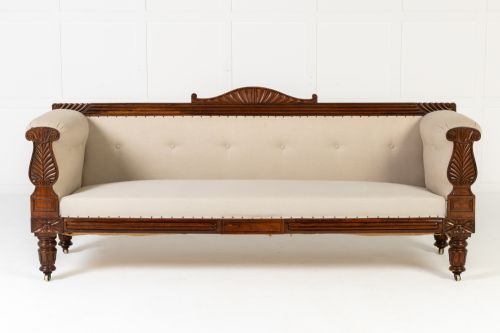


Regency Sofa Settee
A regency sofa settee brings classical proportion and scroll-end elegance to a room, offering generous seating rooted in nineteenth-century design.
Regency Sofa Settee
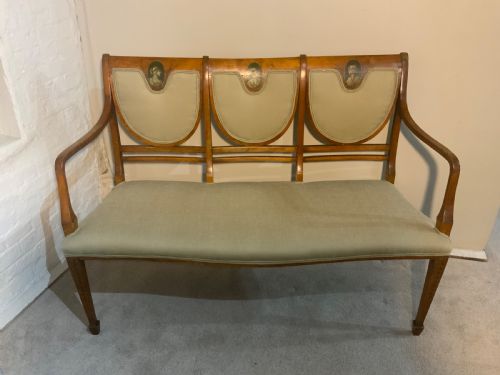
Buyers encounter substantial country house examples alongside more compact library and salon seating. The inventory demonstrates varied seating capacities, including large four-seater settees and smaller two-seat drawing room configurations.
How they were made
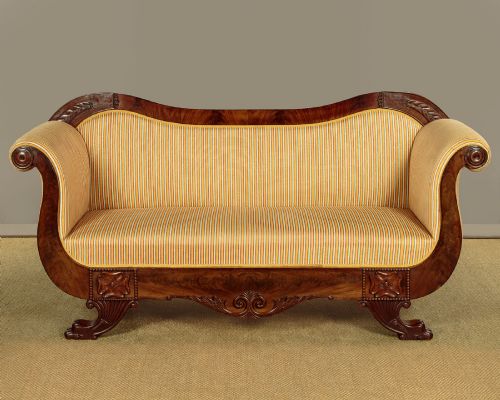
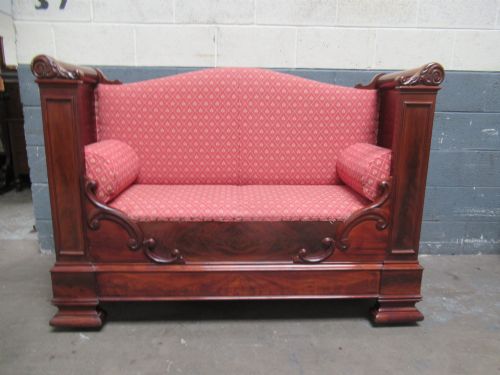
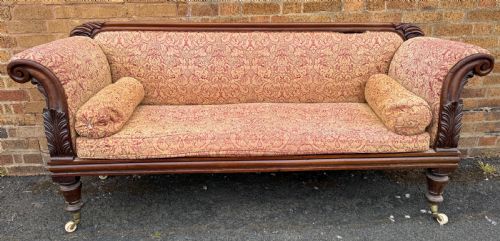
Frames rely predominantly on dense timbers such as mahogany, rosewood, and satinwood, frequently shaped with carved details, scroll arms, or lyre-shaped elements. Brass inlay and giltwood accents appear alongside ebonised finishes to create classical Neo-Classical profiles.
Upholstery methods incorporate traditional foundations using hessian and padding, paired with leather, button-back fabric, or caned panels. Daybeds and scroll-end couches utilise curved wooden frameworks to support extended lounging.
Listed forms range from compact library window seats to seven-foot country house settees and cane-backed daybeds.
What varies in quality
The sophistication of the timber grain and the crispness of the carved ornamentation dictate the distinction between standard production and top-tier workshop output. Richly figured rosewood or finely carved mahogany frames with integrated brass inlay reflect superior craftsmanship.
Proportion and structural integrity separate substantial country house seating from lighter domestic forms. Pieces retaining original show frames and disciplined scrollwork demonstrate higher design ambition.
The Regency Sofa Settee Glossary
- Scroll end
- A sweeping, curved wooden terminal on a sofa arm that echoes classical scroll motifs. This characteristic profile defines much nineteenth-century seating.
- Double-ended sofa
- A seating form featuring symmetrical scroll ends at both sides, allowing a person to recline comfortably facing either direction.
- Caned
- Woven rattan panel work used in seat backs or frames. This technique provides a lighter texture alongside solid timber elements.
- Show frame
- An exposed wooden structural frame surrounding the upholstered portions of a settee. It displays the carved wood and finish directly.
- Campaign sofa
- A portable seating form adapted for travel, often associated with military officers during the early nineteenth century.
Regency Sofa Settee: Frequently Asked Questions
What is a regency sofa settee?
A regency sofa settee is a nineteenth-century seating piece characterised by classical lines, scroll ends, and timber frames such as mahogany or rosewood.
These forms include daybeds, double-ended couches, and country house settees designed for formal reception rooms.
How do I date a settee?
Dating relies on stylistic markers such as Neo-Classical geometry, heavy scroll arms, and specific wood choices like satinwood or simulated rosewood.
Evidence from the period points toward 1800 through the mid-nineteenth century, overlapping with William IV and early Victorian aesthetics.
Where should I place it?
These settees suit drawing rooms, libraries, and large living spaces where their length and classical silhouette can anchor the layout.
Double-ended versions and chaise longues work well positioned centrally or against substantial walls.
How are frame woods identified?
Frames utilise hardwoods including mahogany, walnut, and rosewood, sometimes finished with ebonised touches or gilt detailing.
Some pieces feature painted satinwood or simulated grain effects applied over alternative timbers.