


Regency Silver Serving Dish
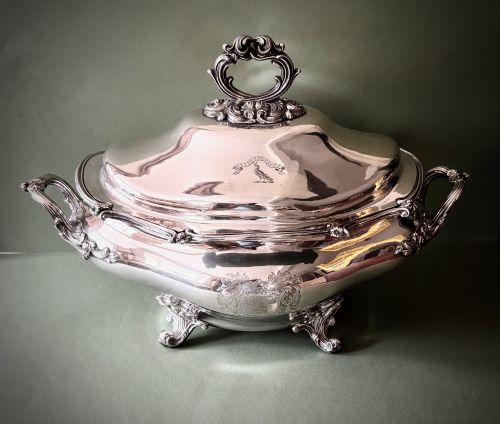
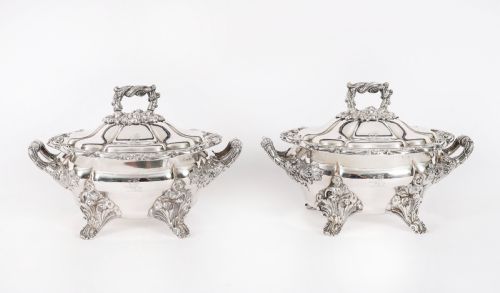
These regency silver serving dish examples bring genuine Georgian elegance to the dining table through fine Old Sheffield plate and sterling silver.
Regency Silver Serving Dish
Origin points span traditional English workshops as well as regional variations including Indian Colonial silver. The forms typically display the crisp lines and classical ornamentation characteristic of Regency and Georgian design.
How they were made
The primary technique behind Old Sheffield plate involved fusing a thin sheet of silver to a thicker base of copper, creating durable metal sheets that were subsequently worked by hand. Silversmiths then shaped these composite metals into deep tureens and oval serving dishes, often incorporating applied silver wire borders.
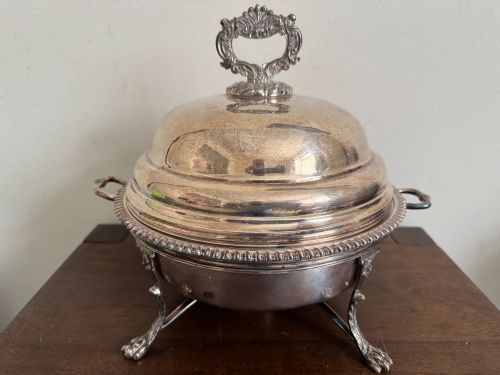
Solid sterling silver pieces, such as the George III supper dishes, required traditional raising and casting methods executed by skilled London makers. Base metal structures provided sturdy support for warming dishes and lampstands designed to keep food hot at the table.
Materials documented across these serving pieces include sterling silver, base metal, copper, and specialised composite surfaces such as Old Sheffield plate.
What varies in quality
Quality rests upon the preservation of the original fused silver layer over the copper core, particularly where edges and raised details receive regular polishing. Pieces that retain crisp hallmarks, crisp armorial crests and intact applied borders sit higher in the range.
The sophistication of the maker's hand also dictates worth, seen in the proportion of handles, the smooth action of lidded joints and the structural integrity of warming compartments.
Creswick·Matthew Linwood·Dan Holy
The Regency Silver Serving Dish Glossary
- Old Sheffield Plate
- An early form of silver plating produced by fusing silver and copper together through heat and pressure before rolling them into sheets.
- Entree Dish
- A shallow lidded vessel used for serving individual courses at formal dinners during the Georgian and Regency periods.
- Soup Tureen
- A large, deep serving bowl with a cover designed for holding and presenting soup at the dining table.
- Warming Dish
- A specialised serving vessel featuring a compartment beneath for hot water or a heating element to maintain food temperature.
- Sterling Silver
- An alloy consisting of pure silver and other metals, standardised for durability while maintaining high purity.
Regency Silver Serving Dish: Frequently Asked Questions
What is a regency silver serving dish used for?
These vessels were created to serve principal courses, soups and side dishes during formal Georgian and Regency meals. Their substantial forms allowed hosts to present food with considerable theatricality.
Many examples include fitted covers to retain heat until the dishes reached the dining table. Certain variations also incorporate warming stands for prolonged temperature control.
How do I care for Old Sheffield plate?
Old Sheffield plate requires gentle cleaning with non-abrasive silver polish to protect the thin exterior silver layer. Aggressive scrubbing can expose the underlying copper core.
Store these items in stable humidity conditions and avoid wrapping them in materials that trap moisture. Regular, soft dusting prevents the buildup of tarnish in intricate decorative borders.
Are these dishes made of solid silver?
Most items matching this description are manufactured from Old Sheffield plate rather than solid sterling silver. This technique fused a thin layer of silver onto a copper base to achieve the appearance of solid metal at a lower cost.
Solid sterling silver examples do exist from this period, typically bearing clear town marks and maker's stamps. Examining the edges often reveals the subtle copper line characteristic of fused plate.
How can I date a Regency serving dish?
Dating relies on stylistic markers such as neoclassical Regency motifs, as well as any engraved armorial crests or maker marks. Pieces marked with sterling hallmarks can be pinned down to specific years.
Unmarked Old Sheffield plate pieces are generally dated by comparing their construction methods, handle designs and footrims to documented examples from the early nineteenth century.