


Regency Silhouette Artwork
Regency silhouette artwork captures intimate likenesses in crisp profile, offering a timeless glimpse into the faces of the Georgian and Regency eras.
Regency Silhouette Artwork
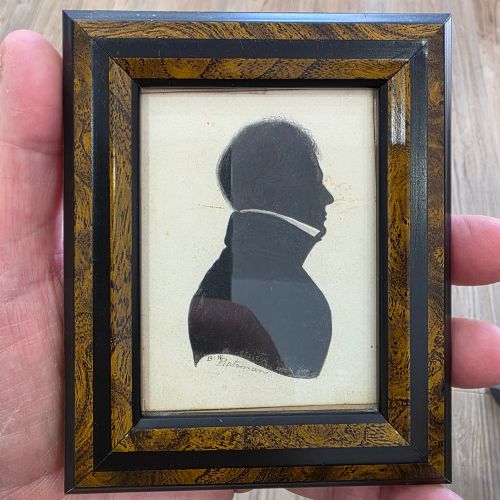
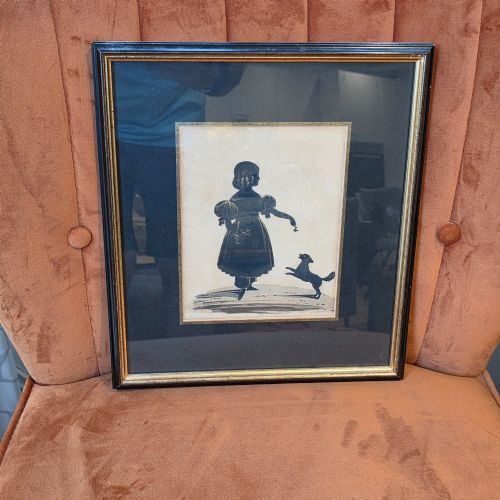
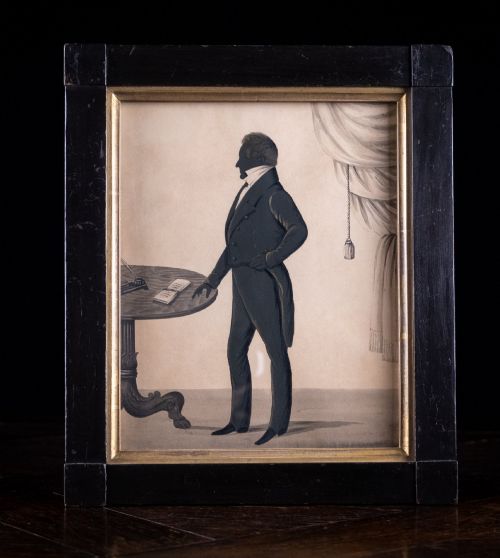
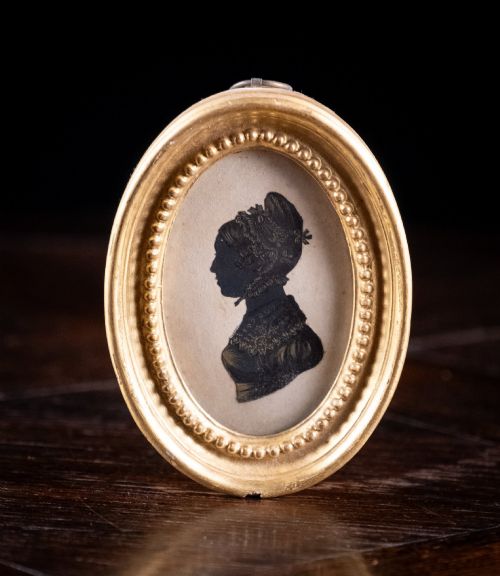
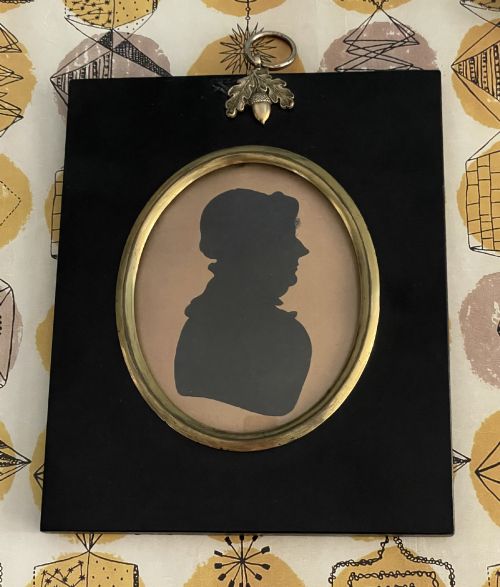
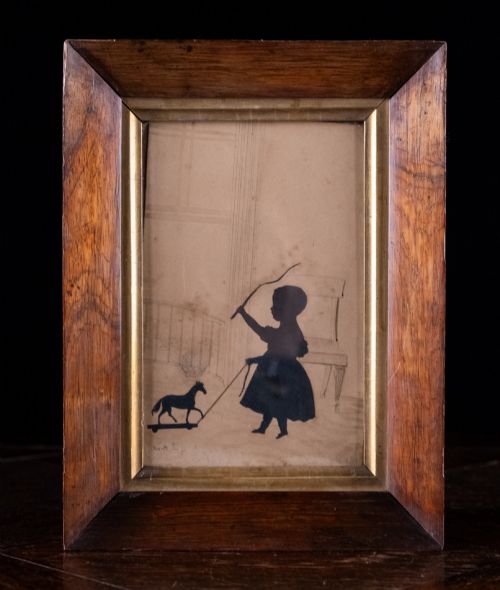
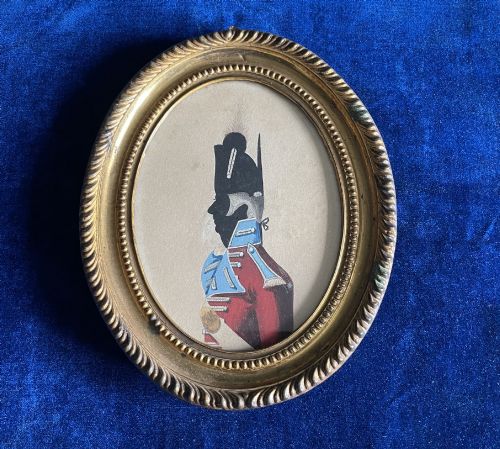
The versions you are most likely to meet on this page include framed wall art depicting gentlemen, ladies, children, and occasionally animals or floral subjects. They arrive in formats ranging from simple painted miniatures to elaborate cut paper compositions.
Dating primarily from the nineteenth, Regency, and eighteenth centuries, these works encompass styles associated with the Georgian and early Victorian periods. They serve as direct historical windows into past lives, preserved behind protective glass within traditional frames.
How they were made
Makers utilised paper, ink, and watercolour to construct these profiles, often employing delicate scissors or knives to cut figures freehand. Some artists applied paint directly to glass or cards to build up the dark profile against a pale background.
Frames play a structural role in the survival of these objects, constructed from wood, ebonised wood, maple, and giltwood. Many incorporate brass mounts and gold leaf accents to highlight the inner aperture surrounding the portrait.
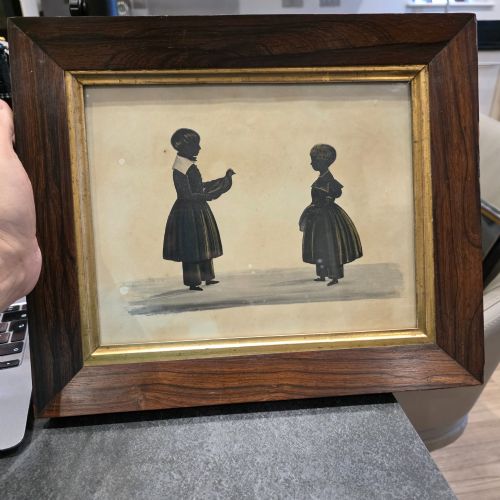
A young subject holds a pet bird frozen in paper, reminding us that children in the Regency era sat just as restlessly as they do today.
What varies in quality
The distinction between average and exceptional pieces rests upon the precision of the cutting or brushwork. Master practitioners captured distinctive hairstyles, clothing folds, and facial expressions with minimal strokes or snips, achieving an immediate sense of character.
The quality of preservation and framing also sets examples apart. Original glass, untouched paper surfaces, and period frames with intact gilding elevate a piece far above those altered or re-framed in later decades.
William James Hubard·Augustin Edouart·Frederick Frith·John Smith of Edinburgh
The Regency Silhouette Artwork Glossary
- Silhouette
- A portrait profile filled in with a solid dark colour, typically black, against a lighter background. This form of art relies entirely on outline and shadow to convey identity.
- Giltwood
- Wood carved and covered with a thin layer of gold leaf or gold paint. This material frequently appears on the decorative frames enclosing period profiles.
- Ebonised wood
- Timber treated to resemble heavy, dark ebony. Makers utilised this finish to create stark, contrasting borders around light-coloured portrait mounts.
- Portrait miniature
- A small-scale painting or likeness designed for intimate viewing. These works require immense skill due to the tiny canvas and fine detail involved.
- Cut paper
- A technique where artists snip paper with scissors to form a picture without drawing. The resulting silhouette relies on clean edges and clever layering.
Regency Silhouette Artwork: Frequently Asked Questions
How do I identify a true period silhouette?
Examine the materials and framing closely to spot the indicators of age. Period pieces typically utilise old paper, traditional glass types, and timber frames consistent with the eighteenth and nineteenth centuries.
Look also at the style of dress and hair depicted on the sitter. Fashion cues from the Regency and Georgian eras offer reliable clues for dating the artwork accurately.
Where should I hang these framed portraits?
Choose a wall away from direct sunlight to protect the delicate paper and watercolour pigments from fading. Grouping smaller pieces together creates a striking display reminiscent of period gallery walls.
Ensure the room maintains stable humidity levels to prevent damage to the historic wood frames and paper supports.
What subjects appear besides single portraits?
Artists occasionally depicted children with pets, family groups, or detailed scenes involving horses and dogs. You can also find intricate cut paper pictures featuring floral arrangements rather than human profiles.
These varied subjects reflect the broader decorative tastes of households during the Regency period.
Are signed silhouettes more desirable?
Signed works or those bearing attribution to known artists carry stronger historical documentation. Signatures written on the reverse or front provide a direct link to the maker's studio.
Unsigned examples remain common, however, as many talented practitioners left their output anonymous.