
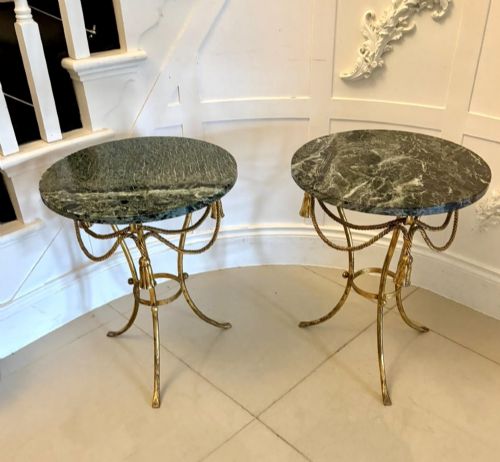
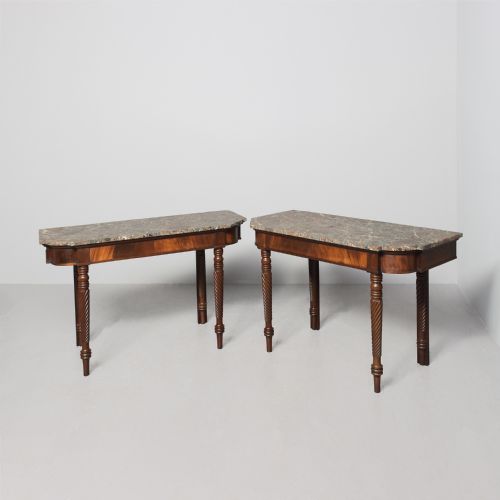
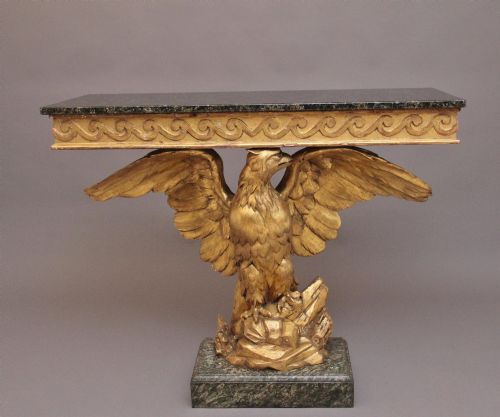
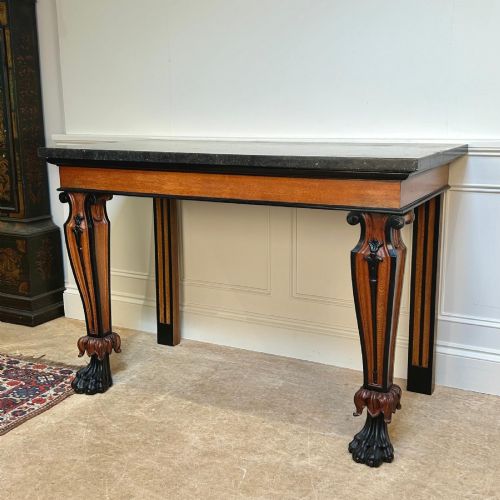



Regency Side Table Marble
A regency side table marble pairs cold, polished stone with warm timber, built for grand rooms and still anchoring modern halls.
Regency Side Table Marble
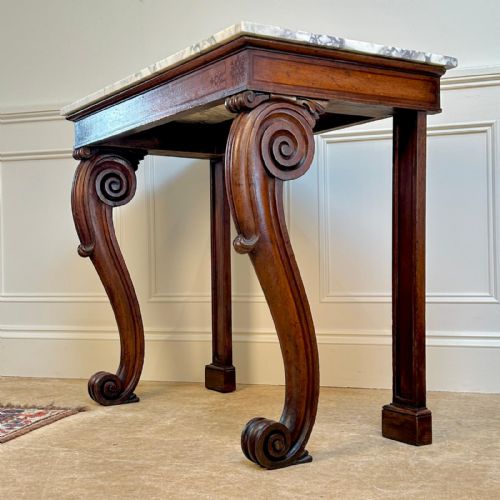
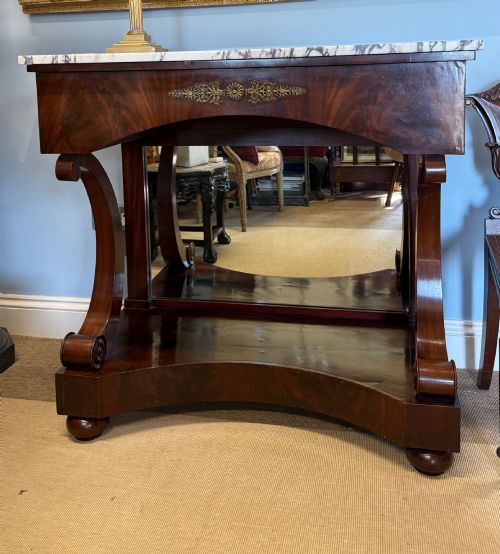
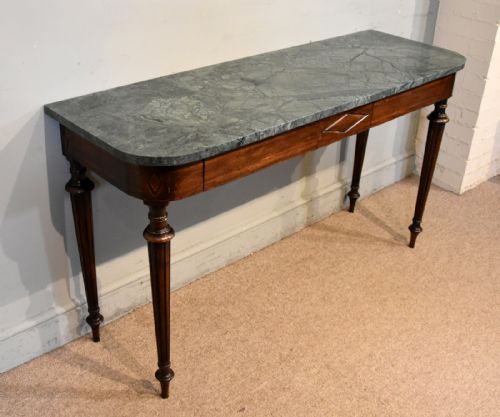
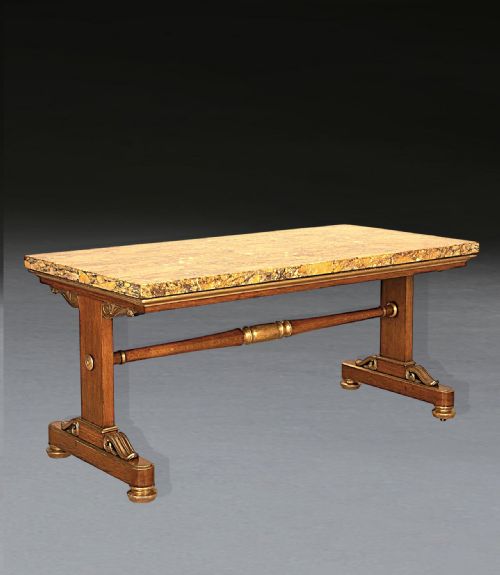
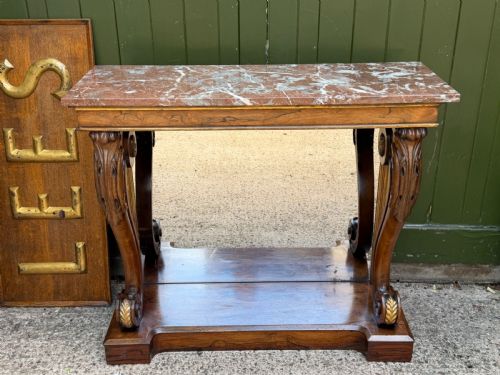
A regency side table marble combines classical stone tops with timber frames built during the nineteenth century or later revivals. Buyers encounter console tables, pier tables, and occasional forms designed to sit flush against drawing room walls.
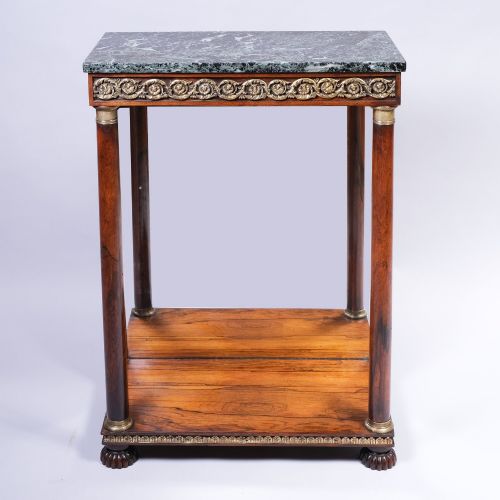
Mahogany and rosewood dominate the timber frames, frequently paired with giltwood, brass mounts, or ebonised details. Marble slabs range from plain white carrara to complex specimen and siena varieties.
The aesthetic draws heavily on neoclassical and french empire design vocabularies. Pieces span authentic early nineteenth-century production through to later twentieth-century revivals.
Materials and construction
Cabinetmakers utilised dense hardwoods like mahogany and figured rosewood for the structural frames, often applying parcel-gilt or brass mounts for contrast. Marble tops were cut thick and polished smooth, resting directly upon timber rails or sub-tops.
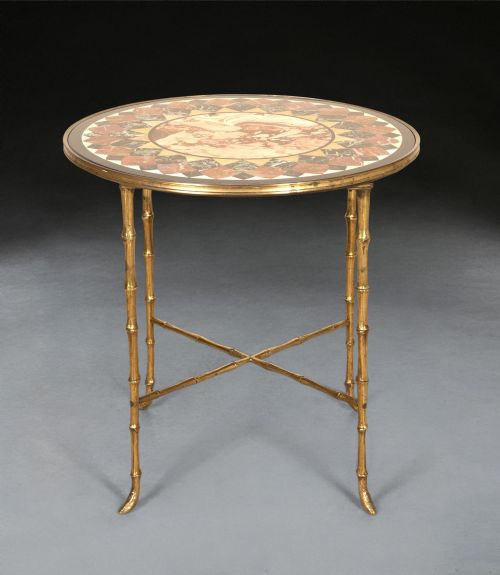
Joinery relied on traditional techniques suited to heavy stone loads, ensuring rigid support for inset specimen marbles and pietra dura panels. Giltwood and ebonised wood elements required skilled carving and surface preparation before gilding.
Dolphins swim silently beneath glass and marble tops in unexpected marine revivals.
Distinctions in quality
The grade of the marble top dictates much of the stature, moving from standard white slabs to multicoloured specimen marbles and intricate pietra dura work. Timber selection similarly separates standard production from highly figured flame mahogany or richly grained rosewood.
Carving depth and the crispness of giltwood enrichment reveal the hand of skilled workshops rather than mass production. Original mounts, intact mirror backs, and structural integrity elevate an example above later assembled pieces.
The Regency Side Table Marble Glossary
- Console table
- A table supported by brackets or console legs against a wall. They frequently feature marble tops and mirror backs.
- Specimen marble
- A top assembled from numerous small geometric or figurative pieces of different coloured marbles. This technique creates intricate mosaic patterns.
- Giltwood
- Wood that has been coated with gold leaf or gold paint. It provides brilliant reflective highlights on frames and mounts.
- Pietra dura
- An artistic technique using cut and fitted polished coloured stones to create images. It appears on the most lavish tabletop surfaces.
- Gueridon
- A small round table supported by a central pillar or figures. French in origin, they often display fine marble tops.
Regency Side Table Marble: Frequently Asked Questions
Where should I place a marble top table?
These tables suit hallways, drawing rooms, and living spaces where a solid surface and classical silhouette add architectural weight. Their shallow depth allows them to sit against walls without obstructing walkways.
Keep them away from direct heat sources and moisture to protect the timber frame and polish of the stone.
How do I care for antique marble?
Clean the stone surface with a soft, damp cloth and mild pH-neutral soap. Avoid acidic liquids like vinegar or lemon juice, which etch polished marble instantly.
Use coasters and felt pads beneath decorative objects to prevent scratching the polished surface over time.
Are these tables heavy?
The inclusion of solid stone slabs makes these pieces substantially heavier than standard wooden tables. Two people are typically required to lift and position them safely.
The weight helps anchor the table firmly against the wall without requiring permanent wall fixings.
How do I spot a revival piece?
Revival pieces from later periods often exhibit machine-cut timber joints and standardised modern fixings beneath the top. Examining the timber shrinkage and patination helps clarify the age of the frame.
Later copies frequently pair older marble slabs with twentieth-century bases, or replicate nineteenth-century neoclassical motifs precisely.