



Regency Sewing Chest
A regency sewing chest brings refined Georgian utility into a room, offering clever compartments for needlework and rich timber grain.
Regency Sewing Chest
When you search for a regency sewing chest, you encounter elegant portable boxes and fitted tables designed for needlework and small valuables. These pieces span the nineteenth century, drawing heavily on Regency, William IV, and Georgian design traditions.
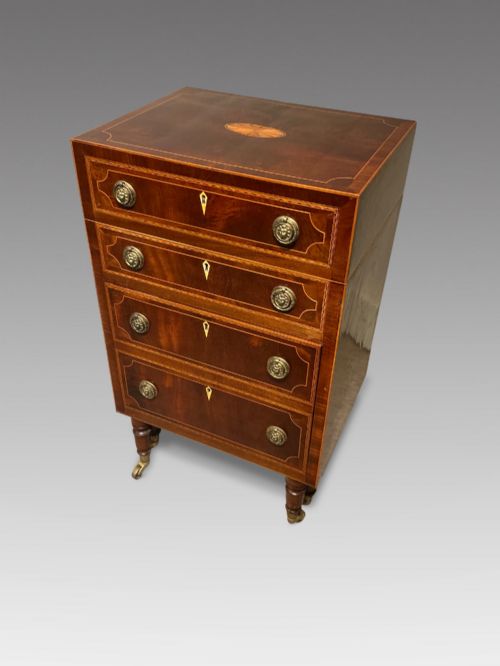
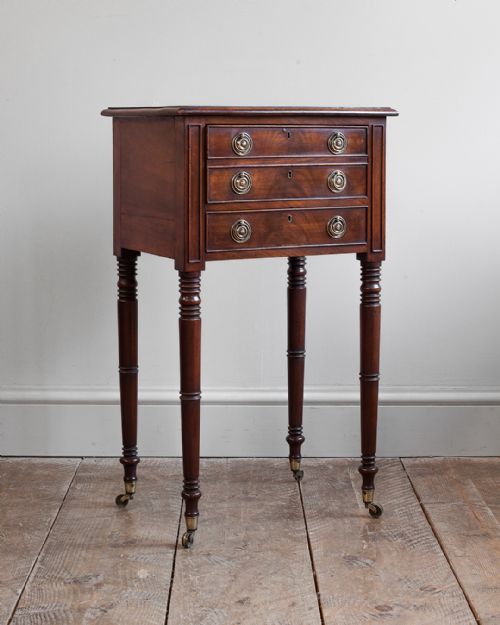
The objects on this page primarily take the form of work tables, workboxes, teapoys, and jewellery boxes. Most examples sit within the nineteenth century and the Regency period, constructed as freestanding pedestals or lidded tabletop chests.
Makers of the era combined storage with display, incorporating interior trays, silk lined compartments, and fitted lids. These forms served the drawing room and parlour, holding threads, fabrics, and personal trinkets close to hand.
Materials and construction
Cabinetmakers utilised dense hardwoods such as mahogany and rosewood, often selecting timber with pronounced grain figures for the exterior surfaces. Satinwood also appears, providing a lighter contrast for box and table panels.
Decorative details rely on brass mounts, gilt highlights, and occasional lacquer work like yellow japanning or leather coverings such as red Russia-leather. Interiors often feature delicate silk fabric linings alongside wooden partition trays.
Regency Sewing Chest Retail Price Guide 2026
Typical asking prices for regency sewing chest among the pieces listed under this phrase on Sellingantiques today, from the lower quarter to the upper quarter. They describe what is for sale here now, not the wider market.
Some nineteenth-century makers lined their boxes in red Russia-leather, scented with birch oil to keep moths away from stored wool.
Distinguishing quality
The finest examples display careful timber selection, where mahogany or rosewood veneers wrap continuously around the form to maintain grain alignment. Superior pieces also retain their original fitted interior trays, delicate silk work bags, and functioning brass locks.
Construction methods reveal the hand of skilled cabinetmakers through tight dovetail joints and smooth drawer actions. Lesser items may show mismatched timber patches or replaced interior fittings that disrupt the integrity of the original design.
The Regency Sewing Chest Glossary
- Work table
- A small freestanding table featuring an enclosed compartment or hanging bag for needlework materials. These pieces typically stand on pedestal bases with multiple internal compartments.
- Teapoy
- A small box or chest originally designed to store tea, frequently adapted in period homes to function as a work box for sewing tools. They stand on central pedestals or table frames.
- Japanning
- A European imitation of Asian lacquer work involving layered resin finishes, seen here in yellow tones on decorative boxes. This technique provided a durable and glossy surface decoration.
- Pedestal worktable
- A sewing chest supported by a single central pillar resting on a platform base with feet. This form allows seated access to side compartments and internal storage trays.
Regency Sewing Chest: Frequently Asked Questions
What is a regency sewing chest used for?
These pieces were originally built to hold sewing threads, needles, and fabric scraps used by ladies in the drawing room. Today, they serve as decorative side tables or secure storage for jewellery and small personal items.
The compartmentalised interiors make them practical for organising modern desk accessories or trinkets while maintaining a traditional aesthetic in a living space.
How do I identify a Regency period piece?
Regency items often feature classical architectural motifs, bold rosewood or mahogany veneers, and brass inlay or paw feet. Look for clean structural lines influenced by classical Greek and Roman design.
Dates generally fall between the early nineteenth century and the reign of William IV, spanning roughly from eighteen hundred to the eighteen thirties.
Are interiors usually original?
Many surviving pieces retain their original wooden compartmentalised trays, though delicate silk fabric linings frequently show wear and replacement over time. Finding an example with intact partitions and original paper or fabric lining adds significant interest.
Inspect the interior construction to see if the wood colour and wear patterns match the exterior carcase of the box or table.
Where should I place one in my home?
A lidded box version sits well upon a side table, chest of drawers, or desk as a focal point. Freestanding pedestal work tables function effectively beside a sofa or armchair as occasional tables.
Keep these items away from direct sunlight and sudden temperature changes to protect the delicate rosewood or mahogany veneers and historical finishes.