





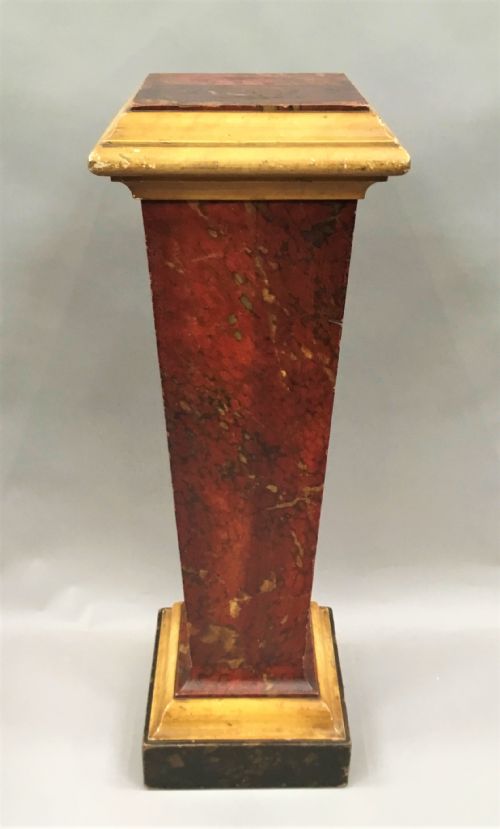


Regency Sculpture Plinth
A regency sculpture plinth elevates a bust or statue, bringing classical form and balance into a room.
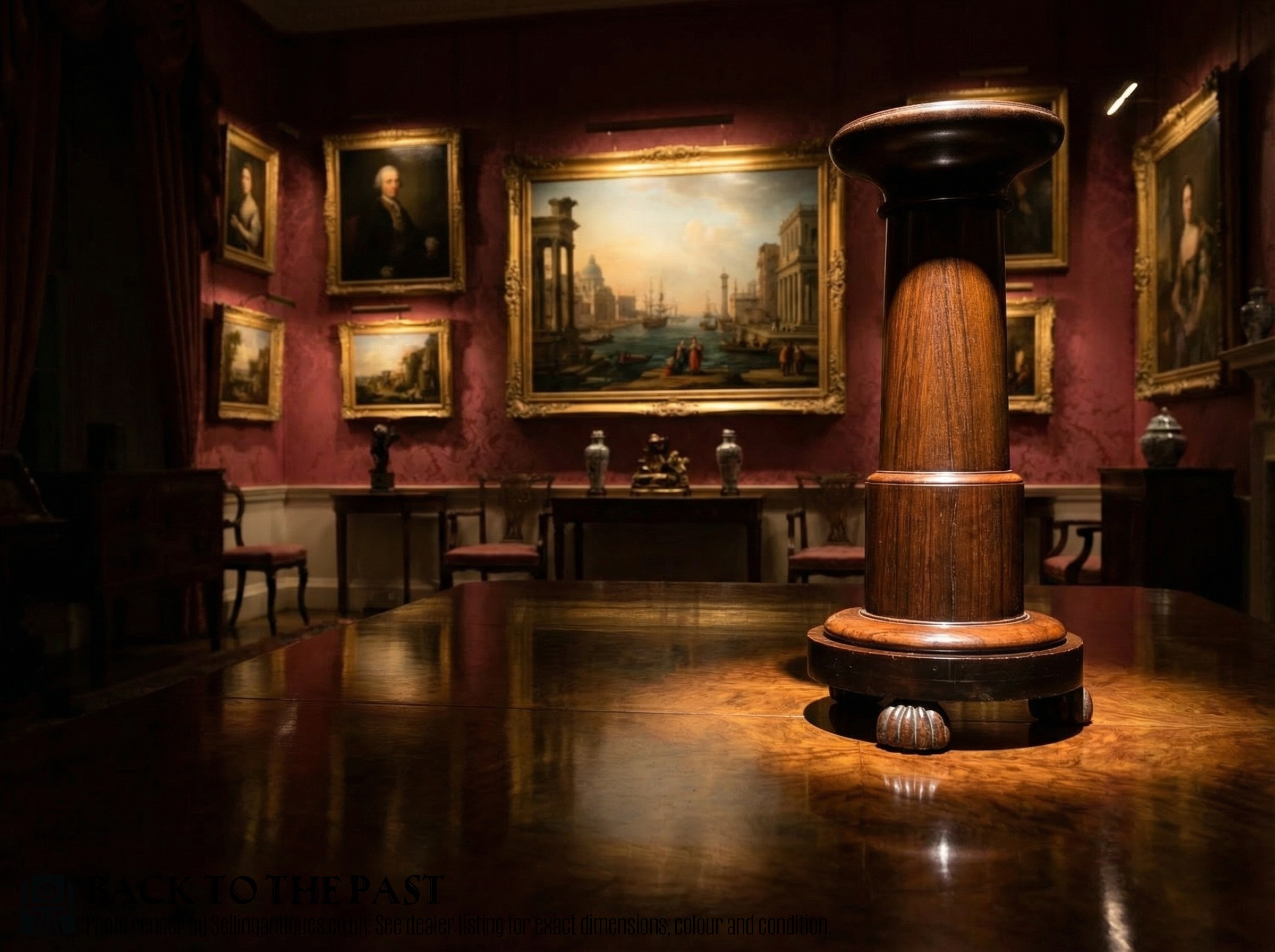
Regency Sculpture Plinth
A regency sculpture plinth is a solid stand designed to display art, standing as a pedestal, column, or cabinet in neoclassical style. These pieces provide height and presence to bronzes, figures, and busts.
The selections encountered here span the nineteenth century, including Georgian and Victorian variations alongside pieces from the core Regency period. Forms range from simple circular faux marble columns to mahogany cupboards built for display.
Many examples incorporate architectural details typical of the neoclassical taste, such as fluted columns and faux finishes. They serve a practical purpose while introducing a distinct period aesthetic to an interior.
Materials and Construction
Cabinetmakers utilised timber such as solid mahogany and rosewood, often pairing them with grain-painted pine to achieve desired decorative effects. Surface treatments included original faux marble finishes that mimic expensive stone.
Foundations and decorative accents frequently integrated bronze, brass, or plaster, as seen in figures of muses, lions, and columns. These diverse materials were combined to create stable, heavy structures capable of supporting substantial sculptures.
Regency Sculpture Plinth Retail Price Guide 2026
Typical asking prices for regency sculpture plinth among the pieces listed under this phrase on Sellingantiques today, from the lower quarter to the upper quarter. They describe what is for sale here now, not the wider market.
Materials across the listings include mahogany, bronze, plaster, marble, and brass.
Determining Quality
Quality rests in the precision of the carving, the integrity of the timber, and the preservation of original finishes like faux marble paint. Superior examples exhibit careful proportion and robust construction.
The refinement of cast bronze mounts and the quality of veined marble bases distinguish finer pieces from simpler utilitarian stands. Balance and weight also indicate the original maker's intent and standard of work.
Humphrey Hopper
The Regency Sculpture Plinth Glossary
- Pedestal
- A support or base for a column, statue, or vase. These structures raise artwork to eye level.
- Neoclassical
- A style reviving classical Roman and Greek forms. It dominates the design of these plinths with clean lines and architectural motifs.
- Faux marble
- An artistic finish painted on wood to imitate genuine stone. This technique offers the visual weight of marble without the extreme heft.
Regency Sculpture Plinth: Frequently Asked Questions
What is a sculpture plinth used for?
A sculpture plinth elevates statues, busts, and vases to a proper viewing height within a room. This placement protects the artwork while giving it visual prominence.
Historically, these stands allowed collectors to display bronze figures and plaster muses effectively. Today, they function similarly in domestic interiors.
How do I identify a Regency period piece?
Regency pieces often display neoclassical symmetry, clean architectural lines, and specific timber choices like mahogany and rosewood. Details such as faux marble finishes and bronze mounts help date the work.
Comparing construction methods with known nineteenth-century examples further clarifies the era. The presence of original paint finishes also aids identification.
Are these plinths strong enough for heavy statues?
Solid mahogany and heavy bronze columns are built to support substantial weight. The dense materials provide natural stability for marble and bronze sculptures.
Plinths constructed from pine or lighter woods suit smaller plaster figures and busts. Checking the internal bracing ensures safe display for heavier items.
Where should I place a pedestal in a room?
Pedestals perform well in corners, entryways, or flanking a fireplace to draw the eye upward. Their vertical form makes use of empty wall space without crowding the floor.
Placement depends on the lighting and the object displayed on top. Ensuring adequate clearance around the base prevents accidental knocks.