

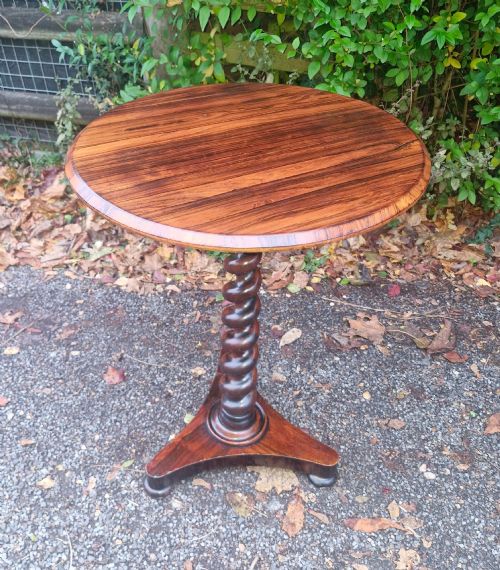
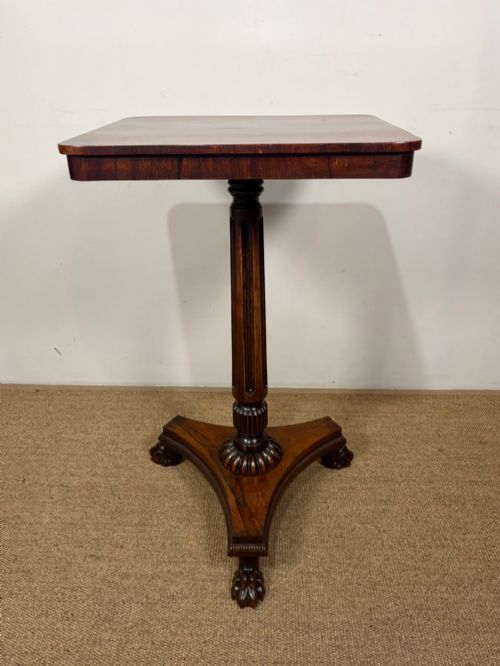
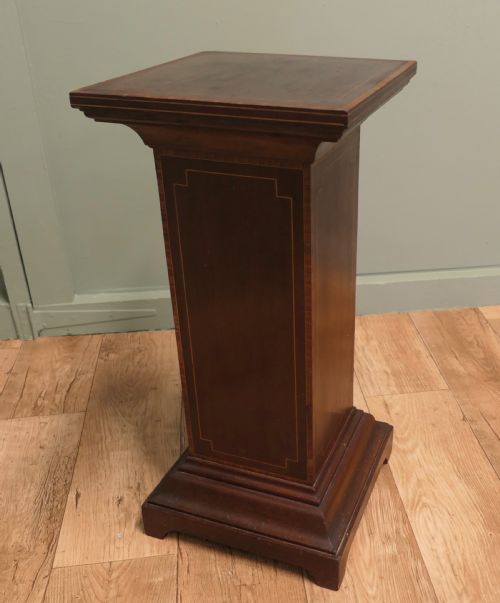
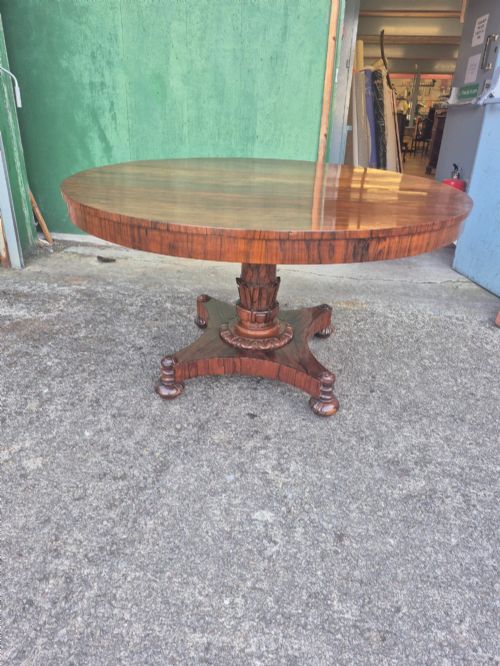


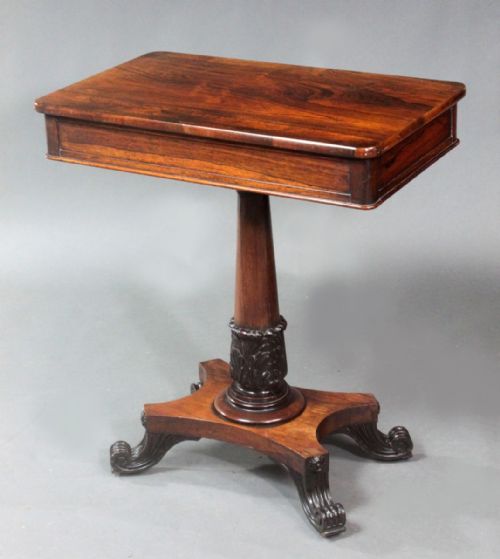

Rosewood Pedestal Column
These rosewood pedestal column pieces bring rich timber figures and sturdy classical forms into rooms that need a solid centrepiece.
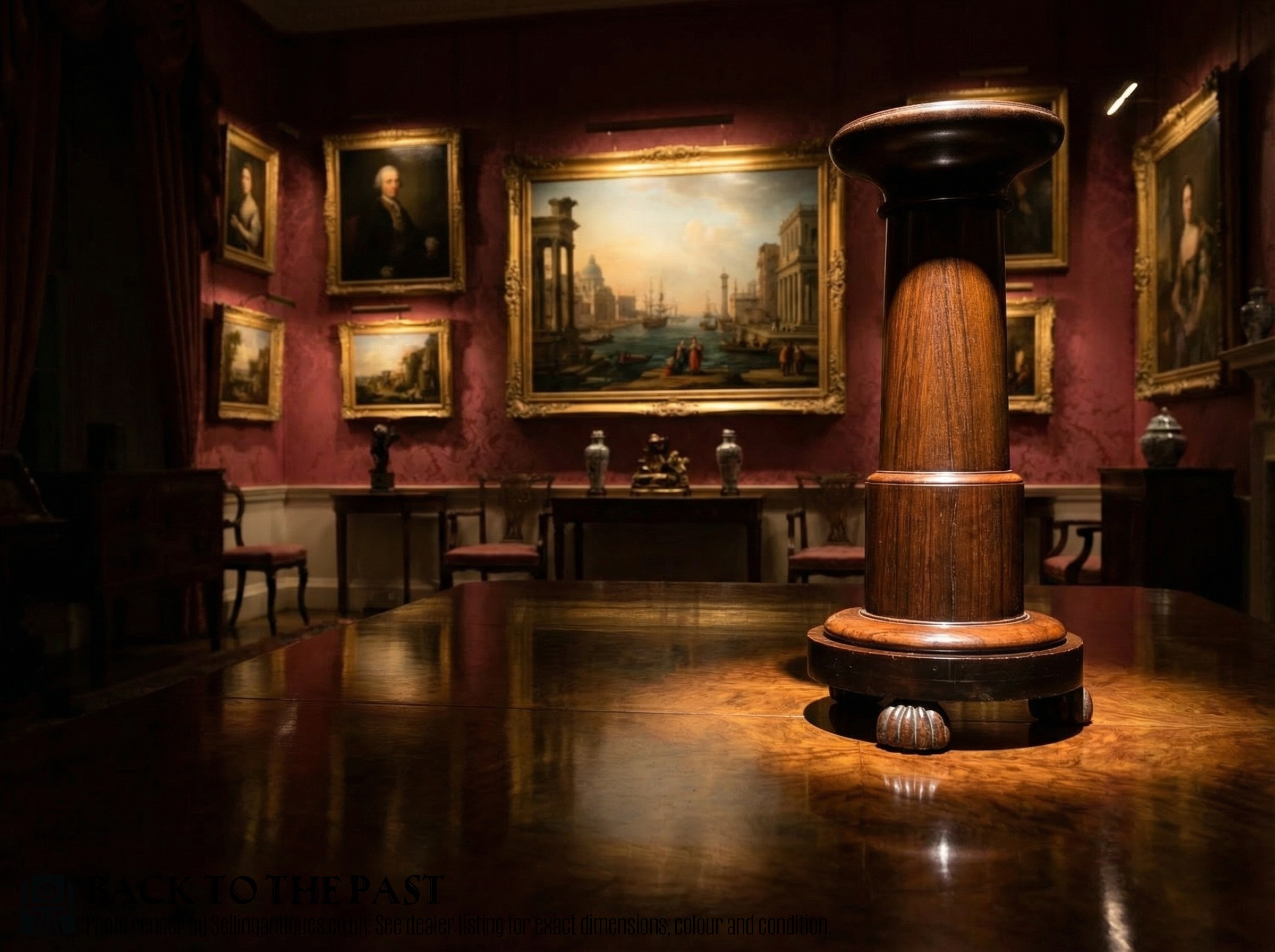
Rosewood Pedestal Column
When you search for a rosewood pedestal column, you are looking at substantial timber supports carrying circular or hexagonal tops suited for display and dining. The examples seen here span the 19th Century, drawing heavily on Regency, William IV, Victorian, and late Georgian periods.
You will most frequently meet occasional tables, card tables, and plant stands amongst these listings. These forms rely on a central pillar rising from a stable base to hold specimen wood tops or fold-over surfaces.
Makers of this era utilised exotic hardwoods like goncalves and solid rosewood to build stands that function both as practical furniture and architectural statements. The forms range from simple lamp tables to large breakfast tables and sculpture displays.
Construction and materials
Cabinetmakers built these pieces using dense timbers such as rosewood and mahogany, often applying intricate parquetry or specimen wood tops to create geometric patterns. Brass mounts and baize linings appear on functional gaming and card surfaces.
The central columns are turned from solid stock or heavy veneers, anchored to robust platforms or feet that distribute weight evenly beneath heavy marble or timber tops.
Rosewood Pedestal Column Retail Price Guide 2026
Typical asking prices for rosewood pedestal column among the pieces listed under this phrase on Sellingantiques today, from the lower quarter to the upper quarter. They describe what is for sale here now, not the wider market.
Materials recorded across these items include brass, baize, marble, and goncalves alongside primary rosewood.
Judging quality in column furniture
Quality rests in the grain selection of the rosewood and the crispness of the turned pillar work. Pieces featuring solid construction and complex parquetry or specimen wood tops stand apart from simpler veneered alternatives.
The stability of the central column and the precision of folding mechanisms on card tables indicate the skill of the original workshop.
The Rosewood Pedestal Column Glossary
- Pedestal
- A central vertical support carrying a tabletop or display surface. This column design replaces traditional four-legged frames to free up floor space.
- Parquetry
- Geometric wood mosaic work used for decorative tabletops. Cabinetmakers arranged contrasting timbers in precise patterns.
- Jardiniere
- A decorative stand designed to hold plants or floral arrangements. They often feature waterproof liners or raised rims.
Rosewood Pedestal Column: Frequently Asked Questions
What is a rosewood pedestal column table used for?
These tables serve as central display points, lamp surfaces, or dining tables depending on their top configuration. Card and breakfast tables add functional folding surfaces to living spaces.
Smaller plant stands and sculpture pedestals elevate decorative objects to eye level within a room.
How do I date a 19th-century pedestal table?
Dating relies on stylistic clues from the Regency, William IV, and Victorian periods seen in the turning of the column and the base design. Heavier proportions and specific veneers often point towards the early decades of the 19th century.
Secondary woods and construction methods underneath the top provide further confirmation of the manufacturing era.
Are these tables made of solid rosewood?
Many pieces combine solid rosewood structural elements with finely figured rosewood veneers applied to stable secondary timbers like mahogany or pine. Fully solid examples also exist, particularly in Anglo-Indian pieces.
The choice of solid timber or veneer depended on the decorative effect the cabinetmaker wished to achieve on the top and column.
How should I care for antique rosewood furniture?
Keep these pieces away from direct sunlight and extreme temperature fluctuations to prevent the rosewood veneer from drying or cracking. Regular dusting with a soft, dry cloth preserves the polished surface.
Avoid using silicone-based polishes, opting instead for traditional wax feeds if the timber requires nourishment.