


Regency Rosewood Chest
A regency rosewood chest brings dense tropical timber and precise brass detailing to a room, offering both surface display and deep storage.
Regency Rosewood Chest
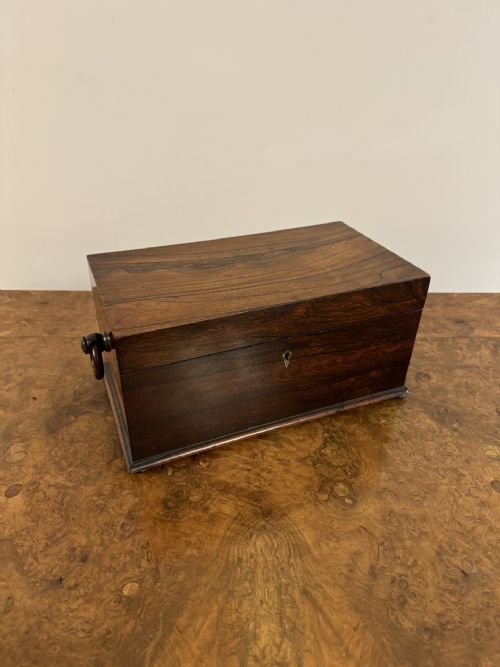
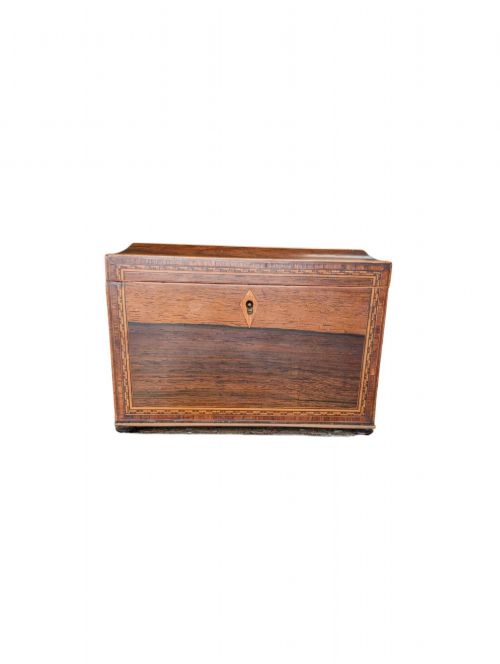
When buyers search for a regency rosewood chest, they encounter a variety of forms designed to hold personal treasures, papers, or household valuables. The selection spans compact tabletop boxes alongside substantial drawer units made during the nineteenth century.
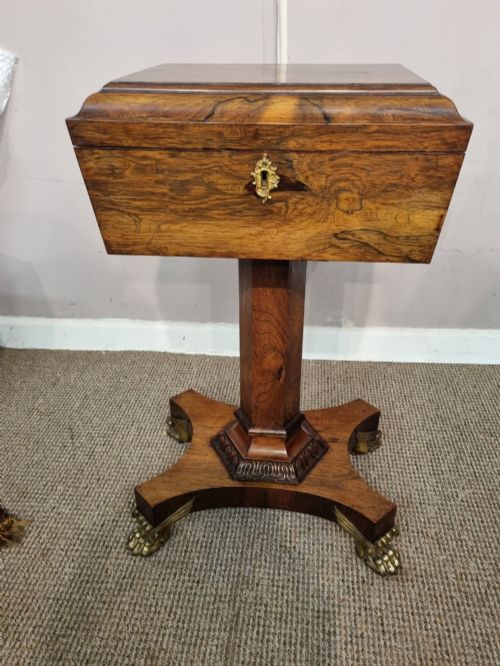
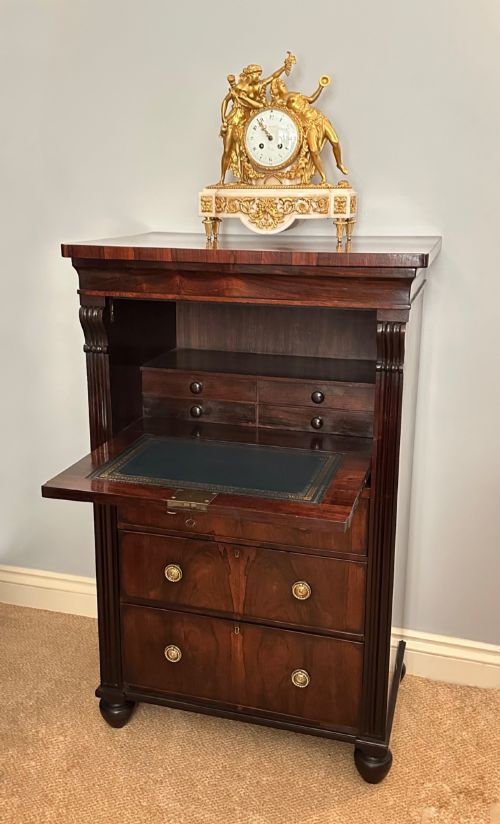
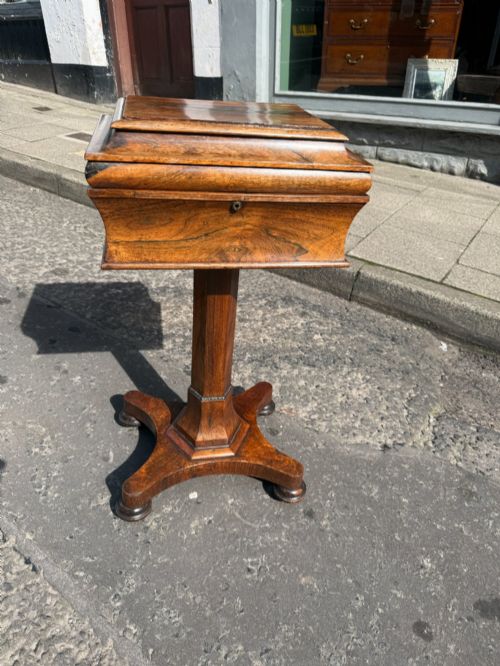
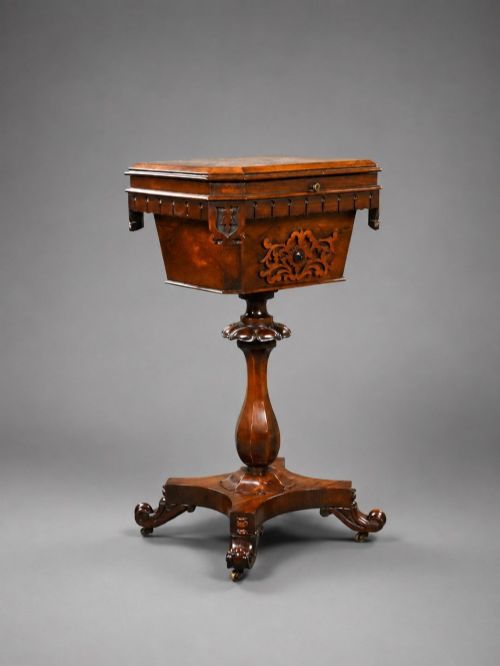
The most frequent examples appearing on this page are tea caddies, teapoys, and various chests of drawers including Wellington and Wellington secretaire models. These pieces stem primarily from the Regency, Georgian, and William IV periods, often displaying classical architectural proportions.
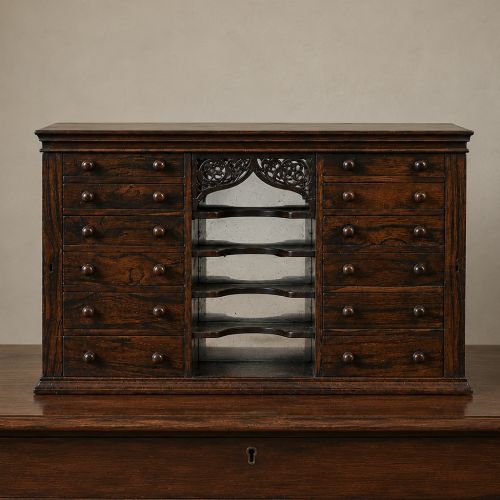
Smaller tabletop formats such as jewellery boxes and writing slopes sit alongside larger side cabinets and ottomans. Each variation reflects the period's demand for portable luxury and orderly storage in domestic interiors.
How they were made
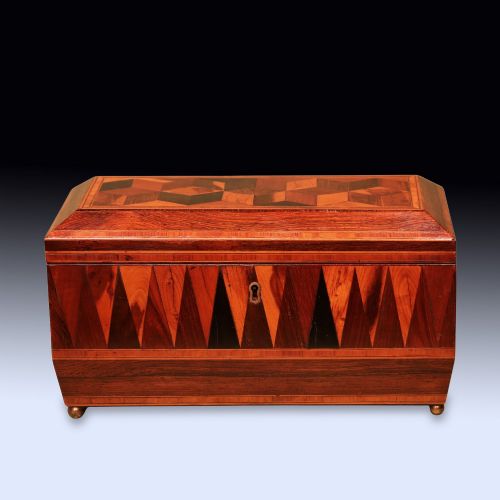
Interior fittings often incorporate compartments lined with leather, glass mixing bowls, or fitted bone and wood sections. Parquetry and crossbanding demonstrate advanced joinery techniques employed to decorate curved sarcophagus forms and flat drawer fronts alike.
Several tea caddies still retain their original loose leaf tea cases and glass mixing bowls ready for service.
What varies in quality
The distinction between ordinary and superior pieces rests on the crispness of the brass inlay and the selection of the rosewood timber grain. Master cabinet makers aligned figure patterns symmetrically across lid panels and drawer fronts.
Internal complexity also dictates the tier of the piece, where fully fitted tea caddy canisters, secret locking mechanisms, and original working keys elevate the status of a chest.
The Regency Rosewood Chest Glossary
- Wellington Chest
- A tall, slender chest of drawers secured by a locking side flap that fastens over the drawer edges. This form originated in the nineteenth century to maximise vertical storage space.
- Teapoy
- A freestanding container supported on a pillar and base, used to store tea leaves and utensils in the drawing room. Interiors usually contained removable canisters and a glass mixing bowl.
- Sarcophagus Form
- A tapered box shape featuring a domed or peaked lid resembling an ancient stone coffin. Cabinet makers utilised this classical silhouette extensively during the Regency period for tea caddies and work boxes.
- Tunbridge Ware
- Small wooden items decorated with microscopic tessellated mosaic patterns made from naturally coloured woods. These intricate pictorial designs were produced in Kent.
- Campaign Box
- A portable trunk or chest constructed in sections with brass corners and recessed handles for military transport. Officers used these durable boxes during nineteenth century campaigns.
Regency Rosewood Chest: Frequently Asked Questions
What is a teapoy used for?
A teapoy served as a specialised container for storing expensive loose tea leaves in the drawing room. They usually contained internal caddies and compartments for sugar and mixing.
During the nineteenth century, hosts used them to prepare tea before guests. They doubled as small decorative tables placed beside seating.
How do I identify a Regency period piece?
Regency items display classical proportions inspired by ancient Greece and Rome, often combining dark rosewood with precise brass inlay. Look for architectural elements like lion mask handles and sarcophagus shapes.
Construction details from this era include hand-cut dovetails and secondary woods like pine or mahogany beneath the veneer.
Where were these chests placed in a home?
Smaller boxes and tea caddies sat upon side tables, Pembroke tables, or pembroke cabinets in formal reception rooms. Larger drawer chests and Wellington cabinets stood against parlor walls.
Bedside cabinets and miniature chests were kept in private chambers for personal trinkets and documentation.
What makes a Wellington chest different?
A Wellington chest is characterised by its narrow, vertical bank of several drawers secured by a hinged locking stile on the right side. This external flap bars access to all drawers simultaneously.
Cabinet makers designed them to hold linen, documents, or jewellery while occupying minimal floor space in domestic interiors.