



Regency Revival Pedestal Table
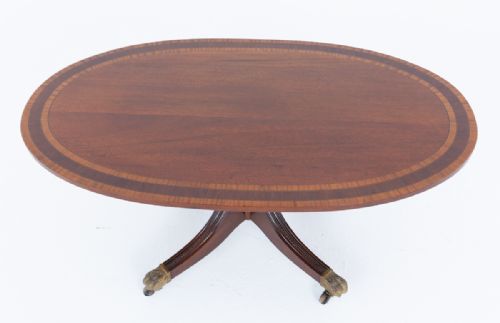
A regency revival pedestal table brings classical proportion and rich mahogany into a room without the fragility of true antiquity.
Regency Revival Pedestal Table
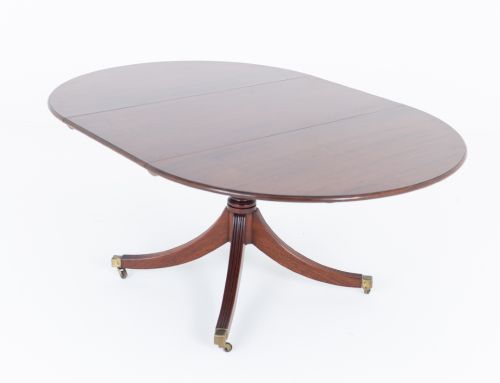
When you search for a regency revival pedestal table, you look for sturdy dining and centre furniture built to echo the classical lines of the early nineteenth century. Most examples you meet here date from around nineteen hundred to the nineteen twenties, adopting the heavy timbers and central column supports characteristic of the revival period.
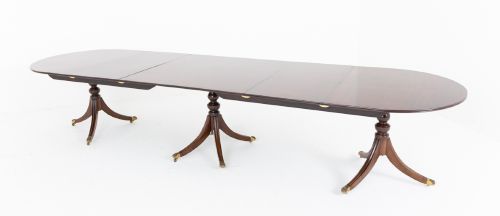
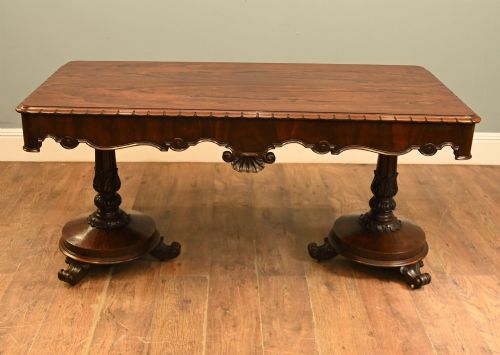
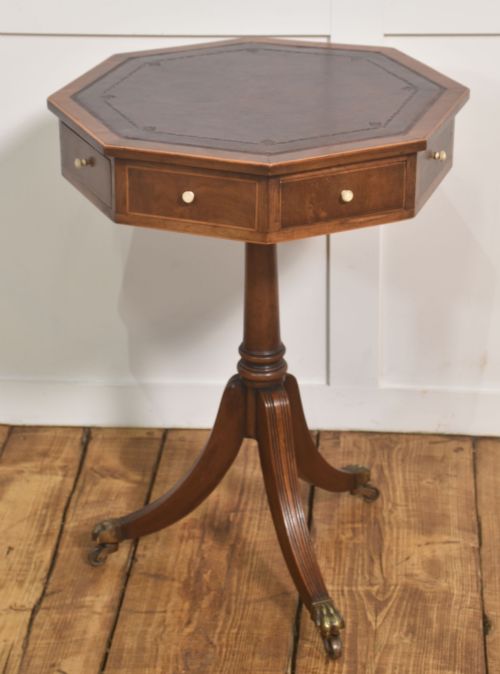
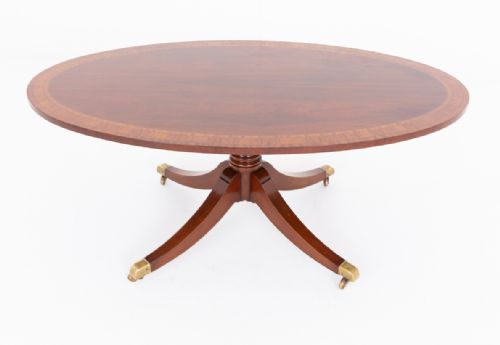
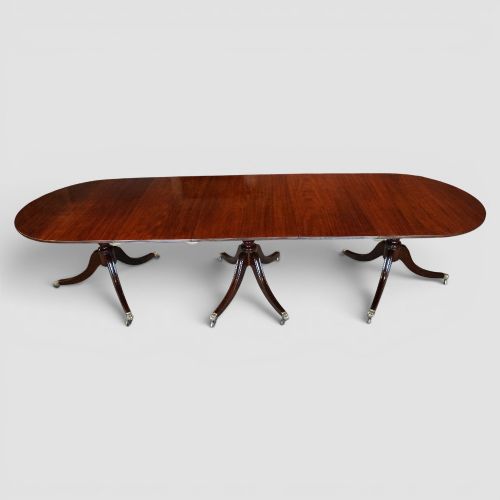
The form ranges from compact two pedestal dining tables to large triple pillar formats designed for extended dining rooms. Alongside these, circular drum tables and smaller centre tables appear frequently, maintaining the balanced geometry central to the style.
Materials and construction
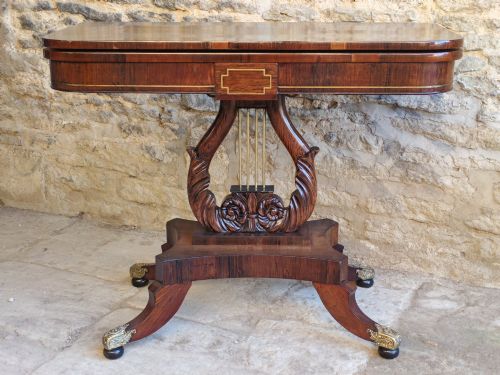
Cabinet makers relied heavily on solid and veneered mahogany, often selecting timber with deep grain patterns to build the main surfaces and sturdy central columns. Secondary materials such as brass fittings, satinwood inlay, and leather top inserts added contrast and texture to the finished pieces.
Pedestal bases required robust internal framing to support multiple pillars and heavy top leaves without sagging. Joinery techniques from the period ensured stability across extending dining formats, combining traditional framing with substantial weight.
Regency Revival Pedestal Table Retail Price Guide 2026
Typical asking prices for regency revival pedestal table among the pieces listed under this phrase on Sellingantiques today, from the lower quarter to the upper quarter. They describe what is for sale here now, not the wider market.
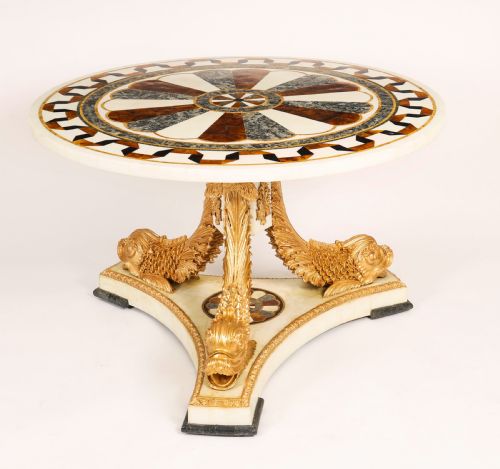
Listings span several decades, featuring mahogany and rosewood surfaces supported by brass castors and marble.
Distinguishing quality in craftsmanship
Quality rests primarily on the depth and figure of the mahogany timber and the crispness of any inlaid details. Finer pieces display carefully matched veneers across expansive table leaves rather than plain, uniform boards.
The weight and turning of the pedestal columns also determine worth. Solid brass paw castors and well-carved reeded pillar mounts separate standard production from superior workshops.
Whytock & Reid
The Regency Revival Pedestal Table Glossary
- Pedestal table
- A freestanding table supported by a central column or pillars rather than four corner legs. This design allows for easier seating placement around the perimeter.
- Drum table
- A circular library or centre table featuring a deep frieze band containing drawers, resting on a single turned pillar. The top often incorporates a leather writing surface.
- Satinwood inlay
- A decorative technique using light-coloured exotic wood to create contrasting geometric or floral borders. It provides a sharp visual line against dark mahogany.
- Reeded pillar
- A column decorated with parallel convex mouldings running vertically down the shaft. This detail is typical of classical revival furniture.
- Twin pedestal
- A table construction utilising two distinct central columns to support a long rectangular top, frequently fitted with removable leaves for extension.
Regency Revival Pedestal Table: Frequently Asked Questions
How do I care for a mahogany tabletop?
Keep the wood away from direct sunlight and steady heat sources to prevent the finish from drying or cracking.
Polish the surface occasionally with traditional beeswax rather than modern silicone sprays to maintain a natural lustre.
Can these tables be extended?
Many multi-pillar versions were built with mechanical slides and drop-in leaves to accommodate larger gatherings.
Check the undercarriage for winding mechanisms and alignment pins before attempting to adjust the length.
What rooms suit a pedestal table?
Circular centre tables fit well in hallways or drawing rooms where foot traffic flows around all sides.
Dining formats anchor a formal eating space, offering legroom advantages over standard four-leg designs.
How old are these revival pieces?
The majority of pieces catalogued here date from the late nineteenth century through to the interwar period.
They copy the Regency style popular a century earlier, bridging antique design with practical twentieth-century manufacturing.