





Brown Leather Occasional Table
These brown leather occasional table pieces bring tactile writing surfaces and rich timber frames into sitting rooms and studies alike.
Brown Leather Occasional Table
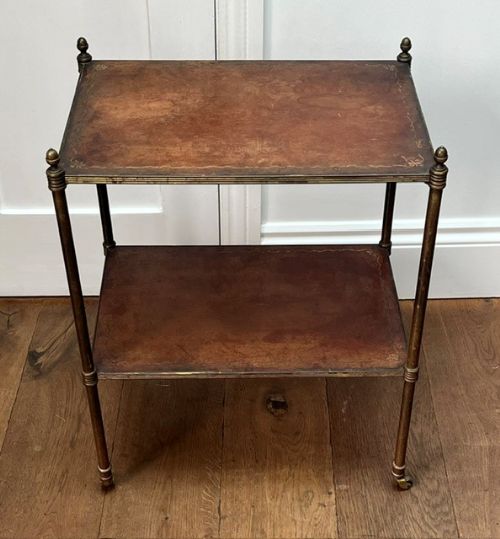
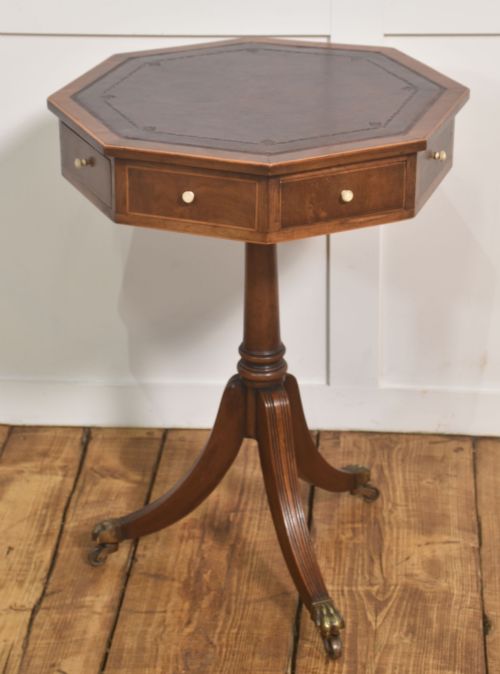
When you search for a brown leather occasional table, you uncover a lineage of compact furniture designed for writing, reading, and display. The pieces on this page span side tables, library tables, and writing tables, alongside two-tier etageres and drum tables.
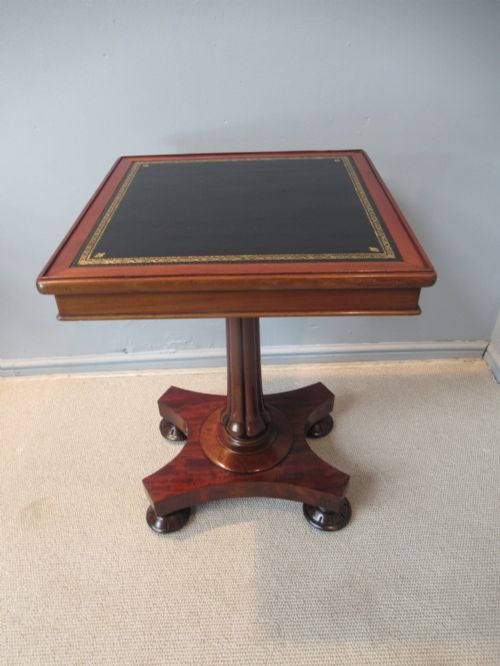
Mahogany forms the structural backbone of these pieces, frequently paired with inset leather surfaces that range from plain hides to tooled designs. Styles stretch from Georgian and William IV through Victorian and Regency Revival, touching also upon Aesthetic Movement and Arts and Crafts designs.
Most examples originate from the nineteenth and early twentieth centuries, capturing periods when utilitarian surfaces received decorative treatment through brass mounts, gold leaf, and marquetry. You will also encounter occasional departures into bamboo, rattan, and cow horn construction.
How they were made
Cabinet makers built the primary frames of these tables using solid mahogany, rosewood, and kingwood, often employing turned pedestals, tripod legs, or X-frames for support. Wood selection governed durability, while secondary timbers provided stability for drawers and internal framing.
Workshops applied leather hides directly to wooden table surfaces, securing the perimeter with decorative tooling, blind stamping, or gilt embellishment. Metalwork elements such as brass mounts, gilt-metal fittings, and lacquered brass tiers integrated structural support with decorative finish.
Brown Leather Occasional Table Retail Price Guide 2026
Typical asking prices for brown leather occasional table among the pieces listed under this phrase on Sellingantiques today, from the lower quarter to the upper quarter. They describe what is for sale here now, not the wider market.
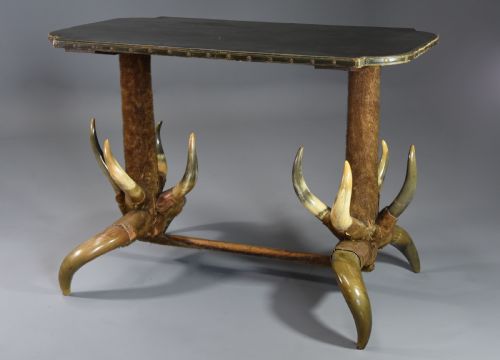
One exceptional nineteenth century German table is constructed entirely from cow horn, standing as a wonderfully eccentric departure from standard mahogany.
What varies in quality
Quality reveals itself in the crispness of the timber carving, the precision of the joinery around drum table drawers, and the integrity of the leather inset. Superior examples show careful selection of mahogany grain and refined application of gold leaf toolwork.
The sophistication of secondary materials also separates standard tables from exceptional ones, particularly where workshops incorporated gilt-metal mounts, marquetry inlay, or unusual structural elements like bamboo and cow horn.
Liberty and Co·Mallett of London
The Brown Leather Occasional Table Glossary
- Drum Table
- A circular library table with a deep top supported on a central pillar, frequently fitted with alternating drawers and faux drawers around the perimeter. These tables gained popularity during the Regency period.
- Tooled Leather
- Leather decorated by pressing heated metal tools into the surface, often using gold leaf to create intricate borders and decorative motifs around the edge of a writing surface.
- Tripod Table
- A small occasional table supported by three legs radiating from a central column, allowing the top to tilt on many historical examples.
- Etagere
- A set of open shelves or tiered stands used for displaying small objects, sometimes incorporating leather surfaces on the primary tier.
- Marquetry
- Inlays of different woods applied to a structural base to form decorative patterns or pictures, seen on French and English tables.
Brown Leather Occasional Table: Frequently Asked Questions
What is a drum table?
A drum table is a round occasional or library table featuring a wide top and a central pedestal base. They typically include drawers built into the deep wooden frieze.
Historically placed in libraries and studies, these tables provided a stable surface for writing and holding books while keeping reference materials close at hand.
How do I care for the leather top?
Leather surfaces require minimal moisture and occasional gentle cleaning to maintain their suppleness over decades of use. Avoiding direct sunlight prevents the brown hide from fading.
Applying appropriate leather dressings helps preserve the gold tooling and keeps the material from drying out near heat sources.
Were these tables used for writing?
Many of these pieces served as writing tables, library tables, or occasional desks where correspondence took place. The smooth leather insert provided an ideal cushion for quill pens and steel nibs.
Smaller side tables and etageres functioned more broadly for holding books, lamps, and decorative ornaments in domestic reception rooms.
How do I distinguish Regency from Regency Revival?
Original Regency pieces date from the early nineteenth century and carry the authentic wear, timber ageing, and construction methods of that specific era. Regency Revival items date from later periods, such as the early twentieth century, reproducing those earlier architectural lines.
Examining the secondary woods, fixings, and interior drawer construction helps clarify the true age of the piece.