




Regency Revival Gold Mirror
A regency revival gold mirror brings the striking scale and classical motifs of the early nineteenth century straight into a modern interior.
Regency Revival Gold Mirror
A regency revival gold mirror encompasses wall mirrors, overmantels, and convex plates reflecting classical taste from the nineteenth century onward. These pieces draw heavily on Egyptian revival, neoclassical, and Grecian designs that defined the Regency period itself.
Most examples found here span the nineteenth and early twentieth centuries, featuring giltwood frames, ebonised wood details, and distinctive columns. Buyers will encounter both original nineteenth-century works and later revival pieces created around nineteen twenty.
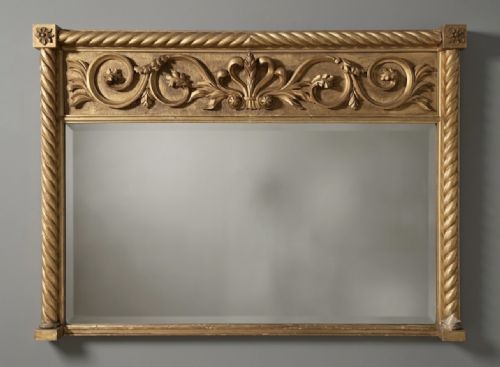
Forms range from large tryptic overmantels designed for grand chimney breasts to compact pier mirrors and circular convex glasses. Each variation captures the theatrical gilt aesthetic that sought to brighten rooms through reflected candlelight and daylight.
How they were made
Makers constructed the timber carcasses from wood before applying layers of gesso to build up intricate surface ornamentation. Carved details and applied mouldings defined the architectural character of the frames.
Water gilding and gold leaf were applied over the prepared gesso ground to achieve a brilliant, reflective metallic finish. Ebonised wood accents and brass components frequently provided sharp visual contrast against the gold.
Mirror glass was set into the frames, with convex plates offering wide-angle reflections and multi-plate tryptic configurations dividing the view. Construction relied on traditional joinery methods suited to heavy framed wall hangings.
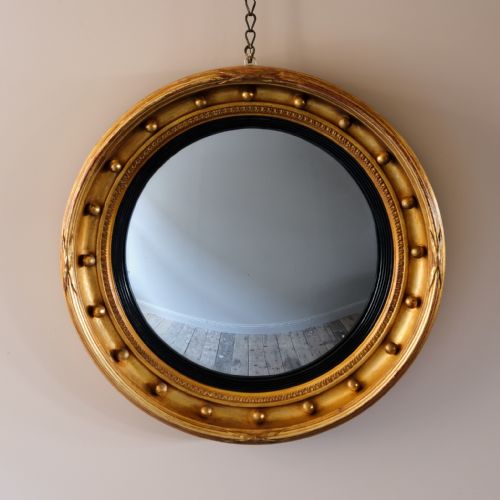
Convex mirrors were once nicknamed banker's mirrors because their wide-angle view let shopkeepers keep an eye on everything at once.
What varies in quality
Depth and crispness of the carved ornament distinguish superior frames from simpler production pieces. Hand-carved gesso work shows sharp detail in classical motifs such as columns and Egyptian revival elements.
The integrity of the original gilding and the preservation of the underlying gesso layer dictate the visual richness of the surface. Patina develops naturally over time, showing the subtle warmth of the gold leaf against the wood beneath.
Sir Willian Trotter
The Regency Revival Gold Mirror Glossary
- Giltwood
- Wood that has been coated with gold leaf or powder. This finish gives the frames their characteristic bright appearance.
- Gesso
- A plaster-like mixture applied to the wooden frame before gilding. It provides a smooth surface for carving fine details.
- Convex mirror
- A round mirror with a curved outward glass plate. This form creates a wide, fish-eye reflection of the entire room.
- Overmantel mirror
- A large horizontal mirror designed to hang above a fireplace mantel. These pieces often feature multiple glass panels.
- Pier mirror
- A tall, narrow mirror made to hang on the wall between windows. They frequently sat above matching console tables.
Regency Revival Gold Mirror: Frequently Asked Questions
How do I style a regency revival gold mirror?
Position the mirror above a mantelpiece or console table to anchor the room's decorative focus. Its reflective surface helps bounce natural light into darker corners.
Pair the piece with traditional or transitional furnishings to let the classical gilt frame stand out. Ensure the wall fixings are secure enough to support the heavy timber and glass weight.
What is the difference between original and revival pieces?
Original pieces date from the Regency and George IV eras, reflecting contemporary neoclassical tastes. Revival pieces were produced later, particularly around nineteen twenty, copying those earlier designs.
Both categories utilise similar gilding techniques and classical motifs such as columns and ebonised details. Careful examination of the wood construction and gesso ageing helps determine the exact period.
Where were overmantel mirrors placed?
Overmantel mirrors were traditionally hung directly above the fireplace in principal reception rooms. Their generous proportions reflected the flames and warmed the overall atmosphere.
Today, they function equally well above sideboard units or along main hallway walls. Their architectural presence creates an immediate focal point in domestic interiors.
Why use convex glass in these mirrors?
Convex glass plates were designed to capture a wide-angle view of the entire interior space. This optical property made smaller rooms appear much larger and brighter.
Framed by circular giltwood surrounds, these mirrors served as both optical instruments and decorative art. They remain popular for their distinct spherical reflection.