




Regency Revival Armchairs
Regency revival armchairs are classical revival seats bringing neoclassical design to later Victorian and twentieth-century interiors.
Regency Revival Armchairs
Regency revival armchairs encompass seating produced across the nineteenth and twentieth centuries, channeling earlier classical lines. Buyers exploring this phrase encounter pairs and sets designed as library chairs, open armchairs, and dining chairs.
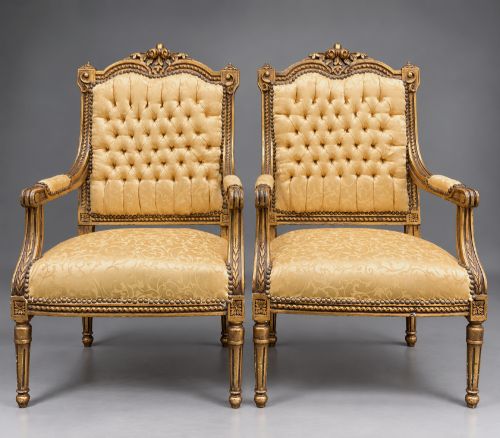
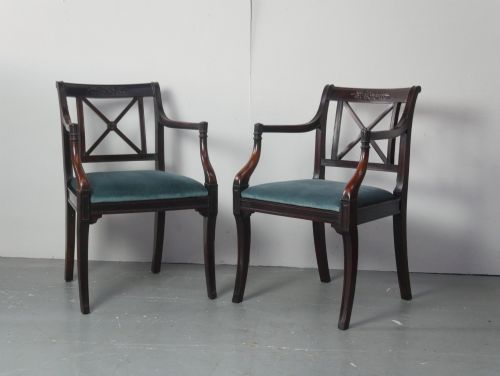
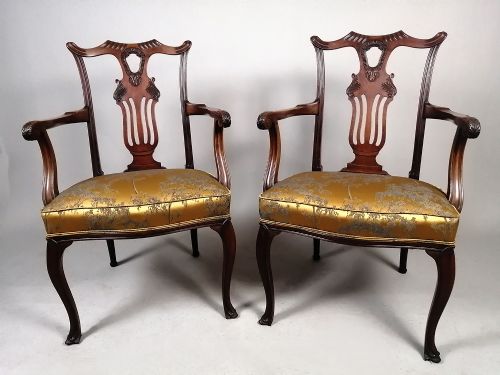
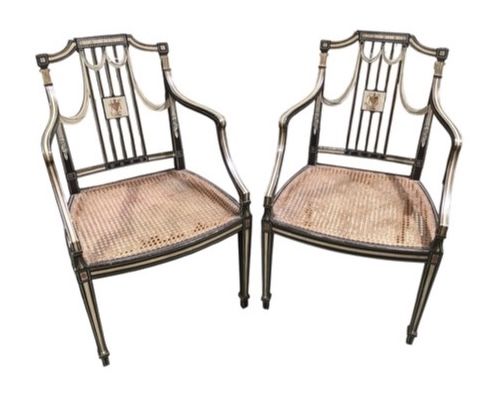
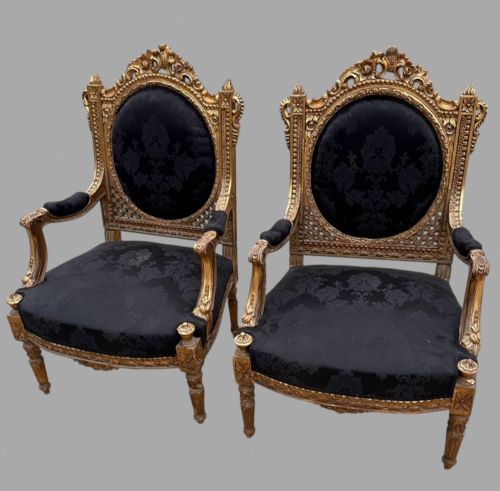
The pieces appearing on this page range from late Victorian interpretations down to twentieth-century revivals, alongside original period examples. Common forms include lyre-back elbow chairs and open giltwood library seats drawing on classical motifs.
How they were made
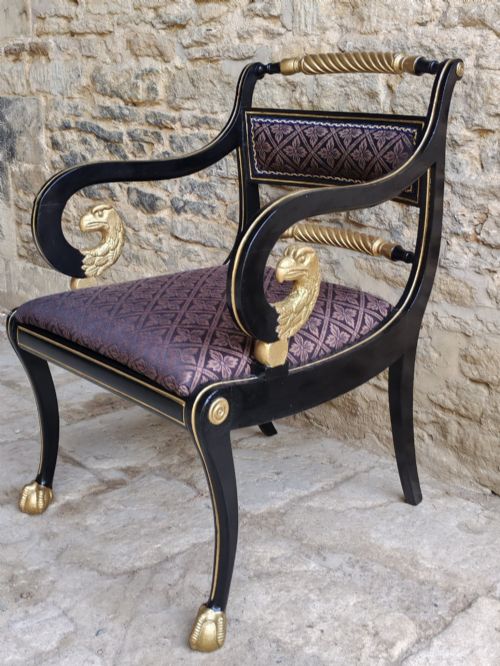
Maker's workshops utilised traditional timbers including mahogany, walnut, satinwood, and oak, often combining them with ebonised finishes. Giltwood detailing and brass mounts provided the decorative contrast characteristic of the Regency vocabulary.
Upholstery relied on textiles such as velvet and standard fabrics, fitted over supportive frames. Carved wooden elements demonstrated hand-carving techniques applied to details like monopodia supports and lyre splats.
One extraordinary metamorphic armchair transforms seamlessly into a set of library steps when you need to reach the top shelf.
What varies in quality
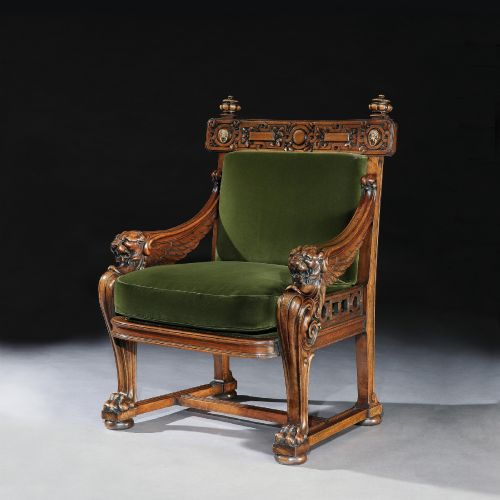
The distinction between standard production and superior work rests on the crispness of the carving and the fidelity of the classical detailing. Pieces reflecting the direct influence of designers show sharper execution in elements like lion monopodia and giltwood surfaces.
Material selection dictates the character of each piece, from richly figured mahogany and satinwood to solid giltwood frames. The integrity of the original timber structure and the quality of the applied finish determine the overall standing of the chair.
Thomas Hope·Thomas Chippendale·Richard Hicks Bridgens
The Regency Revival Armchairs Glossary
- Monopodia
- Carved animal legs, often lions, used as supports on chairs and tables in the classical manner. This ancient Roman motif was revived during the Regency period to project imperial grandness.
- Giltwood
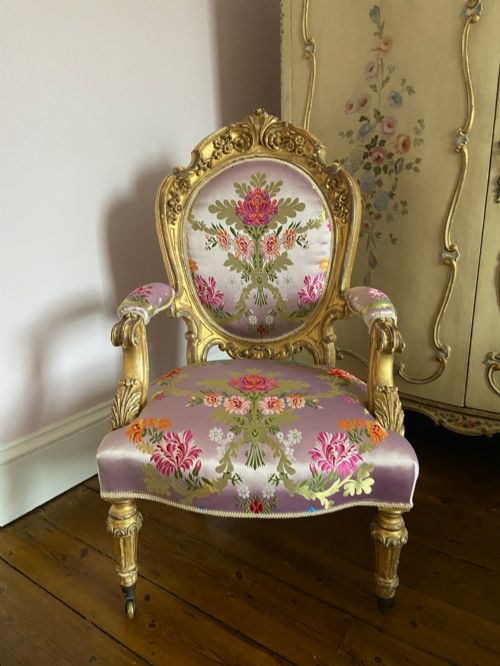
- Timber coated with gold leaf or gesso and gilding. It provides a bright, reflective surface favoured for ceremonial and principal rooms.
- Lyre back
- A chair splat shaped in the outline of a musical lyre. This form became popular during the neoclassical revivals of the nineteenth century.
- Ebonised
- Wood stained or painted black to imitate ebony. This treatment was frequently used to create stark contrast against gilt highlights.
Regency Revival Armchairs: Frequently Asked Questions
What defines a regency revival armchair?
These armchairs replicate or adapt the classical furniture styles of the early nineteenth century, drawing heavily on Greek, Roman, and Egyptian motifs. They bridge historical aesthetics with the manufacturing capabilities of later Victorian and twentieth-century workshops.
Buyers find these chairs in forms ranging from open library seats to dining chairs. They incorporate materials like giltwood, mahogany, and velvet to achieve an opulent classical effect.
How do I spot a revival piece?
Revival pieces dating from the late nineteenth or twentieth century often reveal construction methods, secondary timbers, and fastener types specific to their actual period of manufacture rather than the eighteen-twenties. Closer inspection of the timber ageing and joinery helps separate the original Regency period items from later interpretations.
Design proportions and carving styles also offer clues, as later makers sometimes exaggerated classical motifs. Comparing the specific giltwood or mahogany finish against known period examples clarifies the manufacturing era.
Where should I place these chairs?
Regency revival armchairs suit studies, libraries, and drawing rooms where their classical lines complement formal interior schemes. Open armchairs and library chairs work effectively as standalone reading seats or paired beside a fireplace.
Dining chairs function well around a central table to introduce architectural presence to a dining space. Their striking silhouettes ensure they act as focal points within a room.
How do I care for giltwood frames?
Giltwood surfaces require gentle dusting with a soft, dry brush to avoid scratching the delicate gold leaf layer. Moisture and chemical cleaners should be kept away from the gilded areas to prevent stripping or tarnishing.
Positioning the chairs away from direct sunlight and excessive heat sources protects both the timber frame and the upholstery fabrics. Regular, careful maintenance preserves the reflective finish of the gilt.