


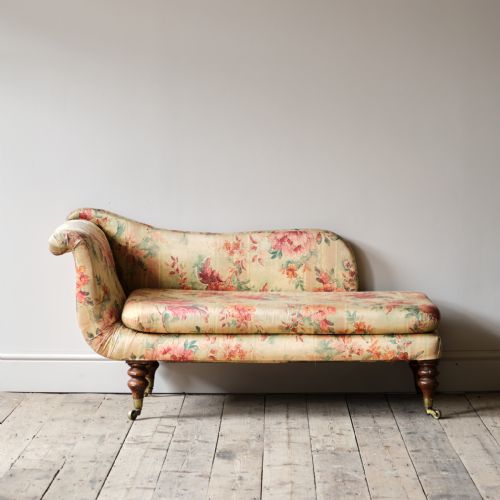


Regency Recamier
A regency recamier offers classical reclining elegance, combining sweeping scroll ends and rich timber frames to anchor a sophisticated interior scheme.
Regency Recamier
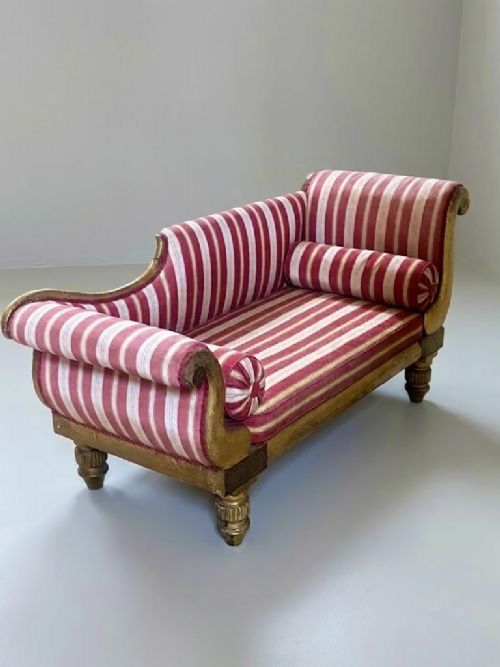
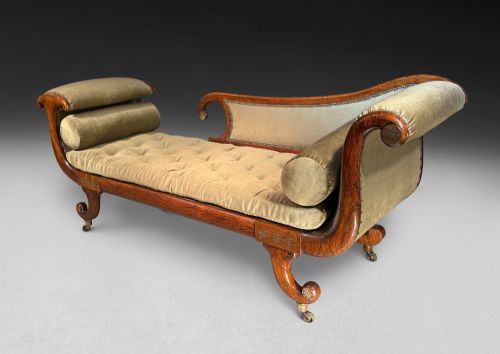
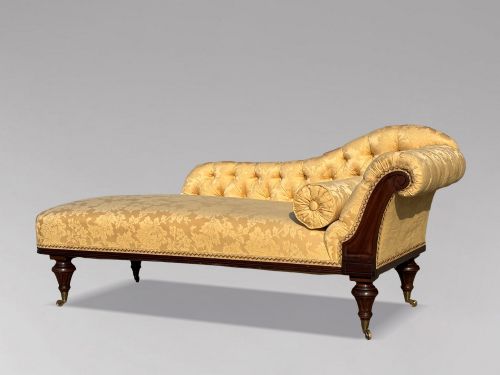
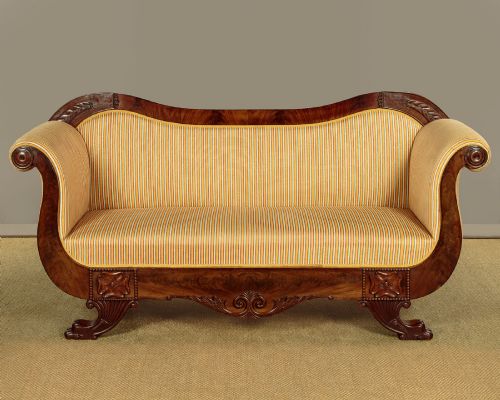
A regency recamier typically appears as a chaise longue, daybed, or scroll end couch designed for reclining in neoclassical style. These pieces trace their lineage to the early nineteenth century, drawing heavily on Roman and Greek seating forms popular during the Regency and William IV periods.
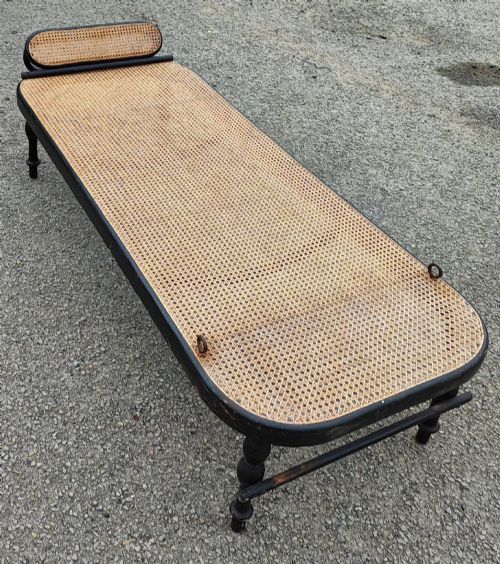
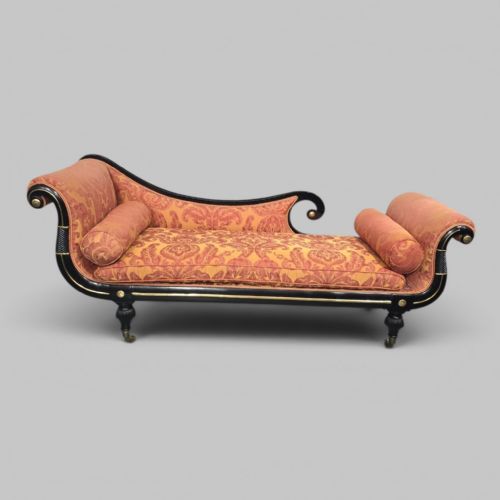
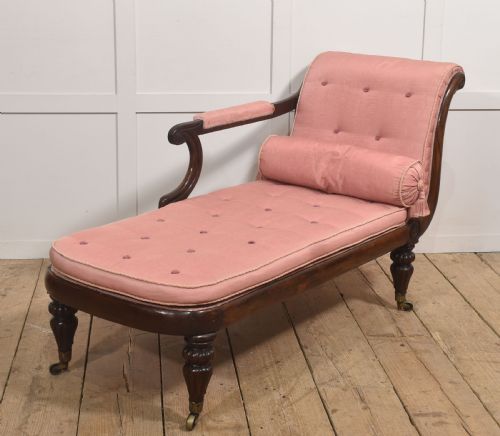
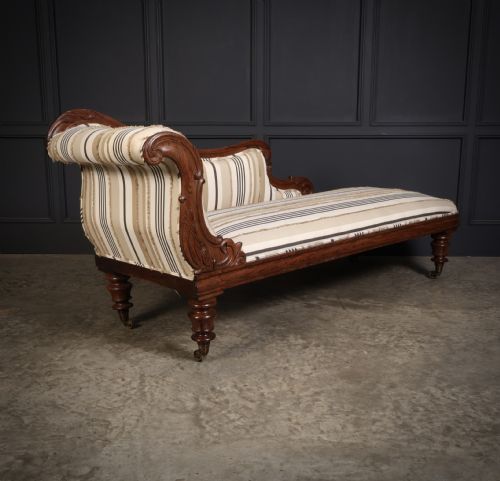
The version most commonly met on this page is a mahogany or rosewood chaise longue featuring a raised scroll end and upholstered seating. Alongside traditional timber frames, variants emerge in simulated rosewood, ebonised wood, and cane, occasionally stretching into later Victorian iterations and surrealist interpretations.
Makers and designers of the era, including figures associated with Gillows, produced daybeds and couches that served both functional lounging and formal display. Buyers will also encounter associated busts depicting Madame Récamier herself, linking the physical seating form directly to its famous neoclassical namesake.
Distinctions in quality
The refinement of the timber carving and the crispness of brass inlay fundamentally separate superior examples from simpler production. Master workshops achieved fluid, organic lines in the scroll ends and structural rails that lesser pieces simply fail to capture.
Material selection also dictates the standing of a piece, with solid rio rosewood or finely figured mahogany framing holding greater inherent presence than secondary woods. Furthermore, the integration of original or historically appropriate upholstery textiles enhances the visual harmony of the finished daybed.
Madame Récamier famously paused for a portrait, inadvertently launching a permanent furniture dynasty named in her honour.
Gillows·Willian Trotter·Syrie Maugham
The Regency Recamier Glossary
- Récamier
- A form of daybed or chaise longue featuring one or two raised ends, named after the French society figure Madame Récamier. The design became a staple of neoclassical interior decoration.
- Scroll end
- A sweeping, curved wooden terminal on a couch or daybed that mimics ancient Roman seating archetypes. This architectural feature defines the silhouette of many early nineteenth-century pieces.
- Simulated rosewood
- A painted or stained wood finish designed to imitate the rich grain and deep colour of genuine rosewood. Craftsmen utilised this technique on native timbers during the Regency period.
- Cane seating
- Woven rattan material used for chair and daybed panels to provide a resilient and breathable surface. This technique appears frequently on nineteenth-century day beds and long stools.
Regency Recamier: Frequently Asked Questions
What is a regency recamier used for?
These pieces were originally designed for semi-recumbent resting, reading, and formal entertaining in neoclassical drawing rooms. In modern spaces, they function brilliantly as sculptural daybeds or statement seating in studies and bedrooms.
Their elongated silhouette allows them to fit naturally against a wall or float within a larger room as a striking focal point.
How do I tell a Regency piece from a Victorian one?
Regency and early nineteenth-century pieces lean heavily on restrained neoclassical lines, crisp brass inlay, and simulated rosewood finishes. Victorian examples often introduce heavier proportions, bolder carving, and darker walnut or mahogany tones.
Examining the underlying timber grain and the sharpness of the scroll end usually reveals the stylistic transition between the periods.
Can I use a daybed for daily sitting?
Most antique daybeds and chaise longues are structurally robust enough for regular lounging when placed correctly. The cane or upholstered foundations provide sturdy support suited to domestic life.
Care should be taken with antique textiles and delicate carved frames to preserve their condition over years of use.
What woods were used for these couches?
Cabinet makers predominantly worked with mahogany and rich rosewood, sometimes employing solid rio rosewood for high-status commissions. Ebonised wood and simulated rosewood offered alternative finishes for fashionable interiors.
Secondary woods like pine or oak frequently form the internal frame beneath the show wood.