


Regency Reading Armchair
A regency reading armchair is a sturdy seat built for the library, combining timber and upholstery to support hours of quiet study.
Regency Reading Armchair
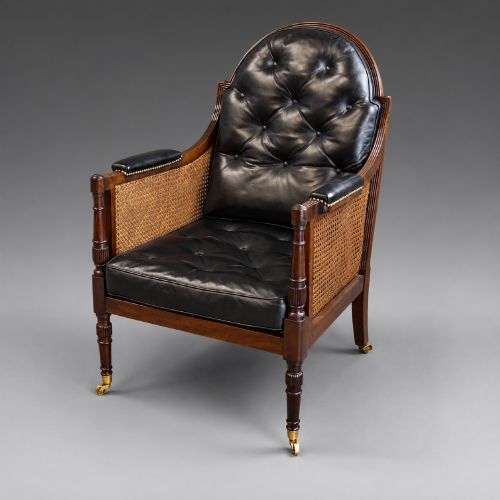
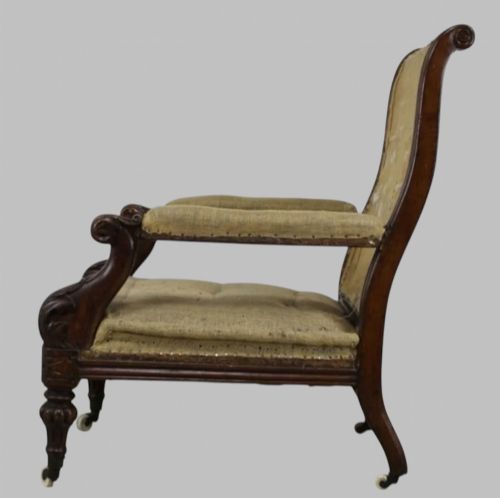
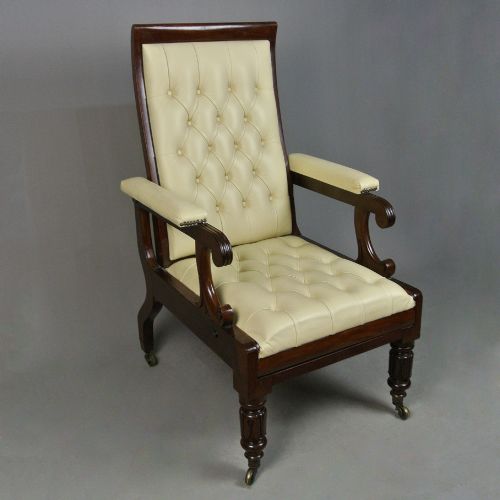
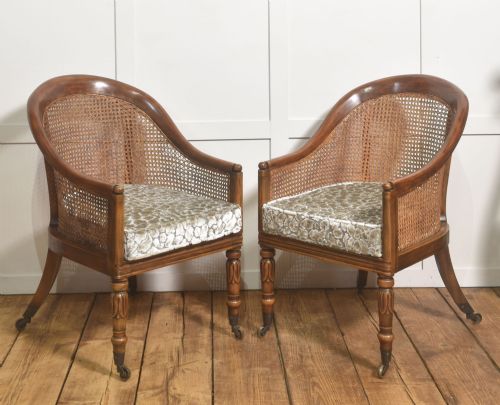
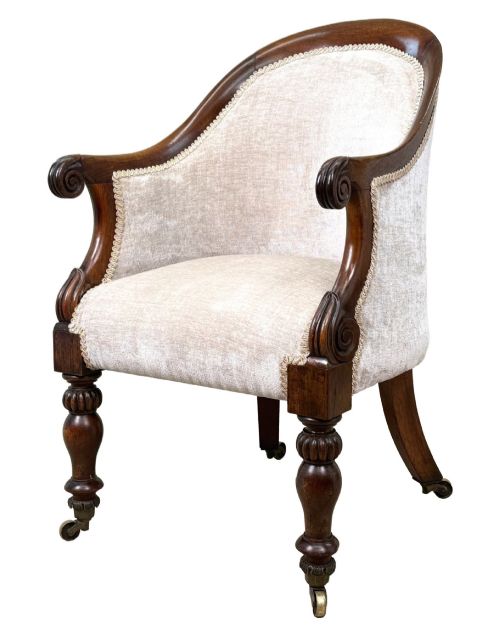
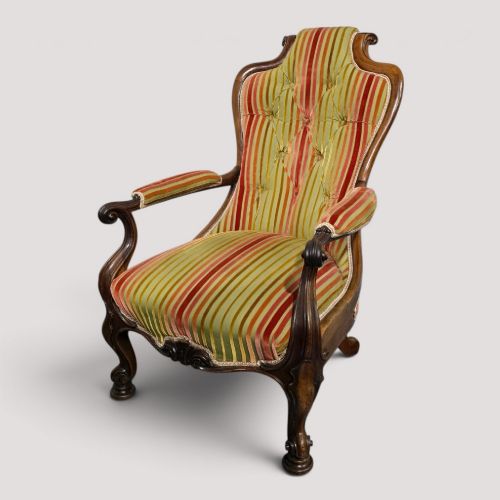
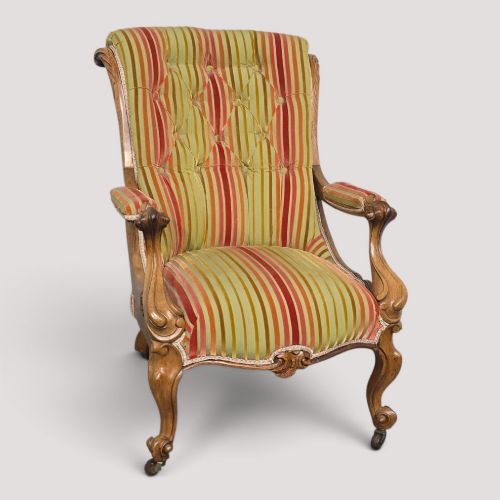
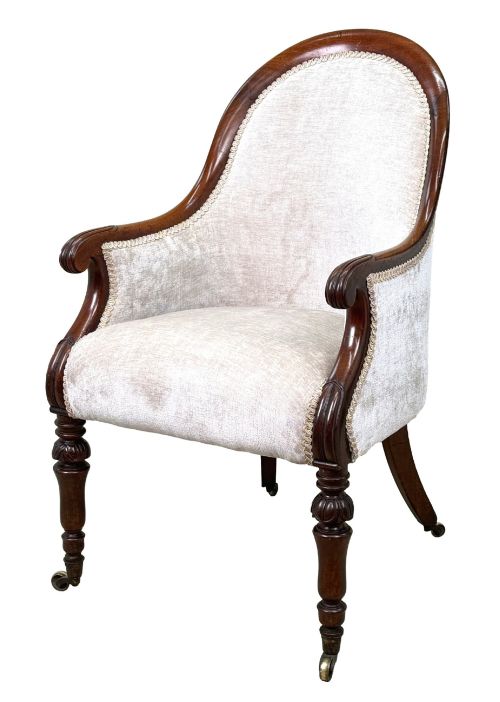
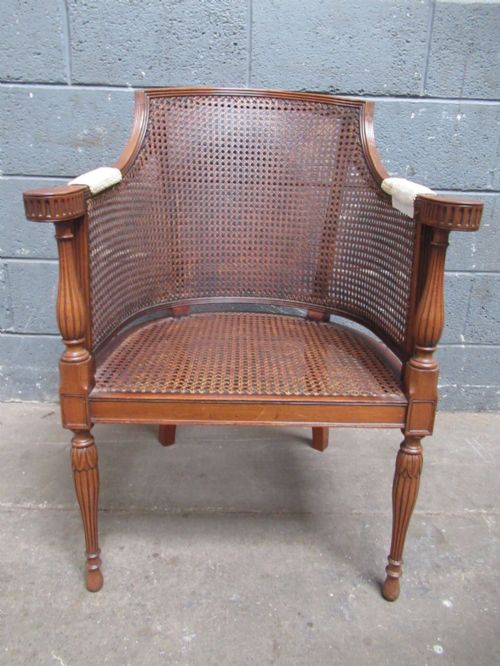
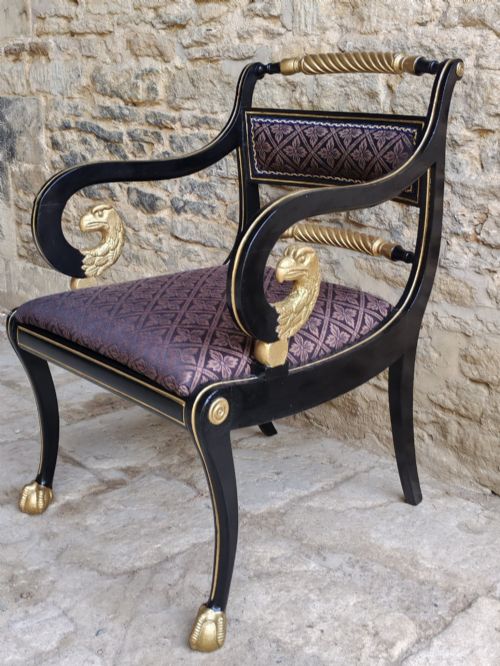
When you search for a regency reading armchair, you encounter seating designed for the study and library during the early nineteenth century and related periods. These chairs take several forms, including open armchairs, tub library armchairs, desk chairs, and bergères fitted with caning.
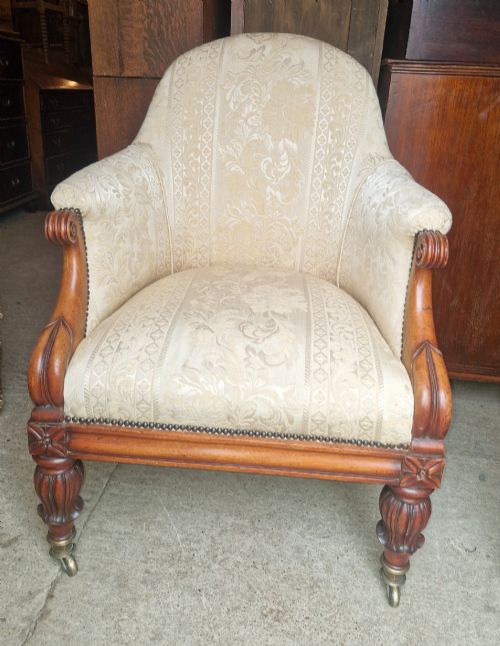
The most common examples on this page date from the Regency and William IV eras, though items from the Georgian, Victorian, Edwardian, and later nineteenth-century periods also appear. Makers and workshops constructed them from solid hardwoods to serve readers, writers, and scholars.
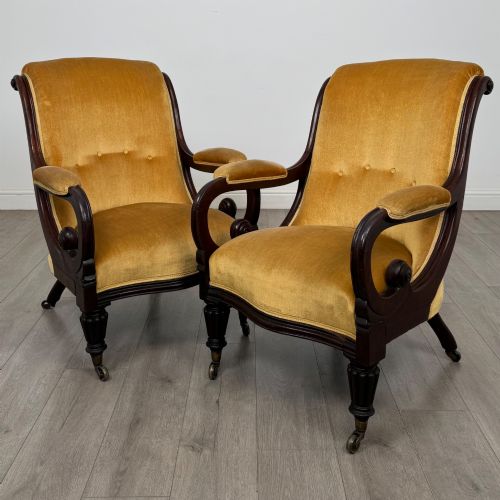
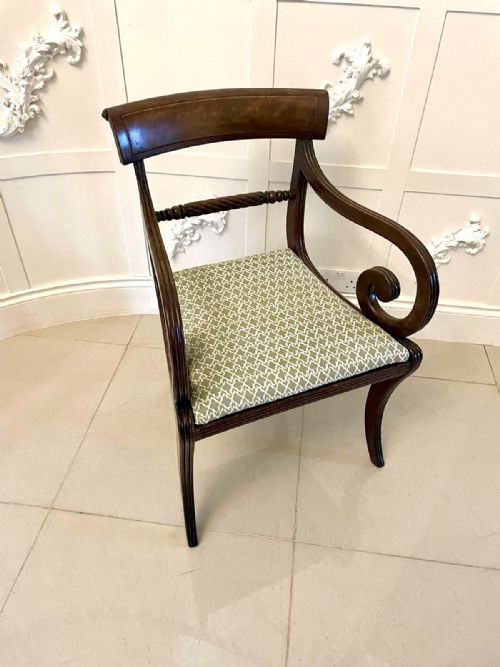
Many of these seating pieces feature distinct variations such as lyre arms, reeded frames, or spoon backs. Whether built as a standard library chair or a specialised reclining model, each piece reflects the functional requirements of nineteenth-century domestic interiors.
Materials and Construction
Makers built these frames predominantly using mahogany and rosewood, selecting dense timbers that permitted sharp carved details and sturdy joints. Caning often formed the seat and back panels of bergère models, providing a flexible base for loose cushions.
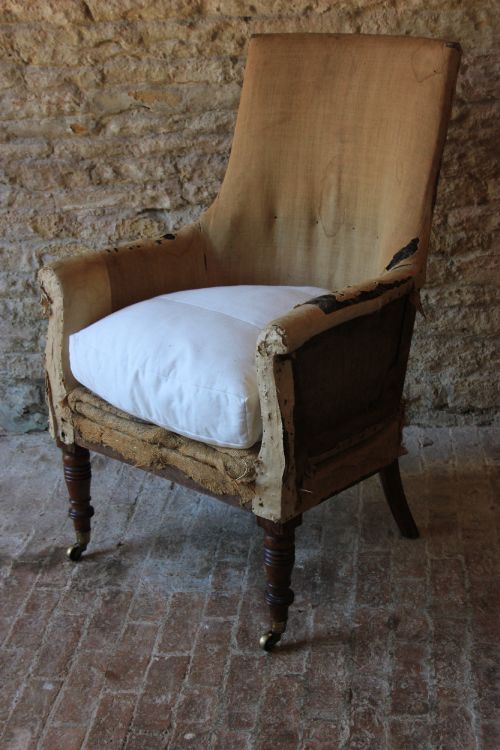
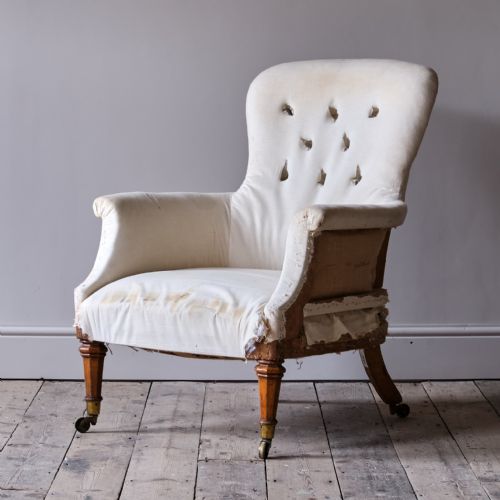
Upholstery utilised traditional fillings covered in leather, velvet, fabric, hessian, and calico. Brass fittings, including castors or mechanical reclining hinges, completed the construction of more advanced library and desk chairs.
Some nineteenth-century readers required patented mechanical reclining frames so they could doze off securely after finishing a heavy chapter.
Evaluating Quality
The distinction between standard examples and the finest pieces lies in the crispness of the timber carving and the sophistication of the frame design. Chairs featuring specific mechanical adjustments, such as patented reclining actions, represent a higher tier of domestic craftsmanship.
Subtle details like reeded mouldings, scrolled arm supports, and the integration of cane work with polished mahogany set superior workshop output apart from simpler country house furniture.
Gillows
The Regency Reading Armchair Glossary
- Bergère
- An upholstered armchair with enclosed sides, often featuring cane panels woven into the wooden frame. This form became particularly popular during the Regency period for library seating.
- Reeded
- A decorative moulding formed of parallel convex strips resembling bundled reeds. Cabinet makers carved these profiles directly into the legs and arm supports of mahogany chairs.
- Tub Chair
- An armchair featuring a continuous curved back and armrest rail forming a semicircular enclosure. Library versions often provided extra support for long hours of reading.
- Lyre Arm
- An armrest shaped in the classical silhouette of a musical lyre. This stylistic flourish appeared frequently on finer nineteenth-century library armchairs.
- Drop-In Seat
- A removable upholstered frame that fits into a recess in the chair seat rails. This technique allowed for straightforward reupholstery without dismantling the main structure.
Regency Reading Armchair: Frequently Asked Questions
What defines a regency reading armchair?
These seats are nineteenth-century library and desk chairs constructed primarily from mahogany or rosewood to support study and reading. They frequently incorporate upholstered leather panels, open arms, or woven cane work.
Craftsmen designed them with ergonomic curves and sturdy frames to suit the domestic libraries and studies of the period.
How were these armchairs used?
Owners placed these chairs in libraries, studies, and writing rooms for reading heavy volumes or working at a desk. Adjustable or reclining versions allowed the user to alter their seating angle for comfort.
Caned bergères provided a cool, flexible seat, while leather-upholstered variants offered a firm and durable surface for writing.
How do I care for the leather and wood?
Keep mahogany and rosewood surfaces clean by dusting them regularly with a dry cloth and occasionally applying suitable beeswax. Avoid placing antique timber furniture in direct sunlight or near heat sources.
Treat leather upholstery with specialist balms to prevent it from drying out, and protect cane panels from sharp impacts.
How can I tell the period apart?
Regency and George IV pieces display classical restraint, often featuring reeded legs, mahogany frames, and subtle brass accents. William IV and later nineteenth-century examples tend to show heavier proportions and bolder carved details.
Examining the underlying timber construction and the style of the arm supports helps clarify the approximate date of manufacture.