
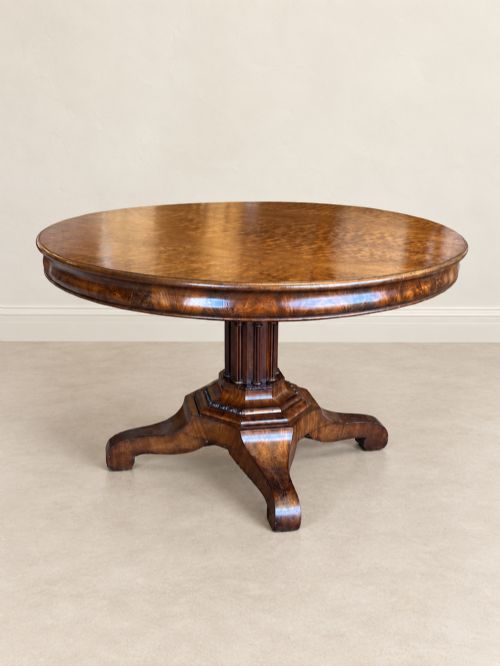
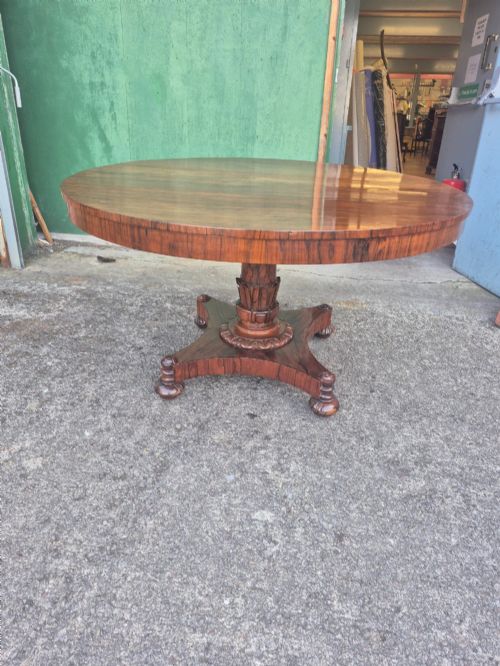
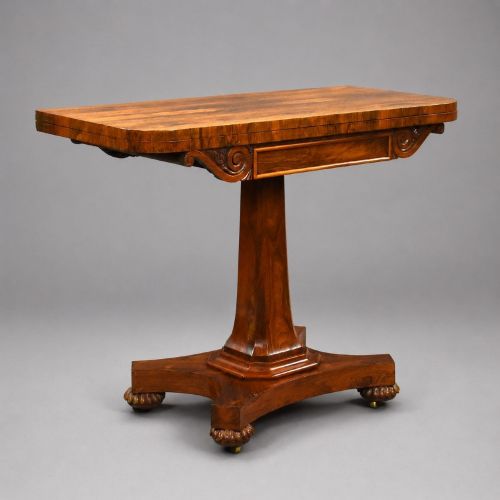
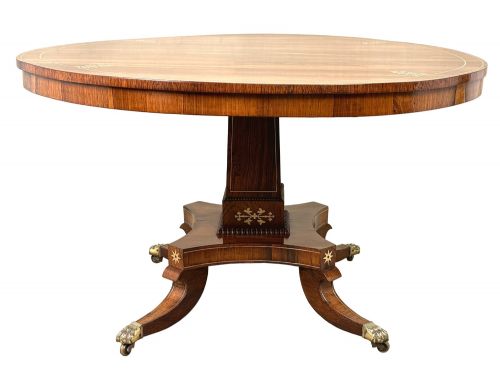
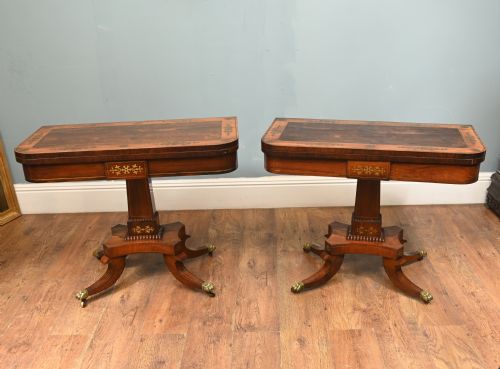

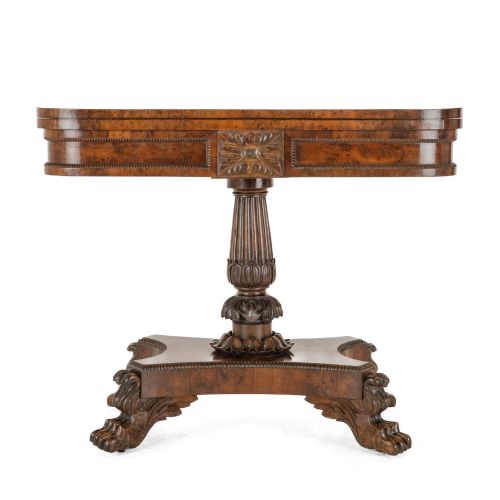


Regency Quadform Pedestal Table
These tables are substantial centrepieces of the Regency period, built with a heavy central column and four-sided support to anchor a room.
Regency Quadform Pedestal Table
When you search for a regency quadform pedestal table, you are looking at formal tables defined by a central pillar rising from a four-way platform or base. The selection available here spans the 19th Century, incorporating George IV, William IV, and Victorian periods.
The forms you will meet most frequently include card tables, centre tables, breakfast tables, and tea tables. These pieces often feature fold-over tops or tilt mechanisms, serving practical domestic uses in libraries, parlours, and drawing rooms.
Originating predominantly from English and Scottish workshops, these tables employ timbers such as mahogany, rosewood, and burr yew. The presence of brass inlay and carved details marks the aesthetic ambition of the era.
Judging the execution
The distinction between standard examples and the finest pieces lies in the selection of the timber veneer and the precision of the brass inlay. Grain matching across fold-over leaves demonstrates the care taken by the maker.
Carved elements on the pedestal and feet reveal the sculptor's hand, where crisp edges and deep relief separate superior work from simpler production. The integrity of the central pillar construction dictates how well the table bears weight over time.
Reading tables included double-sided designs so two people could peruse newspapers simultaneously.
Gillows
The Regency Quadform Pedestal Table Glossary
- Quadform pedestal
- A central column support rising from a four-sided base or platform. This design provides structural stability and floor clearance.
- Tilt-top
- A tabletop mechanism that pivots vertically for storage against a wall when not in use. It is commonly found on breakfast and centre tables.
- Card table
- A folding table designed for games, featuring a baize-lined interior surface when opened. The top swivels or folds over to reveal a hidden well.
- Rosewood
- A heavy, dark timber with distinct figuring utilised extensively during the Regency period. It takes a high polish and provides deep colour variation.
- Brass inlay
- Fine strips or motifs of brass set flush into the wooden surface. This technique creates geometric patterns across the table top.
Regency Quadform Pedestal Table: Frequently Asked Questions
Where were these tables placed?
These tables were designed primarily for prominent positions in the home, such as the centre of a drawing room or library.
Card and tea variants were placed against walls until needed for evening entertainment or dining.
How do I care for rosewood surfaces?
Rosewood requires stable humidity and protection from direct sunlight to prevent the timber from drying and the polish from fading.
Regular dusting with a dry cloth maintains the finish without the need for heavy oils or waxes.
How do I distinguish William IV from Regency?
William IV pieces tend to be heavier and more robustly carved, reflecting a transition in taste during the 1830s.
Regency pieces often display leaner proportions and more delicate brass inlay work.
Can these tables be used daily?
These tables handle normal daily use well, provided hot items and moisture are kept away from the polished timber.
Fold-over mechanisms should be operated with care to protect the internal hinges and veneer edges.