




Regency Porcelain Centrepiece
A regency porcelain centrepiece is a commanding table vessel designed for display, bringing period elegance and painted detail to a formal room.
Regency Porcelain Centrepiece
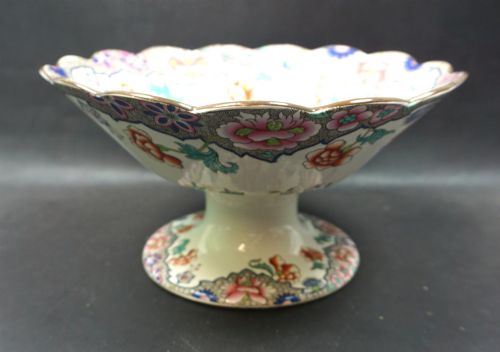
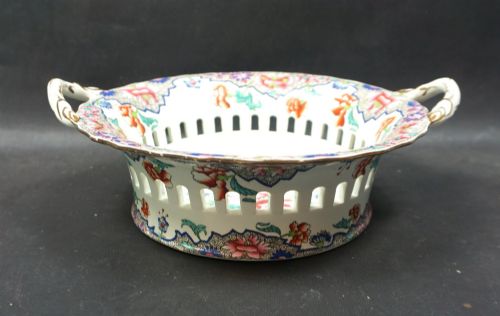
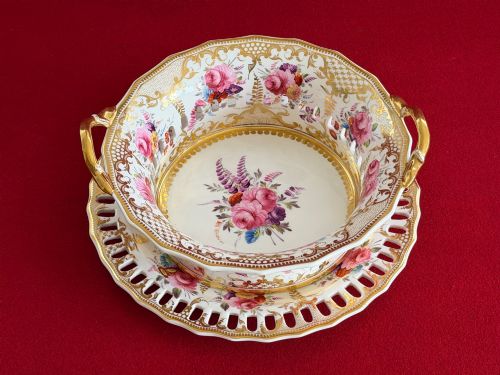
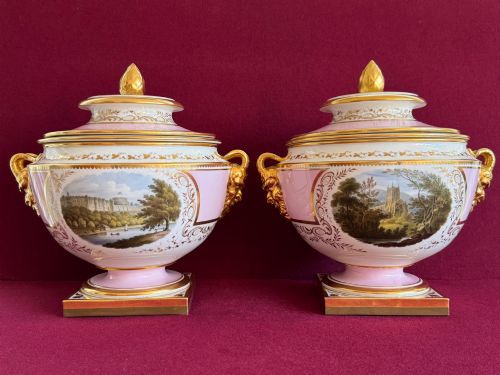
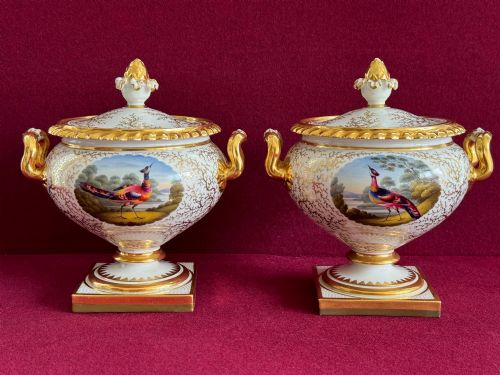
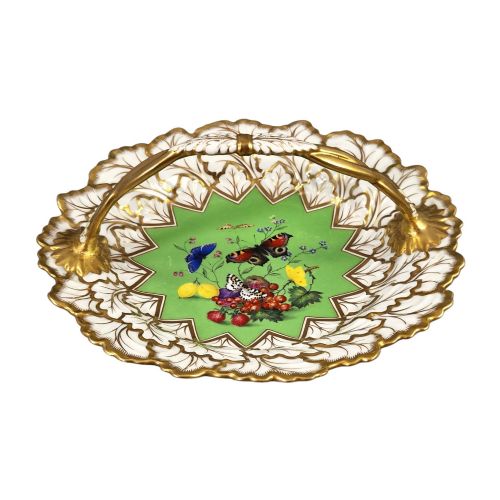
A regency porcelain centrepiece represents the height of early nineteenth century dining table decoration, appearing across periods such as the Regency and Georgian eras alongside related forms like baskets, ice pails, and bough pots. These objects served to anchor large dining arrangements or display fruit and flowers for guests.
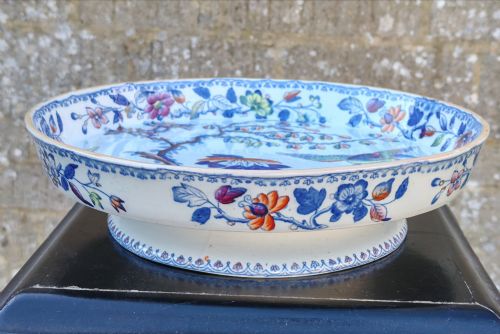
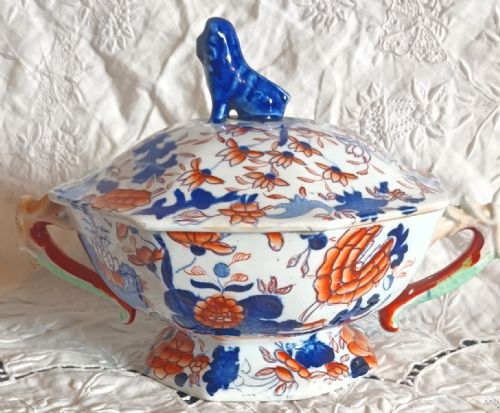
The pieces on this page span several decades of British ceramic production, featuring soft-paste porcelain, ironstone, and earthenware bodies shaped into tureens, bowls, and baskets. Stylistic influences cross from Georgian restraint into the bolder decoration of the Grand Regency period.
How they were made
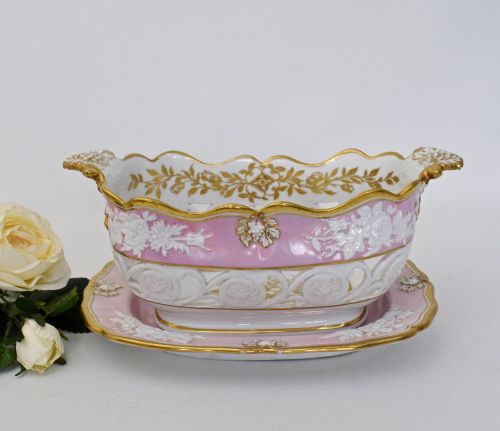
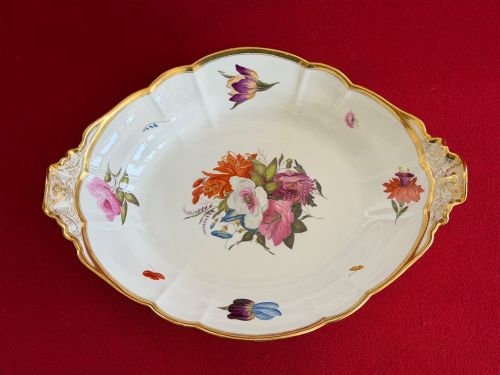
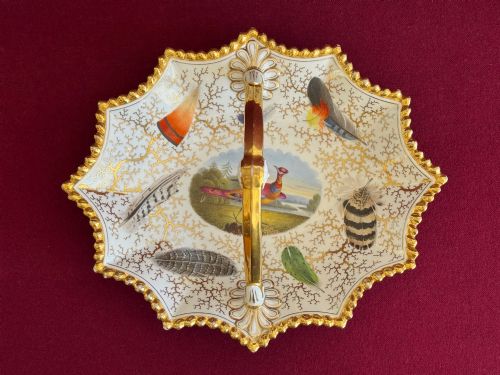
Makers utilised porcelain and ironstone bodies, often shaping them into intricate vessels with applied handles, pedestals, and pierced basketwork. Surface decoration relied heavily on hand-painting, enamel colours, and detailed applications of gold leaf and gilding.
Specialised factories employed notable artists to paint floral panels and exotic scenes directly onto the glazed ceramic surface before a final firing fixed the colours. The combination of heavy moulding and fine brushwork defined the technical standard of the period.
Regency Porcelain Centrepiece Retail Price Guide 2026
Typical asking prices for regency porcelain centrepiece among the pieces listed under this phrase on Sellingantiques today, from the lower quarter to the upper quarter. They describe what is for sale here now, not the wider market.
Object forms extend beyond traditional centrepieces to encompass cream tureens, ice pails, bough pots, and serving dishes.
What varies in quality
The distinction between standard commercial output and superior craftsmanship rests on the ambition of the modelling and the finesse of the hand-painting. Superior pieces display crisp definition in moulded details like handles and animal figures, alongside painterly control in floral or figural panels.
The quality of gilding and the preservation of enamel colours over centuries play a decisive role in the standing of an object. Firings that achieved a clean, bright glaze without warping the ceramic body mark the upper tier of production.
Barr Flight and Barr·Flight Barr and Barr·Chamberlain s Worcester·Mason s Ironstone·Minton Porcelain
The Regency Porcelain Centrepiece Glossary
- Soft-paste porcelain
- A ceramic composition fired at lower temperatures than hard-paste porcelain, producing a warm body and a smooth glaze that absorbs enamels effectively. It was widely utilised by English factories during the Georgian period.
- Gilding
- The application of gold leaf or powdered gold to the surface of porcelain to highlight rims, handles, and decorative motifs. This technique added considerable cost and status to the finished vessel.
- Ironstone
- A dense, durable type of earthenware patented in the nineteenth century to imitate true porcelain. It offered superior strength for heavy utility vessels like tureens while taking bright enamel patterns well.
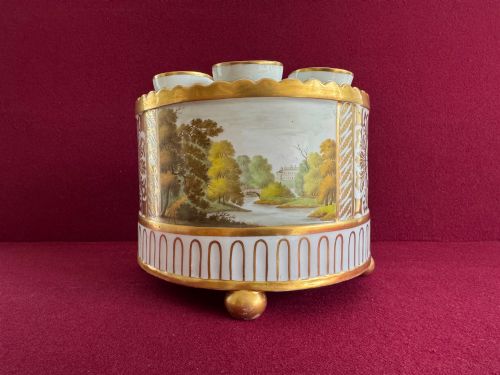
- Bough pot
- A decorative ceramic vessel designed to hold cut branches or flowers for interior decoration. These containers typically featured pierced covers and painted landscape or botanical scenes.
- Enamel
- A glass-like substance melted onto the surface of fired porcelain to provide vibrant colours for painted decoration. Enamels required secondary low-temperature firings to bond securely with the glaze.
Regency Porcelain Centrepiece: Frequently Asked Questions
How were centrepieces used?
Historically, these vessels occupied the middle of the dining table during multi-course formal dinners to display seasonal fruits, sweetmeats, or floral arrangements. They served as visual anchors for the entire table setting.
In daily life between meals, owners often placed them on sideboards or mantelpieces so their painted scenes and gilded details could be admired as standalone works of art.
How do I care for antique porcelain?
Antique porcelain requires gentle handling and should be washed by hand in lukewarm water using a mild detergent when necessary. Avoid soaking pieces with old repairs or exposed soft-paste bodies.
Keep them away from direct sunlight and dramatic temperature fluctuations to protect delicate enamel colours and nineteenth-century gilding from fading or degradation.
How can I tell Georgian from Regency pieces?
Georgian porcelain from the late eighteenth century often displays neoclassical restraint, featuring symmetrical shapes and delicate botanical painting. The palette frequently relied on softer enamels and restrained gilding.
Regency pieces from the early nineteenth century tend to show bolder forms, heavier gilding, and more vibrant enamel colours influenced by expanding global trade and shifting royal tastes.