
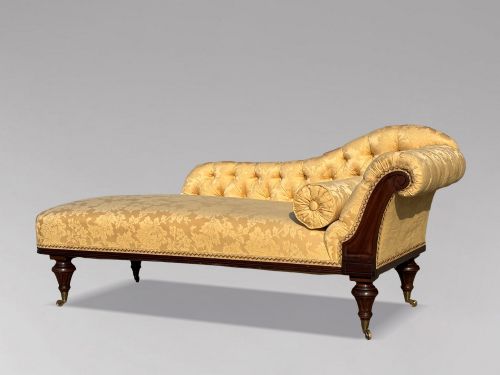
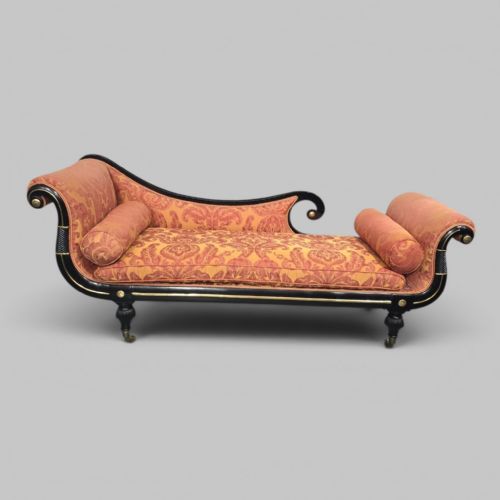


Regency Period Lounge
A regency period lounge brings neoclassical elegance to a room, offering refined seating in mahogany, rosewood and silk.
Regency Period Lounge
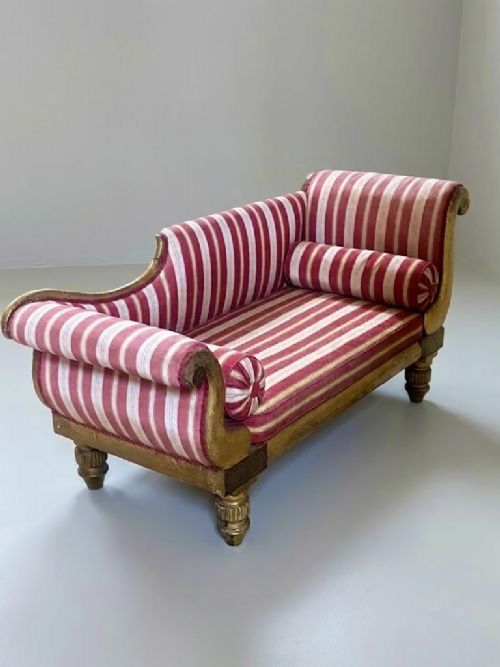
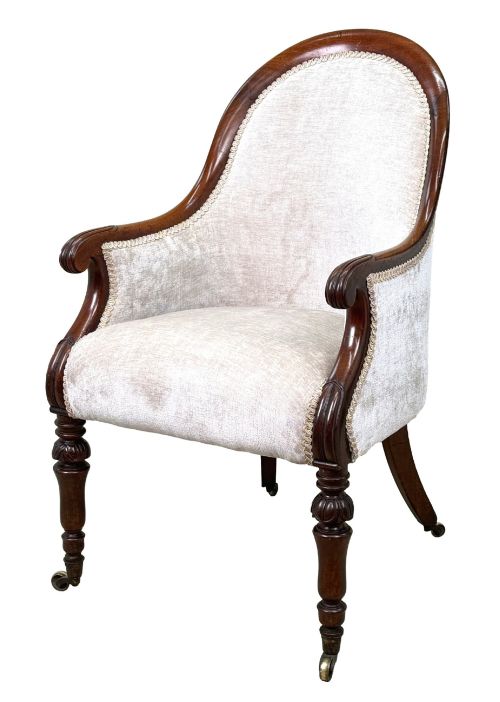
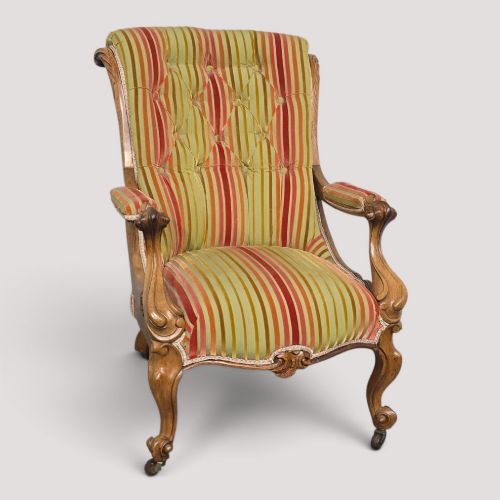
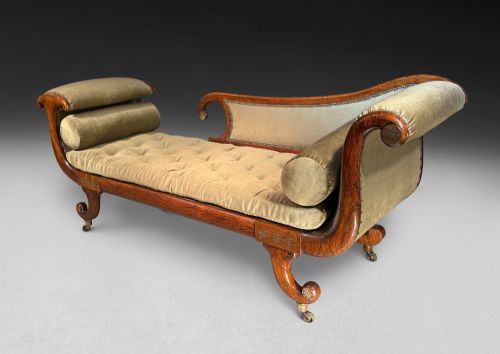
A regency period lounge encompasses seating forms such as library armchairs, chaise longues, daybeds and settees. These pieces date primarily from the Regency era and the nineteenth century, occasionally extending to early twentieth century interpretations.
The forms originate in English and Swedish traditions, employing rich timbers and elaborate upholstery. Buyers meeting this phrase encounter chaise longues, library armchairs and sofas designed for drawing rooms and libraries.
How they were made
Cabinetmakers utilised dense timbers including mahogany, rosewood and simulated rosewood for the frames. Brass inlay, carved herms and show frames provided structural ornamentation.
Upholstery involved traditional materials such as velvet, damask fabric, silk, leather and standard fabric. Frames combined carved woodwork with sprung or padded seating.
Listings feature mahogany, rosewood, simulated rosewood and brass alongside velvet, damask fabric and silk.
What varies in quality
The standard of timber selection and cabinetwork dictates the distinction between ordinary and superior pieces. Fine examples display precise brass inlay, intricate carved figures and substantial show frames.
The choice of covering material and the execution of upholstery affect the overall character of the lounge. Original or period-appropriate textiles such as striped silk or velvet elevate the distinction of the piece.
The Regency Period Lounge Glossary
- Chaise Longue
- An upholstered long chair for reclining, combining a chair and a footstool into a single piece. These items frequently feature scrolled ends and exposed timber frames.
- Bergère
- An enclosed armchair with upholstered sides and back. The frame is typically constructed from polished mahogany or other hardwoods.
- Simulated Rosewood
- Timber painted or stained to imitate the grain and colour of natural rosewood. This technique was common in the Regency period to achieve a decorative surface.
- Herms
- Tapering pedestals surmounted by carved human busts or figures. They appear as structural or decorative elements on nineteenth-century sofa frames.
Regency Period Lounge: Frequently Asked Questions
Where were these lounges used?
These furnishings were placed in drawing rooms, libraries and private parlours of substantial houses. They provided comfortable seating for reading, resting or entertaining guests.
Library armchairs sat near bookcases, while chaise longues occupied parlour spaces for daytime relaxation.
How do I identify a regency piece?
Identification relies on observing specific timber choices, decorative motifs and structural forms. Characteristic materials include mahogany, rosewood, brass inlay and silk upholstery.
Proportions adhere to neoclassical canons, often featuring carved scroll ends, sabre legs or architectural details.
How do I care for antique upholstery?
Protecting silk, velvet or damask fabric requires shielding the piece from direct sunlight and maintaining stable room humidity. Regular gentle dusting prevents particles from settling into the weave.
Professional cleaning preserves delicate textiles and maintains the structural integrity of antique stuffing materials.